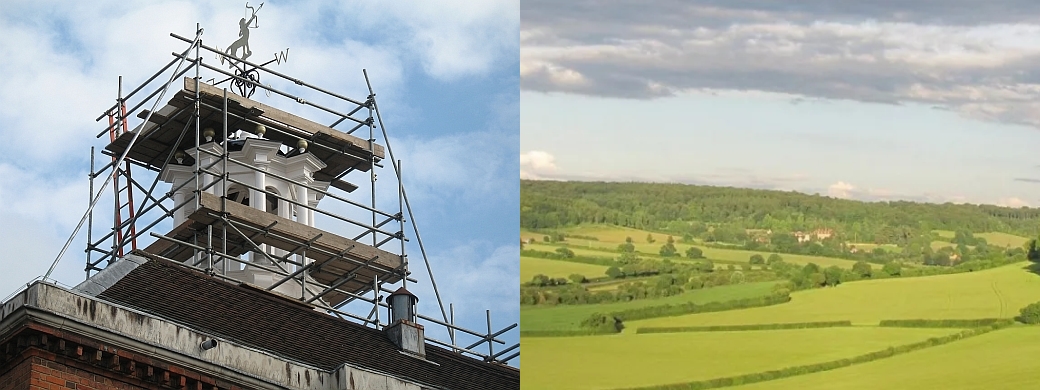

published on November 23rd, 2008 on perpetual-lab.blogspot.com, now visible in archive.com
 It was a Sunday morning in March and I was just 16. I’d been writing an essay on a stanza from a poem by William Wordsworth: “A violet by a mossy stone / Half hidden from the eye / Fair as a star when only one / is shining in the sky”. I’d been sitting by the warm kitchen hearth in the country cottage where I was boarding with Mr & Mrs Jenkins. My parents had moved from the Isle of Wight after my stepfather was made redundant from the aircraft factory. He couldn’t find another job on the Island. They knew Mrs Jenkins from the Spiritualist Church. It wasn’t a good time for me to change schools, so this makeshift arrangement made sure I could continue with my Sixth Form studies. Mr Jenkins used to wheeze and rattle with every breath, after inhaling poison gas during the Great War. They were a kindly couple and I appreciated the independence from my parents.
When I saw that the heavy rain had stopped, I took my chance to step out from the stuffy cottage to clear my head. Rivulets had formed on either side of the steep lane, sparkling in the sun, making v-shaped waves as they flowed; then went milky as they washed away mud, leaving grains of sand caught in the rough road surface; then went clear again so that the waves made a lens for the sunlight, with highlights and shadows dappling the rivulet bed; then carried little twigs and leaves as they flooded in wide pools and narrowed to swift rapids. Birds sang in the budding hedgerows. I never thought I might write about it fifty years later, but we tend to remember turning-points in our lives. Till then I had not been tuned to Nature in that particular way, as a boy might not be tuned to a girl glancing at him with a particular look. Nature took my heart before any girl did, and I’ve just described the moment.
Telling you about this incident serves the function of unblocking the flow of my memoirs, which got dammed up in February at this point, but that’s coincidence (which as I proposed in my last post is the very fabric of existence). I just happened to recall it today, on this Sunday morning, on a mundane errand under an umbrella. Early snow had turned to sleet and then heavy rain; finally the sky lightened and the road shone like a mirror made of dark metal. It made me think of that Spring morning in 1958.
I actually intended to write about a book by Bill Plotkin, but all in good time. Let me be honest: I find writing hard and it keeps getting harder. Plotkin has his agenda, which I try and understand, and whilst I agree with his plot, and feel closely kin to his ideas, (& paid no bill, having borrowed it from the library—whoops, can’t resist playing on the syllables of his name), I have my agenda too, which his book helps me see. I write for the lonely soul. I’m not a writer by vocation, just an amateur craftsman, not even with much loyalty to my craft. Mostly now I prefer to work with my hands: building a door from scratch for an old man’s shed, cooking a lemon meringue pie (having recently learned the secrets of this magical dish), renovating traditional country chairs made of elm and ash; taking walks in all weathers to quell thought and connect with the elemental universe.
I could write a book if only my ideas stood still long enough, but they don’t, and I can only see here and now, not what happens round the next corner. My writing is about the moment, and has to take place in the moment.
Plotkin is an academic and mystic. The two mix together like oil and water, i.e. not easily; but he does a tolerable job of it. I like to suck up his mystical bubbles as through a straw, and disregard the rest. His more illumined sentences rise up from a sea of verbiage, like this one:
“Soul-initiated adults serve both nature and culture by serving their own souls.”
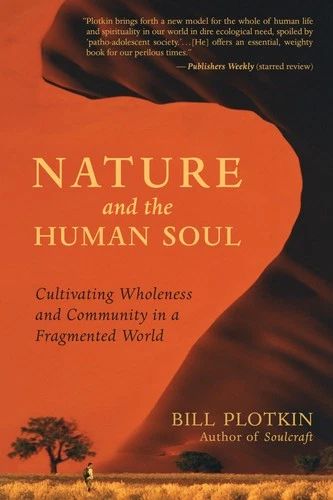 Or perhaps I just like to mine the nuggets of stuff I already agree with. Is there any use in reading a book for that purpose? Oh yes, we all like to read things we agree with. And then I change sides and argue with them, for I don’t seem to learn anything except by arguing against. Plotkin’s title is Nature and the Human Soul: perfect. Even the subtitle is good: Cultivating Wholeness and Community in a Fragmented World. He wants us to recognize the stages of maturity that each person ought to pass through, and has lovely names for them:
1. the innocent in the nest
2. the explorer in the garden
3. the thespian at the oasis
4. the wanderer in the cocoon
5. the apprentice at the wellspring
6. the artisan in the wild orchard
7. the master in the grove of elders
8. the sage in the mountain cave.
And where am I? Stage 2, by the sound of it, corresponding to Middle Childhood. Hm, I ought to get moving.