

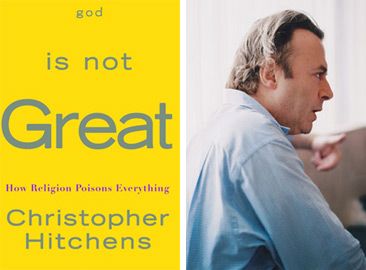
 I was well into my sixties when I wrote this. My view hasn’t changed at all; but the eloquence has shrivelled.
Here are some posts
with alacrity
Invisibles
eleventh child
The existence of God
Divine Anarchy
I was brought up to treat God with respect, regardless of what I might think personally. In England there was and possibly still is a law against blasphemy, which demonstrates a legal as well as moral imperative not to attack the thing that someone else holds most dear, even with words. To me it is self-evident that books with titles such as The God Delusion and God is Not Great put themselves in the wrong, regardless of any arguments they put forward, because of their authors’ disrespect. Perhaps they would ask that I respect their reasoning. I would grant them that. I respect their reasoning no more and no less than everyone else’s; but I don’t have to be convinced by it. And I can question the Bible’s claims to truth, without a tinge of scorn.
“In the beginning God created the heaven and the earth.” (Genesis 1:1) “In the beginning was the Word, and the Word was with God, and the Word was God.” (John 1:1) And of course such claims, relentlessly repeated, have got to us. We don’t question the axiom that God existed before we came along, because it appears self-evident. Even an atheist would accept that a God, if he existed, must be there from the beginning, before man came along.
But I hope to show you that it cannot be so. Man must precede God, for God is a word without which we could not be having this discussion. (Yes, it is a discussion. As I write, I’m in lively debate with myself. You are invited to join in.) Words are part of language. Words signify something so that communication can take place. So before there can be the concept of God, there have to be human beings, who have learned how to share their observations by means of language. If we can’t see it, that’s only because we have been so thoroughly conditioned to think of God as pre-existing.
“Oh, but this is absurd!” I hear you say. “ If there is a God at all, he (she, whatever) is the Creator who made us in his image. Therefore he came first.” Yes, the Bible says that, but the God that people depend on is the God whose existence is confirmed by their experience. There may be a God who made us, but this is unknowable. Whereof we do not know, thereof we cannot speak. In some areas, we have no alternative but to be agnostic*.
In short, God, “the mighty power in whom we trust”, must be based on some present reality. It’s the same for any other concept. For a word like “dog” to exist, someone must know what a dog is, and be able to show someone else, otherwise the word is just an empty sound. It has always surprised me how easily a child learns to identify and name a dog, by pointing, looking at the mother’s lips, repeating the word. (How can the child generalize amongst examples of such different colours, shapes and sizes, recognizing them all as members of dogkind? Plato might have explained that in the invisible Heaven of Forms, the ultimate prototype dog wags its archetypal tail and barks its paradigmatic bark.)
If you want to teach a child about the Judaeo-Christian God, it’s not as though you can point to God in the street, as you can with a dog. It wouldn’t help if you waved your arms about and said “All this is God”, meaning the world, the universe, everything. For these are difficult concepts too, and the child might think that God is something to do with arm-waving. I remember driving with my four-year-old son on a foggy day, and saying, “Look! Fog!” He asked where. I pointed out the window. He said, “I can’t see anything.” I said, “Right! That’s what fog is.” “No,” he replied. “I can’t see anything at all, Dad.” So perhaps God is like fog, but even less visible to the eye.
 But what we want to know is, how was God first discovered (or invented) by adults? In the Bible, it’s straightforward enough. God creates Adam and Eve and immediately talks to them:
So God created man in his own image, in the image of God created he him; male and female created he them. And God blessed them, and God said unto them, Be fruitful, and multiply.
As I proposed in my last, this portrayal of God is a literary device, like the whole Garden of Eden story. For the sake of the tale, Adam and Eve are created fully-grown and (presumably) complete with navels, to which no umbilical cord has ever been attached. They are able to understand Hebrew and speak it. But we are not to condemn these literary devices as falsehoods. Every true story, or every fiction embodying an important truth, takes liberties with reality. We have no difficulty with this, except when we are trying to destroy our opponent’s credibility with rigorous logic.
So, setting the Biblical myths to one side, how did those tribes really discover and name something as God, or whatever word they used in Hebrew? I propose that it was not completely unlike naming a dog. Someone has an experience, through some combination of senses + emotion + intellect, and tries to tell someone else about it. This is where naming first occurs. It is also clear that for language to exist, there must be at least two persons. Person A feels the need to isolate something out of the totality of changing impressions that make up conscious life, by giving it a name. Only by doing this (or failing this, by pointing) can he identify it as the topic of communication. Once, on the motorway, I said to my small son, “Look, fog!” “I can’t see anything”. He soon grasps it: another way to describe
Since the Judaeo-Christian God cannot be represented as a graven image, pointing won’t work. Naming and description is necessary. How did the Children of Israel know about God, before the Old Testament was written? There must have been a dialogue. Person A says to person B, “Listen to what I am saying. This is God!”, in the same way that a mother says “Look, dog!” to her toddler, or I once said “Look, fog!” to my son. There was not just one dialogue, but myriads of them, countless millions, because the knowing of God—“fear of” or “love of”— happens across the globe and over the millennia. I can’t know what’s said in these verbal exchanges, all the variety of meanings. All the same I suggest it is possible to distil the essence.
Person A is the “knower”; person B is the “believer”, who believes because he hasn’t (yet) had the experience which has inspired the knower. Still, he accepts it. Every form of teaching has to be taken on trust initially. There has to be an experience somewhere, that is to say a combination, as I said before, of senses + emotion + intellect, in some proportion. Or—and this predominates in the Old Testament—the experience manifests as a voice, which must have come from somewhere, therefore from God. Or a prayer—of supplication or thanksgiving. Or even an absence, in the spot where a presence was sensed before.
It is possible of course for a so-called “knower” (or teacher) to speak falsely, of an experience which he doesn’t have, and for the believer (or student) to believe it nevertheless. And then it is possible for the speaker, that is, person A, to start believing it later, because person B has started to believe it. And we must grant that belief itself is an experience—if only of imagination! It is part of the human repertoire to imagine something before it has any anchoring in senses, emotion or intellect.
Imagination is a double-edged sword. We may use it to cut through ignorance and absorb learning as a child does—but we might get cut ourselves, and be defrauded by fantasy. Imagination is a kind of experience, not because any philosopher (Hume, perhaps) says it is so; but because we can each observe that this is the way we are made. We are capable of creating something out of nothing. You could fake two love letters, one from “him to her”, one from “her to him”. In Shakespeare’s comedies they end up falling in love with one another, even if one is a girl disguised as a boy. (In Shakespeare’s day, all the female parts were boys disguised as girls, but anyway we delight in the illusion of seeing what is not.)
So we are perfectly capable of being deluded about God. But this is the worst-case scenario, and doesn’t justify the disrespect implicit in The God Delusion and God is Not Great. God is the treasure of millions and you can’t argue that away with logic. By “treasure” I mean the most valuable thing they possess, the thing they hold sacred†. The less they possess materially, the more they are likely to treasure God. I don’t think anyone should have the disrespect to call them deluded. They should be given the benefit of the doubt. If you must, you can call it technically a delusion, because faith in God has no scientific basis. By the same token, you can call the rainbow a delusion, until the day a scientist comes along and gives his blessing, saying, “It’s all right, there actually is a rainbow, because Mr Isaac Newton has just written a treatise called Opticks which explains how refracted white light splits into a spectrum.”
The fool hath said in his heart, There is no God.
But which of us is in no danger of foolishness? The cleverer we are, the closer to foolishness.
* Definition of “agnostic”, from the Oxford English Dictionary:
One who holds that the existence of anything beyond and behind material phenomena is unknown and (so far as can be judged) unknowable, and especially that a First Cause and an unseen world are subjects of which we know nothing.
[“Suggested by Prof. Huxley at a party held previous to the formation of the now defunct Metaphysical Society, at Mr. James Knowles’s house on Clapham Common, one evening in 1869, in my hearing. He took it from St. Paul’s mention of the altar to ‘the Unknown God.’” R. H. Hutton in letter 13 Mar. 1881.]
† See “The Sacred“
 a wayfarer’s notes
Geez, a lot to think about here. I'm gonna have to check back in when I'm not half-asleep.
LikeLike
Thanks for the feedback, Bryan. I think it was my fault. I’ve gone back and made some crucial edits, to make it more readable when you’re half-asleep. Knowing the power of your dreams, I hope you’ll be able to absorb it in the hypnagogic state and even the hypnopompic, though the latter is hardly likely to be associated with reading.
LikeLike
Might also suggest that much of the “english” language has been subliminally 'corrupted' from (or by) the latin priesthood. “pagan” (as far as can gather) simply means “a person outside the walls of Rome”; a countryperson. Similarly “heathen”.
In the beginning was the “word” – logos?. MM, depends on which language one was born with, I guess.
long story.
LikeLike
.. and – for those who follow the ” Bible” – will also throw this thought in..
why is there no mention of the southern hemisphere? How did kangaroos, wombats and possums get onto Noah's Ark???????
LikeLike
Can o' worms, Vincent.
Have, of course, written about this previously but can't (at this point) find the rather brilliant, detailed, essay written by an Iranian scholar;
so, will just paste this in .. the title says it all (Wodensday school?)
History for kids
LikeLike
OK, will stop now, can't be bothered trying to type it all again; but if ya really wanna know what i think about it all, just type 'god' into the search box on Womby's Drivel .. heh.
LikeLike
Good points, Davo. I am using the King James version, & not claiming to be a scholar. That version was completed five years after Australia was discovered by the Dutch, who I don't suppose were in a hurry to tell the British, who took no interest till Captain Cook landed at Botany Bay, after which the Brits invented a free-range version of the offshore detention camp, before the Americans created the battery-hen version in another century, another bay.
I imagine that for all their prophets and seers, the Children of Israel were badly-informed about hemispheres and wombats.
In blissful ignorance of Wikileaks and Wikipedia, they could smite and slay as the Lord commanded, without interference; as some tribes (I mention no names) still do.
LikeLike
Aha, found the post i was looking for
http://wombatswaffles.blogspot.com/2006/05/god-is-illegal-immigrant.html
LikeLike
oops, is that the equivalent of “letters crossing in the mail”? have just finished reading a detailed history of Capn Mathw Flinders. Sad story, if known.
LikeLike
I just read your article on God as an illegal immigrant to “God’s own country”, where you are not even allowed to smuggle in a half-eaten apple.
Am impressed with your scholarship. Struck dumb in fact.
LikeLike
In blissful ignorance of Wikileaks and Wikipedia, they could smite and slay as the Lord commanded, without interference; as some tribes (I mention no names) still do.
Beautiful riposte, wish i'd seen it before rabbiting on.
LikeLike
Oy, what are you doing – awake at your time of the morning .. heh.
LikeLike
Erm, it’s late morning here. 11:15 as I write.
LikeLike
mm, will have to adjust some clocks. My computer tells me 7.16am London time. Almost a match, 'tis 11.16pm local here. On the same DAY though. 19th Janusmonth .. heh. has always fascinated me .. the Untied States of disarray mostly live in my yesterday .. oops.
LikeLike
However, getting back to the point of your post.
The ancient Persian/Judean/Muslim/Roman writers and philosopher “priesthood” had not the slightest idea about the “science” of astronomy. Why should anyone with half a brain continue to believe “The Bible”?
LikeLike
I think the problem here is trying to take the stories in the Bible or any other ancient scripture for that matter literally. As Hayden had pointed out in an earlier comment and i did too as regard to the adam and eve story in the comments here are in my blog(i forget where precisely) these are childrens stories but often with a message behind them. Adults should go for the message.
In the beginning was the word – is a vibration in space as all sound is – and the vibration is God as everything in the universe is – is my interpretation. To begin with a vibration at the quantum level is perhaps the only possible way to begin the universe out of nothingness.
LikeLike
OK, I cannot read this now, as I have to go back to work. Can't you be shallow for once?!
By the way, I noticed you visited Arash's World. His latest post is very thought-provoking.
I am biased, I assume, as I love God talk. Religious people are so entertaining.
LikeLike
Ashok wrote: “Adults should go for the message.”
I agree, the Adam and Eve myth expresses something which is present in the subconscious of all human beings.
For me it would be more interesting to discuss this something.
Is the myth of sin useful, or is it evidence of what Sartre calls bad faith. And if so, can we find a “good faith.” Can we realize a faith that apparently there was nothing Adam and Eve screwed up.
Does a sinless myth authentically tell us that all the “mistakes” we see play an integral part in the design of whatever creates this world we find ourselves in?
LikeLike
Interesting that Ashok and Raymond agree that the thing to go for in the Adam and Eve story is the message.
But I don’t think everyone would agree what the message is.
And though I can attempt to see it in terms of the time when it was written, within the Hebrew culture, as part of their creation myth, which would also support the Ten Commandments and the whole framework of their moral life, I don’t say any message relevant to me.
I would happily discuss the notions of sin and sinlessness, but not in any sense of what should be the case. I don’t know why but I don’t have that kind of involvement at the moment. I want to understand why things are the way they are, that is why my fellow-man is the way he is; but in a somehow detached way.
So I would say that the myths of sin and sinlessness are each useful, in the sense that they have their adherents, now or historically.
My motivation in writing the post was possibly to bridge the yawning gap between militant atheists and their Christian counterparts; exploring the possibility of common ground so that they could understand one another.
I’m not suggesting that the post in itself will do anything to build such a bridge, but is a possible basis of discussion between those present here.
It certainly won’t be a straightforward matter.
So whilst I’m delighted to join in any discussion of any kind, I’m personally more interested in the common ground linking everyone than the divisiveness implicit in the interpretation of messages.
LikeLike
Certainly, Ashok, problems may be created when people take scriptures literally. I suggest there would be no problems at all if the entire human tribe were agreed on what the literal interpretation should be, even if it included the stoning to death of certain types of malefactor. (Because if they wanted to exercise compassion, they would, just people who want to break the Ten Commandments go ahead and break them.) The problem, in my view, is the clash of cultures which results from global communication. This imposes the necessity for tolerance to a greater degree than can possibly arise from taking any scriptures literally.
LikeLike
And Ashok, your interpretation of “In the beginning was the Word” sounds to me very reasonable, acceptable and perhaps inspiring. But in such matters people are often passionate for their own idea.
My own theory, which I don’t expect anyone to share, is that creation myths are there to underpin the society within which they have arisen, and make its members feel good about being in that society and good about themselves.
I think this applies equally to Western culture, which is so proud of Darwin and the astrophysicists & cosmologists who have contributed to the Big Bang theory.
The fact that these ideas go on being argued and developed is part of the Western ethos, and in conflict with the more traditional ideas which pride themselves on reliance on once-for-all revelation.
So there you have polarization and conflict and even bitter political feuding.
LikeLike
John, I long to be shallow! Please help, rescue me. Let us be shallow together. I shall have to revisit Arash’s post. I couldn’t think of anything to say at the time. By now there may be a good bar-room brawl going on, so I could pick up a chair and choose whose side to be on.
More God-talk, yes!
LikeLike
“This imposes the necessity for tolerance to a greater degree than can possibly arise from taking any scriptures literally.”
Could'nt agree with that more Vincent.
LikeLike
Raymond, Vincent my belief is that the world is exactly as it should be.
What it should be must result from the cumulative action of all forces that act on it including all actions of life within it. Classifying some of these actions as sin or sinless is merely a matter of classification to my mind, probably sinful actions are those that make the world less than pleasant/desirable in the long run. Over the short run they must produce some fun and pleasure (as Eve must have enjoyed) otherwise who would go for them.
LikeLike
The short term fun of Eve would be in enjoying the apple, but that is probably a childrens version. In a book of another ancient religion of the Ninevah region (The Yezhidi's)it was sex.
LikeLike
Vincent:
“My own theory, which I don’t expect anyone to share, is that creation myths are there to underpin the society within which they have arisen, and make its members feel good about being in that society and good about themselves.”
My opinions:
Completely agree. The myth-makers saw that sin was necessary in order to separate a purported good from the bad. Without such separation there often arises the fear that the universe is without fundamental values, that is to say, it would be meaningless (for them).
In the myth, Eve's eating the apple (sex) and consequential sin was thus doing a big favor for many folks. With sin and the avoidance of sin, there was the possibility of a meaningful life and a promise of endless survival.
In Zhuangzi and the existentialists, you can create your own idea of meaning, even if it is a mystery. Sin then has no metaphysical use, but still remains useful in the practical use of social stability.
This is not a message I promote; I only put it here to enjoy the continuing conversation. I have no ultimate answer to life that I consider any more valid than that of the fundamentalist. And I would not be surprised if when I die I will wake up in their hell.
LikeLike
Ashok:
“probably sinful actions are those that make the world less than pleasant/desirable in the long run.”
This is plausible, but I doubt that we can be certain of what is good in the long run. Antibiotics was a good discovery in the short run. But in 100 years there may be such a population explosion that some might wonder if that really was a good thing.
LikeLike
John: “Religious people are so entertaining.”
I think this entertainment value is one of the vital aspects in utilizing religion to enhance my life.
LikeLike
oh my, completely beyond me these days. My brain, I think, is hampered by the chill that's descended here – I can think half thoughts, or remember scraps of erudite scholarly works in rebuttal….. but can't get anywhere on scraps alone.
there is some internal 'pushing' here though, a curious nudging like a dog trying to sniff out a pattern… at some level I wonder why we care so much? I mean – if I believe and you don't – whatever does it matter? It happens I am left cold by Mozart, and just as with the god issue people like to jump into the fray and explain patiently how wrong I am and what I'm missing.
How many posts and hours of thought have we devoted to this – not simply to the pure and internal contemplation of truth, but to understanding and refuting/supporting the view of others. I am certainly not exempt from this tirade, I've done it to.
And I acknowledge that I'm fascinated by the scholarship and intensity with which we follow a trail long cold.
Vincent, I follow your thinking with admiration and interest, I have no intention of demeaning you or it in any way. And yet, and yet…. WHY?
Are there those who doubt that Eve's apple is a proxy for sex? I thought this was settled, agreed. (I've read arguments that the apple was 'really' a Turkish quince – and a gourmand who countered that this was impossible, for had it been, she would never have repented!)
But that is flippancy…………… for thousands of years these ideas have obsessed us, and I wonder why.
I am drawn to the notion that it is the story-telling itself that compels, and that if any of this was stated boldly & clearly we'd have dismissed the discussion and moved on long ago.
Vincent, is it true – as it seems to be – that your argument is based on the idea that In the Beginning there was the Word? That the Word precedes the Fact? I'm afraid I'm missing things here…and this is my second dip in the pool.
LikeLike
No, Hayden, my argument is not based on “In the Beginning was the Word”. It is based on a momentary intuition that God was invented by man to assist communication of the ineffable between two persons.
I was trying to show that it is necessarily the case that Man came first and God long after. But despite this, atheism is a foolish and disrespectful position, whilst among the God-believers there are treasures of sincerity, based on core experiences which should be acknowledged and celebrated by everyone.
Like you, I care nothing about Adam and Eve, and what their story is, though ready to discuss it with others.
But I do feel a strong impulse to get across what I am trying to get across, and won’t be put off by its not being understood. This is but a first attempt.
LikeLike
Ahhh, I hope you're not offended by my lazy reading, Vincent. I do understand/respect the impulse, even if my rigor is slight right now.
As for respect for things others believe deeply, I do agree – albeit cautiously. My personal experience has been that Christians lead the pack in disrespectful behavior, however. It isn't pleasant to be held in horror and treated as an expression of satan on earth when one has done nothing other than believe differently, and not ever pushed that different belief. I suppose it would be possible to turn the other cheek and out-christian them, but it is pretty unsettling and offensive. Perhaps things are more moderate in England – I hear it is – but here it often gets quite belligerant. My personal experience as a young person and child was close to abusive from select members of our god-fearing community here. I think that tends to bring out antagonism and confrontation.
I wonder how you factor in the profound disrespect and discourtesy shown towards non-believers as you think through this? Surely it takes more than one stick to make a fire!
LikeLike
Hayden: “It isn't pleasant to be held in horror and treated as an expression of satan on earth when one has done nothing other than believe differently, and not ever pushed that different belief.”
This is one of the most interesting aspects of some (not all) fundamentalist believers. It is vital to their belief system to condemn to hell those who don't see the world their way. I don't share their point of view but really do think that I understand their psycho-spiritual needs.
In the case of the Christian fundamentalists (and this is a minority group within Christianity) the belief is a bit ironic. Paul the apostle announced that “the law is dead.”
And so he replaces doing right and wrong (works/law) with faith in the message of Jesus:
Galatians 2:16 —
“Knowing that a man is not justified by the works of the law but by faith in Jesus Christ, even we have believed in Christ Jesus, that we might be justified by faith in Christ and not by the works of the law; for by the works of the law no flesh shall be justified.”
The irony is that after this “faith” dispenses with any need for works (good versus evil) the fundamentalist comes up with a meta-evil: lack of faith in Jesus Christ. (Apparently unknowningly, he has again reverted to “works.”)
The fundamentalists from every religion sincerely believe that I will go to hell. Just as one of my dearest relatives believed that her husband was doomed to hell for not “accepting Christ.” I love these fundamentalists no less for having these dogmatic ideas. I appreciate their need, and even can entertain the plausibility of their belief systems.
By the way, among some Muslim sects, a Muslim who converts to Christianity is subject to execution by the law (sharia). Again– I love these Muslims no less for these beliefs even though such are nearly opposite from my own.
I am fundamentally in love with all fundamentalists, and of course, am thereby condemned by all of them.
LikeLike
Vincent: “Like you, I care nothing about Adam and Eve, and what their story is, though ready to discuss it with others.”
I love to discuss it because this story, in my view, expresses a human need that I also find within me: The need to Do something to prove my worth. What I most enjoy doing is ridding myself (however successful or not) of this need.
LikeLike
Hayden, you say “I wonder how you factor in the profound disrespect and discourtesy shown towards non-believers as you think through this?”
I would factor it in if I had ever come across it, but I haven’t! I only know about it from hearsay. All I can think of is once when my sister said that according to her church’s beliefs I would go to Hell for following a false god (my guru at the time). In the next breath she said that she didn’t believe it in her heart of hearts because her God was a loving God.
It never occurred to me to think it was even discourteous of her to condemn me to damnation; for I simultaneously felt that her beliefs were false and was sorry for her. Our mutual pity cancelled itself out.
Just as some of us can claim never to have experienced child abuse from family members or strangers, some of us are completely innocent of the abuse that religious may perform on the non-religious, or (probably worse) on the backsliders amongst the religious. I don’t disbelieve that it happens, but I have no concept of the hurt it may cause.
LikeLike
Vincent, that's interesting. I think Britain is more civil in these matters than the US – particularly the Bible belt where I was raised. It's astounding to me to think of growing up WITHOUT having experienced it!
Our neighbors kids were not allowed to interact with me – and there were kids at school who shunned me because I belonged to no church. It's quite bewildering for a child to know they are shut out for a problem they can't solve, can't even understand. And those were the silent ones – those who were willing to talk about it directly were more cruel. They were happy to teach me about the eternal hell my family and I were surely headed for. I don't think this is much a problem on the coasts, but it definitely happens in the midwest and south. And while I focus on the children (because that's who I most interacted with) it was their parents who set the guidelines and they, too, were unkind. Many of these groups believe that god has already made his choices, and there is no redemption, you're already damned. And if god's cut you out, there must be a good reason, you must be bad. Reminds me of the popular Left Behind series – the violence in them is quite pornographic, and all focused against those god cut out of his will.
So while I agree it is deplorable to mock someone's beliefs, I've always assumed it sprang from this other disrespect, & never really thought much about it.
LikeLike
Raymond – yep, I'm aware of the sharia penalty on that point. And I've no intention of measuring christian evils against those of any other religion – I've little patience and no particular love for any of them. You're right that their psycho-spiritual needs pretty much mandates their intolerance – but – I'm quietly intolerant of intolerance. I don't think there's room enough in this world for open intolerance. By that I mean I attempt to maintain a courteous presence regardless of how much I disagree.
Personally, I see religious intolerance as an expression of reactionary cowardice. The world is too small. We can't just wall ourselves off from each other, we need to find ways to get along. And that requires finding a way past disrespect of all sorts.
LikeLike
I often print out articles, especially ones that are politically, legally or philosophically profound or complex. I have reams of such articles in my archives.
One of the things I do is to highlight sections I find profound or quotable. I have found this technique to be quite useless for the things you write, as the whole page turns yellow.
My only quibble with anything you said regards literal interpretation of the Bible, which is often used by very conservative Christians in America to support bigotry and prejudice. Pointing out the logical flaws in literal interpretation is something I do, but primarily for humor, as you cannot debate faith with logic, which is something I just argued in four comments posted at Arash’s site, the last one being a response to your most recent comment.
There is another site run by a very intellectual thinker. He must be, as he mostly thinks like me, with one notable exception: he is a devout Christian. I have posted on his site many times both as guest contributor and commenter. Many of my “arguments” have been op-ed response to his religious articles, someone I am privileged to read most Sunday mornings. Some of your analysis is a much needed third position. Your reason on religious matters seems inspired, my friend.
If he were up for it, would you be opposed to him re-posting some of your articles as a guest contributor on his site? If you agreed, he would give you full credit and I suspect post a link back to your site.
LikeLike
John, I’d be up for it, as long as his site doesn’t in any way resemble Dave Dubya’s Freedom Rant, in which the comments are a little too much like all-in wrestling for my taste. Perhaps not the wrestling itself, but the audience.
LikeLike
I created a long comment that seems not to have survived and I am too lazy to recreate it. I will recreate a bit. Burr's blog is a political blog, but he is very gentlemanly. He rarely disputes comments posted by his readers, even when they are patently absurd. As it is a political blog, he sometimes publishes forceful, though delicately-expressed, articles.
I am the atheist representative on his site. His is the Christian. There is no one voice that reasons without from outside a stated position. That would be you.
Here are three of his best articles, in my opinion:
http://fairandunbalanced.com/blog1.php/2011/01/04/bigotry-s-very-wide-stance
http://madmikesamerica.com/2010/12/what-god-looks-like/
http://www.testimoanials.com/blog/blog1.php/2010/08/04/who-cares-if-it-works-it-sells
LikeLike
I admire his writing greatly, but must confess to not understanding the dynamics of this to-ing and fro-ing of political and religious argument in America. It seems to go off at a tangent from the essence of things, the mystical heart which I believe unites all men, (meaning all humanity, though I prefer the language of my youth).
But American controversialism is not my business. Feel free to link etc.
LikeLike
This comment has been removed by the author.
LikeLike
My definition of God is similar to Davo _ that He is the sum total of everything in the Universe, energy, material, intellect, consciousness – everything, and therefore the argument of weather He exists or does not is valid to me only to the point that perhaps even I do not exist but am merely an imagination. Even that is quite impossible though because then atleast this thought exists. Incase, I do exist then most likely others as well as the Universe exists to and therefore as per my definition God exists.
LikeLike
(minor edit)
Mmmm, OK, will pop up again Vincent. Will try to not 'stir the possum' too much.
I always enjoy these sorts of 'discussions' .. but whenever i begin them (or find myself getting involved)ALWAYS have to start by asking “Define your god”.
There is, as this comment stream seems to indicate – a “fundamental” difference between the notion of “God” .. and “Religion”. “Religion” is a specific tribal notion; a set of sociological rules handed down father to son from generation to generation; and one of the founts of friction.
My notion of “god” – is “the sum total of all the energy available in the universe”. If anyone wants to (or can) put all that in a bottle, set it on an altar, control it to suit “my tribe”, charge fees for me to kneel before it .. godd luck to 'em. Haven't seen it happen yet .. heh.
LikeLike
?? apologies ashok, your comment and that rather extraordinary one from 'anonymous' turned up while i took my 'deleted' comment out for edit.
LikeLike
Um, wasn't me Vincent .. but will ask ashok a question .. why do you refer to something which is essentially “non physical” in the 'human' sense; as “He”?
LikeLike
Thanks Davo & Ashok for the definitions of God. I like them. You will have noticed that the main post doesn’t offer a definition of God, or at any rate doesn’t intend to. I see God as a communal possession, the rock and refuge of millions. It’s not for me to define what already exists in myriad forms in the hearts of those millions; and certainly not to say what it is that they should or should not believe.
I’d go so far as to say that the idea of God is the most powerful idea on earth. To the non-believer, God is a brand, like MacDonald’s or Coca-Cola; but with the big difference that it’s all hype and no product.
To a certain type of believer, and here for the sake of clarity I shall declare myself a spokesman for that camp, the brand is an irritating fact of life. The more important fact is that I must eat something, I must drink something. And if I go wayfaring to a town where the only restaurant is McDonald’s, and the only drink I can buy is Coca-Cola, then I shall give thanks to my God (inventing a God if necessary for the purpose) for this relief from starvation.
Whereas I would normally go mildly hungry rather than consume their branded items. I hope this parable has made my position clear, that I don’t much like the commercial or religious exploitation of universal human needs. But famine and starvation are the worse evils.
I’m not suggesting, either, that McDonald’s and Coca-Cola play any role in the to relief of real famine and starvation. But they do sell what is unarguably food and drink.
LikeLike
mm, i might suggest that 'masculine' permission for pyramidal “franchise” came from long, long ago – can't, at this point, think of an equivalent word for 'goddess' which isn't, somehow, diminutive.
LikeLike
Davo, I use He, She, It, Universe, Nature at different times for God but always with a capital letter and at different times think of God as such too. Being so all encompassing I believe It/He/She interacts with us with these different face up front at different times.
Vincent, the sort of thoughts that you express is similar to the thoughts expressed by Sufi mystics in the east. They too dropped out of traditional system of beliefs and went for their own. They are in a considerable minority though and it is interesting to find that some (not all) of their beliefs tend to converge.
LikeLike
Davo, if you visit the various posts of my blog you will find me using these different references to God.
Vincent the point I made here about sufi mystics is the same one I made about Edgar Cayce earlier in my blog. I understand your irritation if someone tries to foist his/her beliefs regarding God on you. That irritates me as well. However, we too must be careful that we do not irritate others by doing the same i.e. pushing our belief/disbelief on others.
As Buddha said – do not believe anything regarding matters of God if someone else says it including me, eventually your belief/disbelief must be your own personal experience for it to have any value
LikeLike
Just noticed we are upto 50 comments. Just goes to shpw that such discussions are endless but interesting.
LikeLike
Vincent,
One thing I think you are still only coming to appreciate is that everyone in America knows the truth about virtually everything and anyone who disagrees with an American, even another American, is wrong by virtue of his disagreement.
To say: “I don't know,” or “I am not sure,” is an embarrassment. Hence the American has absolutely certainty that is construction of God is the real one and that his best guess of all political issues is the one among many that is not foolish.
Americans cannot imagine how the other guy's thoughts are so absurd, and he quibbles and quarrels he is just trying to fix the other guy, who is most obviously broken.
Politics and religion are the same thing. They are both the sources of rules by which the American must live.
I hope I can legitimately claim myself as the exception to all of this, as I rarely admit to knowing anything. There are few other exceptions living here also, mostly imported. They are usually regarded as stupid.
LikeLike
Vincent In all my comments I really did not address the main point of your post – Yes ofcourse the word God came after man and his language just as the words tree, universe etc. came afterwards for pre-existing things.
LikeLike
Thanks, Ashok. I’m glad of your agreement to this point I was trying to make.
But when you imply that something pre-exists, and then the word comes along later to name what pre-existed, we have to be careful. I grant you that the baby is just as real before and after the moment it is given a name. The tree was a tree even though it existed a million years before the first human capable of language.
But there are words which don’t correspond to any identifiable “thing”, because they are words which correspond to ideas. “Universe” is an idea. Today we have one set of ideas about it, but a thousand years ago people had very different ideas. We don’t know how well or badly our ideas of universe correspond to the reality, because they are largely speculation.
This is even more true of God, which is our name for a way of looking at our reality. We may talk of a God who pre-existed, but we have no knowledge of it or Him whatever. We only have our ideas, our way of looking, our faith or our scepticism.
I am not going to talk of the unknowable, because, of course, I cannot claim to know it.
LikeLike
Davo I’ve been reading Mark Twain’s irreverent account of the Flood, and can confirm that kangaroos, possums and wombats did not get on the Ark at all.
“If he had known all the requirements in the beginning, he would have been aware that what was needed was a fleet of Arks. But he did not know how many kinds of creatures there are, neither did his Chief. So he had no kangaroo, and no ’possum … they having wandered to a side of this world he had never seen and with whose affairs he was not acquainted. … They only escaped by an accident. There was not water enough to go around. Only enough was provided to flood one small corner of the globe – the rest of the globe was not then known, and was supposed to be nonexistent.”
But fear not, Australia! God surfs the Web, and knows about your iniquties. It’s a bit late but he so loves the world that he’s sending you those floods now.
LikeLike
John, you are right. It’s the baseness, the iniquity and all the abominations.
LikeLike
I understand your point Vincent. After man and his language came along he gave a name to some things that pre=existed and also created new concepts and gave a name to that too. As regards God this line of argument will not lead us to discover which of the two it was and some other method has to be found as mentioned in my most recent post on atheism.
LikeLike
Um, irreverant perhaps – but one will have noticed that very few kangaroos,wombats .. etc, were lost in the Qld/NSW floods .. only many thousands of sheep, cattle ..”commercial” funding .. and human folly.
LikeLike
Very well said Davo.
It is amazing how much of Nature man destroys in his quest for things he feels he must have. It is not surprising if Nature is compelled to strike back from time to time.
I had some such concerns when I wrote my most recent post – Man, environment and self, in my blog at someitemshave.blogspot.com if you care to check out.
LikeLike
What time is it?
LikeLike
Today.
LikeLike
Wow. There's been quite a discussion here. I'll have to go back and read it all.
Sorry it's taken me a while to get back here.
I read The God Delusion. I think it's arguments were rather weak, actually. If I remember correctly, there were basically two main points. 1.) Arguing that we can't prove God doesn't exist isn't a reason to believe that he does. He used the example of a tea cup floating in the asteroid field between Earth and Mars. We can't prove there isn't one there, but that's no reason to think there is. 2.) Trying to account for the complexity of the universe by saying that that it must have been designed by a creator only escalates the problem, because God is even more complex so it just raises the same issue all over again.
The problem with both of these arguments, as I see it, is that although they knock down some of the arguments people might make for the existence of God, they really don't address the issue of God's existence itself. But, I guess he's saying the burden of proof is on the believers. I can see that.
I agree with what you're saying about respecting people's beliefs, but I don't think that people should dance around their own opinions either. If Dawkins is an atheist, I don't think he should feel that he needs to be apologetic or mince words about it. He should be polite, of course, just as he should in any case of human interaction. I've known plenty of religious people that don't pull any punches when it comes to confronting people that disagree with them. They would be quite comfortable telling Dawkins all about how he's going to burn in Hell for all of eternity. Is that any more respectful? Also, I'm sure you know how we Americans feel about our freedom of speech, so I'm sure I don't need to tell you how I feel about a law against blasphemy.
Anyway, I know this barely scratches the surface of your post. There's a lot more to chew over here, and if what I'm saying has already been beaten to death in the 60+ comments, then I apologize for being redundant.
LikeLike
Skimming through the comments, I get the sense that your friend John Myste doesn't care too much for Americans. All I can say is that we're not all crass, pig-headed yokels over here, although far more than enough of us are, so I really can't blame him for thinking that. However, coming as he does from an infinitely more enlightened culture, I'm sure he can appreciate how ludicrous it is to make broad generalizations about a person's personality based solely on geography.
LikeLike
Mr. White
I was not judging all Americans thus. I was indicating what one can often expect to find when visiting American blogs. I base this merely on anecdotal evidence and do not intend to suggest that it applies to all Americans. If you visit a whole bunch of political or philosophical blogs, you will find more of this than you would expect. That is observation, not generalization. You find all kinds of people in America.
I made the comment in partial jest. However, there is hint of sincerity also. People typically joke and exaggerate about ideas they find comically absurd, or merely comical. Unfortunately, I find this merely comical. I do not claim that my country is exempt from the same phenomenon. Partially because I know the phenomenon is not specific to a nation or a people. You find it everywhere; but mostly out of loyalty. Where I come from, this phenomenon is excessive, but not pervasive.
I live in Texas, sir.
LikeLike
Ah, I see. I think the “y” in your name threw me. I'm sure by my comment, it sounded like I was more offended than I was. Such is the nature of the internet. And yes, I'm certainly aware of how belligerent people can be around here. Being from Texas, I'm sure your even more aware of it, since we all know what people from Texas are like.
I'm kidding, of course.
LikeLike
Mr. White,
You did not sound offended, but more satirical. I found the subtle implications to be adorably American.
The fault is mine, as I often mis-communicate or worse, communicate accurately and foolishly. I believe you are the second patron of this blog to recognize me for less than I would choose; Davo being the first, who indicted me in his native tongue.
I was not offended by you, sir. And as for Davo, I can't stop laughing every time I think I about it. Never have I been denounced in such an entertaining way.
If you are listening, Davo, I am sorry you and I were not to become friends, as you are a very charismatic and amusing fellow.
LikeLike
Vincent, you may find my latest post 'holy, holy, holy' quite entertaining.
LikeLike
Ashok – yes, will reply in due course!
John – Davo & I are fellow-Australians. I agree with your final judgement, and I think you could be friends. I feel like putting in a word on your behalf to him. It was amusing that you were not recognised by Bryan as being American. You don’t have knighthoods and peerages over there, but to my mind, “unamerican” would a high accolade, equivalent to our Order of Merit. (sorry, America! please don’t rend or render me in some extraordinary fashion. It would be cruel and unusual.)
Bryan – I shall have to write another post, clearly saying what I mean, this time. Your clarity teaches me to be clear too.
LikeLike
OK, I find myself craving the next installment. Is there a release date yet?
LikeLike
Good Guide makes appreciation the better choice than being critical.
1st Commandment- “I” AM The Lord Thy God, You shall have no other god before “ME”! Know “I”self! Responsibility can't be passed off on any concept without trauma, and that's why the apple represents blame, which may be why gods are needed patho-logically.
LikeLike
John, curb your craving! I’m sorry to have whetted your appetite for another instalment. I find myself regretting the post, regretting any promises made, shocked by the number of comments, a record on this blog.
Bored with God? No, but as with sex, there is a big difference between talking and doing.
LikeLike
Brad you are always welcome, even when your comments are tough to decrypt, which for me is most times.
LikeLike
Told ya 'twas a can o' worms .. heh.
Safer t' stay with personal anecdotes.
LikeLike
Vincent,
Some bloggers wish to express themselves on certain issues, but get overwhelmed by the commitment to respond to others that it sometimes implies.
You may post on such issues and “close comments,” meaning set the post as one on which viewers cannot comment.
Do not allow us to squelch your enthusiasm.
LikeLike
Davo, you’re right. I have no personal anecdotes at present, would have to dig into my disreputable past.
John, I would never have comments closed, and I don’t really regret anything. But you say “Some bloggers wish to express themselves on certain issues”. Indeed. I never meant to be one of them! There are plenty of others to express themselves on issues. I prefer non-issues, that is to express my experience, without pressing the reader’s “issue” button. Am more interested in some kind of poetic resonance being achieved.
LikeLike
Vincent, that is.
Though the comment had a number of typos, I found this one to be unforgivable.
LikeLike
Fortunately, the former comment failed to post. Unfortunately, I posted a correction for the prior comment, which looks funny now.
Here is the missing comment…
Vincent,
Alas, this may lead to an unfortunate contraction, as the things with the most resonance-potential are often those that are most evocative.
I have never had a true appreciation of poetry. I would say I dislike 99.9 percent of it. However, I like the other .1 percent and I probably find a tenth of that to be some of my favorite writing.
Some poetry is very “issue oriented,” Like Kenneth Patchen’s “Breathe on the Living,” which I take to be an indictment of God’s use of mercy and the fact that he established heaven as place in the afterlife; or like Shelly’s Ozymandias, which shows the arrogance of regarding temporary realities as truth.
Some poetry provides definition to abstract concepts that one almost cannot express with rhetoric. An example would be Longfellow’s “The Tide Rises,” which could have many interpretations, but I religiously believe his point was to express the incomprehensibility of the fact that a man’s value on earth is mostly an illusion. The idea that the mechanics of the world are unchanged by our departure, feels impossible, as from our view, when we die, the world has ended. Our death is not a devastating event; it is not so much a dramatic event; it is a non event. (http://www.bartleby.com/248/208.html).
Then there are poems that Oscar Wilde and others called “impressions.” In his “Les Silhouette,” he did not want to impart wisdom, nor did he want to argue a position. He wanted to lift you from your seat and transport you into another world in just a few lines. And that is what he did. You do not know why you are there or what you are doing. All you know is that you are there. You feel what he felt and see what he saw. Being there is the whole point. (http://www.bartleby.com/143/34.html). Another example of an impression is Archibald MacLeish’s “The End of the World” (http://www.poemhunter.com/poem/the-end-of-the-world/).
A fourth kind of poetry would be a combination of impression, philosophy and irony, like “Intimations of Mortality” by Louis MacNeice, in which he compares a child falling asleep with death.
I equate blogging to poetry. These are poetic styles I like, when they are well done. I like them because they are profound, either because they arouse my analytical mind or because they arouse my spirit (whatever that is). In all cases they cause my mind to work in a way it was not working before, and that is what I seek.
Your words have this effect. It does not matter to me if they are “addressing” some issue or if they are intended to resonate, as in a poem that is only an impression would, since the effect is the same. In your writing and in the writings of others, I am not seeking a tutorial in life. I merely wish my mind to be worked in a way it was not before. I am looking for intellectual or spiritual arousal.
I think you feel that if a thought becomes an issue, it is somehow sensationalistic, base or crude. If so, then I must disagree. All of these art forms are needed, as they all activate one’s intellect in different ways. To limit one’s expression only to those things that resonate without provoking ,is to relegate a large section of the mind to mediocrity. This section of the mind may neighbor another section that is prone to fisticuffs, which is not a gentlemen’s way. However, the part of the mind that thinks about things that could become “issues” is as much a gentleman as the purely impressionistic portion, and we should not deny him is floor or hold him accountable for the baser tendencies of the human psyche. That would be guilt by association, would it not?
Though I asked a question, it was rhetorical. No response to this comment is necessary.
LikeLike
I laughed when you said Vincint. I thought it might be a typo or it might be a sneering form of address, which was funny because I couldn't imagine you doing that.
I received an email copy of your uncorrected and corrected comment, but neither of them have actually appeared! Yet. Shall I copy them and publish here, if you don't have a copy?
LikeLike
PS your comment now rescued from the spam filter.
LikeLike
My comment was rescued both “now” and “now,” which seemed like a contradiction to I checked the time and noticed that “now” is “now.”
LikeLike
Very profound John, and mystifying to everyone else after my deletion of a duplicate PS.
LikeLike
That is a lot of useful information on poetry by John within the comments
LikeLike
Indeed it is and I owe John some thanks for it, probably in a new post, instead of more about God, who needs no help from me.
LikeLike
Vincent are you waiting for the comments to reach a record 100 before a new post?
LikeLike
No, dear Ashok.
LikeLike
the word is “ME” I alone am responsible for what god can be (or not) so the apple represents where blame was started (for knowledge of others suggesting things). Good & Guide also suggest words that “god” sprouted from
LikeLike
Thanks Brad, I get it now. And you too have got what i was trying to say in the post, plus more.
LikeLike
You probably thought with your new post, this post would retire.
Alas, it is not so.
LikeLike
I think so too 🙂
LikeLike
89
LikeLike
90
LikeLike
91? LOL!!!
LikeLike
This is getting vapid.
LikeLike
What does Vapid mean?
LikeLike
Rather than paste in a dictionary definition of “vapid”, Ashok, I offer you this link to dictionary.com’s free downloadable toolbar for your browser.
LikeLike
Thanks for the link Vincent.
LikeLike
69
LikeLike
In the beginning was physical mathematics.
LikeLike
much more fun than 96, though 49 has possibilities.
LikeLike
Vow 100 comments to a single post!
LikeLike
One hundred
LikeLike