
I wasn’t satisfied with my last: not in a state of mind to do justice to its topic.
Stepping out the door into sunshine or cloud, stripped of the conceptual paraphernalia that normally clothes our consciousness, I marvel at what it is to be human. It’s like being in a strange and wonderful land with no map. Here am I, familiar to myself, though it’s hard to keep up because I slowly change, and I’m at an age where I prefer things as they were, five years ago or fifty. Part of me at any rate likes to dwell in those times, as if they are places, somewhat distant, but available to visit, on wings of fancy. Here is my neighbourhood, equally familiar. And yet.
They say that in your last moments before death, you see your whole life as a panorama. When I step out the door, and go walking, no matter where, I see my life in isolated but coherent fragments, prompted by this scent or that sound; spring buds or the fallen leaves. And in those moments, the past’s flavour is more vivid than ever it could have been at the time. I’ve missed it lately, though, as if everything in my life has conspired to deprive me of contact with this elixir, of naked bathing in Gaia’s embrace. The nakedness, I mean, of being stripped of everyday concepts, those pseudo-realities which our complex civilization tries to impose on us.
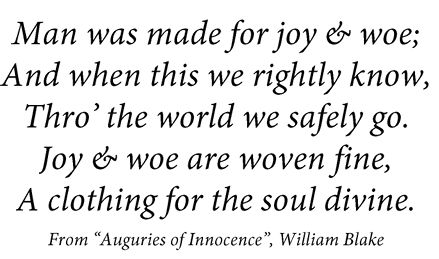 It’s astonishingly difficult to be human, to rise to this challenge foisted on us, perhaps by some contract, Faustian or otherwise, which we signed long ago, before birth, and have since forgotten. So of course we just get on with it, perhaps seeking wisdom from sources outside our own instincts, perhaps just having the nearest influences beat and mould us into shape.
The day before yesterday I realized I must have unknowingly broken a bone in my foot. I could not walk without limping in agony. I could have pointed out the precise position of that bone to a doctor, had I been able to walk to the surgery, which in fact isn’t far. It’s nearer than where my car is currently parked, but in the opposite direction. Stymied. As the day progressed, the pain lessened. As my ability to seek medical aid increased, my motivation to do so diminished. Murphy’s law: you can’t go to the doctor unless you are well enough. So what I must do is give thanks for a miracle, my unattested broken bone having healed itself in record time; my medical record saved from another instance of Vincentian hypochondria. For anyone who has time to follow the links embedded in my posts, I do recommend this one from Roddy Cowie, a psychologist who says “There are lots of obvious connections [between symptoms and emotions, and the frustrating thing is that people don’t have the background to see how obvious the connections are. People seem to find it puzzling that emotion can affect your health. . . .”
Ellie said to me in an email, “looking at my words in Divine Economy, they sound too positive: as if I were avoiding the darker, troubling side of life.” That is something to ponder on endlessly, as are the words of her book. Its entire text, discounting table of contents and list of image sources, amounts to 552 words: sufficient to encompass her topic. Their composition may have taken her seven years.
Why did those words need to be said? Why do they strike a chord deep within us? Why is there a Divine Economy, in addition to this mundane economics which gives us so much trouble in this world that like pain and death adds to “the darker, troubling side of life”? Why is it puzzling to accept that emotion can affect our health? Why is the human animal so plagued with emotion anyhow? Why do we have symptoms? What does the dark, troubling side of life tell us? Are there more questions than answers?
There must be some kind of way out of here,
Said the joker to the thief.
(Bob Dylan, “All along the Watchtower”, best known in a version played & sung by Jimi Hendrix)
Yes, joking apart, there is.
—————
* Links in my previous post now highlighted.
 a wayfarer’s notes