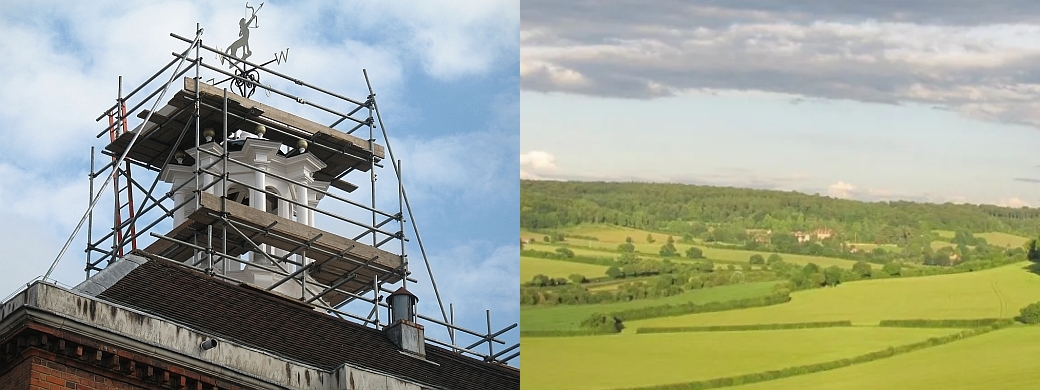


There was a programme on BBC Radio 4 about the writing life. At this moment, it’s only available to “listen again” for another five days, so I’d better get on and publish this. In any event, I’ve made a transcript of the important bit. It starts at 22:26 and you can hear the full audio programme here: “Thou Shalt not Bore”.
Martin Amis: We ought to say that though it’s a wonderful life, I think, being a novelist, it has its fair share of suffering and that in fact the two ingredients that make up a novel are a) exaltation and b) anxiety. But that suffering, the anxiety, is as big an ingredient as all the inspiration you’re ever going to get. With my last novel, Lionel Asbo, I came to the end in nearly a year and thought it was almost done, just polish it, and then revising it took another year. And a writer friend said “What did you have to put into it that wasn’t there before?” And I said, “Anxiety.” I had written the first draft with a certain euphoria, because I was very astonished to see that the novel was sort of there—and it was based on a quite tenuous idea—and then I realized I just hadn’t done the suffering. And by Christ, I did suffer. And the only way you can suffer is to suffer as writers suffer, i.e. you sit down to write a scene and it’s completely dead. Norman Mailer said, “When you come to a scene, you expect your subconscious to have prepared the ground.” And it even led me to offer a definition of writer’s block, which is when the subconscious goes dead.
Robert McCrum: And this happened to you with . . .
Amis: It did, yeah. Do the suffering and . . . Often the suffering entails a nadir, which is, you think, “this novel is no good. And, come to think of it, all my other novels are no good . . . (pause)”
McCrum*: . . . “I’m no good!”
Amis: “I’m no good.” (They laugh) When you get to that point, you can begin.
I listened to the programme in the car, mostly stationary after I’d reached my destination. I’m no novelist but I always find an affinity with Amis, as a writer and as a person, though the personal knowledge comes only from such interviews and his memoir, Experience. Exaltation and suffering are the ingredients in my own writing, too. I’ve been to zenith and nadir—all the way to “I’m no good”—several times in the last few weeks, trying to put a polish on my magnum opus. The process may take several years, so the important thing is to retain the impetus, then attain the steady rhythm of a long-distance runner. There will be a book; it may be like no other.
After listening to the programme, I still had an hour free. I could have gone to the waiting-room as on previous occasions, but this time I went for a walk instead. I took along two electronic companions. One was my Sat-Nav (GPS device). This was to help find my way back. It gives you a glorious freedom where you can just go, no matter where, just follow your nose without a care (walking being already a hundred times freer than driving, at least where I live.) The other companion was my voice recorder, so much more faithful than a camera in helping capture the moment. This is what I said, with a little editing for coherence:
I realized it was the only way I knew how to write—short yet rambling essays.
And when this [book] is done, I could start to write another. And I could also write it [first] on the blog, just as before. Interactive, a conversation with the reader.
There’s a special euphoria that comes from just walking. Here I am. Walking the face of the earth. It is a kind of Zen meditation, I’m sure. You just do it. Everything else is a sort of plus. There’s no particular thing [e.g. purpose] attached to it. . . .
Some times I want to take a different route. And some times I want to follow an old route. It varies between the two. Because in a way, it sometimes doesn’t make a difference where you’re going. You’re there, you’re walking the earth, and there is meaning, just in doing that. Or whatever there is, whatever happens, it has enough meaning.
But the idea of meaning is far too intellectual. It requires far too much education—of some sort or another. [What I want to say is] Beyond meaning. There is just a sense of one part of creation—me—within the rest of creation. I’m devoured, swallowed up by creation. In fact [I was] never separated from it in the first place.
[Meaning is a kind of explanation but] In fact nothing can explain it. But I think it’s when you are carefree. You have left those cares behind. And if it’s a [relationship with] God that can do it, then, yes, you should believe, believe. Because that is what you do. [First] You learn it, and then you strengthen it. And then it holds for you. It’s strong. I don’t have that. I don’t know what I had, ever. [My beliefs were quite vague, rudimentary.] But I think the strongest thing is walking on air. So that is my title [for this post]. Nothing but my own body, my own two feet, my life, my mortality, and being buoyed up by this creation. It doesn’t need some special belief—as you might say, in the force of gravity or even of antigravity—which you might call levity. Levity is another thing. . . .
I don’t know if the above conveys the exaltation of that hour’s walk. In any case, the suffering—sinking down to the inevitable nadir of “I’m no good”—followed later in the day. And so it will go on, I guess, until the work is done. In the meantime, I’ve stopped agonizing about anything I publish here. Some readers may bear with me, I guess. Perhaps fewer than usual.
——-
* I later looked up Robert McCrum, learned about his stroke in 1996, found an article he wrote in The Guardian, Sunday 25 May 2008, which starts as follows:
I’ve read somewhere that, across the world, there are about 175,000 new blogs launched every day. That’s two new blogs a second, a truly awesome statistic from the global IT revolution of our times. Since I joined The Observer as literary editor in 1996, the world of print seems to have been in continuous transition. From an historical perspective, I have had the professional good fortune to live through the biggest IT development since Caxton and Gutenberg about 600 years ago.
There are times when I re-read something from my diaries that is difficult to see through the unsought liquid that pervades my eyes. It is not that I feel I have written something wonderful and uplifting. Rather it is that something “other” fed those words through my fingertips.
I had the same experience when I read this post. The inner knowledge, understanding and wisdom became plain to see….and there was a 'meeting'. You write exceedingly well.
If I perceive that my writing is going well, I pat myself on the back and feel good about myself and take full credit—if I think that the writing is going poorly, I relinquish any responsibility, and assign all blame to the pen. i.e. “The pen is sluggish this morning—the ink is not flowing properly…”
Nice post, Vincent
Pardon the Blake:
“The man
who never alters his opinion is like standing water, & breeds
reptiles of the mind.” from Marriage of Heaven & Hell
It's great that you found your broadcasting soul mates.
There was something else on the radio about writing, where Deborah Mogarch talks about the end informing the beginning and the complications that can be posed if a writer started at the end as sometimes happens. Also, a sentence informs and leads into the next one, was the other little gem.
Hillary Mantel talks about every word being in the right place.
Writers' 'itiches' can go on non stop. What they do seem to have in common is creating angst in one form or another in order to 'mature' into their prosaic characters. We hear that other artists, including fine artists, are bound to do the same if they are to succeed.
Someone else (can't remember who) stated that when the book is finished, it is the end and stick to it (I paraphrase). I can think of an author I like a great deal, where with one of her books she did not, or could not release herself from. It was at least 150 pages longer than it needed to be, it almost lost the plot, I think. I also discovered that there were ten pages missing about 2/3 through the book. I decided just to read on; you know what, it did not matter a jot. In my view, that book would have benefitted from some editing. Later books by the author have been much slicker.
Conclusion; create a work flow, be anxious. At the end, end it and let go your anxiety
Il est un curieux phénomène que j'ai subi.
Jusqu'à début 2007, je ne savais écrire que des rapports, des compte-rendus et des notes techniques (Ma formation d'ingénieur était totalement éloignée de toute autre chose que la technique…
Et, en mars ou avril 2007, m'est arrivé cet accident vasculaire cérébral (stroke).
Brusquement, je ne comprenais plus les documents techniques que je lisais et mes centres d'intérêts devenaient l'écriture, l'émotion, l'esthétique.
C'est ainsi que je me suis mis à écrire tout autre chose que précédemment : des textes venant de moi, toujours sous le coup de l'inspiration…
Je pense que l'activité de mon cerveau s'est déplacée de l'hémisphère cérébral gauche à l'hémisphère droit, pour “compenser” en quelque sorte…
La fin de mon activité professionnelle s'est terminée en courriers polémiques très sarcastiques, très caustiques, avec mes interlocuteurs, que j'ai écrasé par la “magie” de mes textes très incisifs… Choses que je n'aurais jamais su faire avant…
I underwent a curious phenomenon.
Till the beginning of 2007, I only knew how to write reports and technical notes. (My training in engineering had no connection with anything outside technical subjects.)
Then in March or April 2007, I had this stroke.
Suddenly I could no longer understand technical documentation, and my interests became centred on writing, emotions aesthetics . . .
Thus I started to write quite differently from before: the material now coming out of me, always flowing from inspiration …
My professional activities came to an end with a series of sarcastic letters, full of polemic, in which I “crushed” my correspondents with the “magic” of my incisive writing … stuff I could never have done before