
 A year ago, Bryan White and I collaborated on an ambitious book project. I can’t quite recall the start point, though I think it originated in a conversation conducted in the comment columns of this site. Not surprisingly in hindsight, it soon foundered, but its remnants are a matter of public record as a blog titled Strangers in Paradox.
Though I’m hazy about its starting point, I feel pretty clear about the sticking point. We couldn’t agree on reality. To put it simply, Bryan saw reality as something objective: out there, independently of how we see it, or even whether we see it or not. I had significant reservations about that. I saw reality as the sum total of what we actually see, or perceive with our other senses. But I think we disagreed just as much about the role of reason. Bryan saw the ability to reason as the source of human mastery over nature. I saw reason as a servant, neutral in itself, but taking its colour and tone from its master—which was usually self-interest.
So we were deadlocked, both getting impatient because we each wanted to move on to the more interesting stuff. It wasn’t turning out to be the kind of fun we had envisaged in the first place. It may have been intended as more than idle fun: to put down a marker, to publish, to earn some reward in recompense for our labours. But that was then. The tides come and go, recycling the castles we build in the sand.
Recently I stumbled upon The View from Nowhere, by Thomas Nagel. It’s a pretty solid piece of original philosophy from a great teacher (Professor of Philosophy at New York University). Reading it—I’m still only halfway through—I realize that Bryan and I were strangers in paradox indeed,
For Fools rush in where Angels fear to tread.
In his book, Nagel recognizes the precise nature of the sticking points which Bryan and I encountered. It is as if he heard our squabbles, gathered us together and said “Now, children! It’s wonderful that you’re taking such an interest. Let me tell you how it actually is.” He had to start at the beginning, with the birds and the bees, so to speak, in order to work up a context. So let me start at his beginning, at Chapter 1, Introduction, first paragraph:
This book is about a single problem: how to combine the perspective of a particular person inside the world with an objective view of that same world, the person and his viewpoint included. It is a problem that faces every creature with the impulse and the capacity to transcend its particular point of view and to conceive of the world as a whole.
In that very first paragraph I was smitten, dear reader. He nailed the problem, and did it with such precise generality that I wanted to embrace him there and then, or—because we must all behave appropriately these days, even in our use of metaphor—fall at his feet. Till that point, my hero had been Ludwig Wittgenstein, but that’s another tale:
for I loved the man, and do honor his memory on this side idolatry as much as any
—as Ben Jonson says of Shakespeare. Nagel likes Wittgenstein too, but he’s his own man, listens to all the philosophers but lets us know where he stands: probably nearer Bryan’s side than mine, in our Strangers days. This is a salutary experience for me. He’s comfortable with the notion of objective reality. It sits there outside us, unaffected by how we see it. This makes him a realist, where I had been teetering on the idealist side.
But then, having admitted there’s an objective reality, he undertakes the task of exploring what it includes, and if there is anything outside its borders.
This is where it gets interesting, to me at any rate. He contrasts the objective and the subjective. The subjective is all about me and what I see: my world, my optical illusions, my hallucinations, dreams, beliefs, values, emotions and so on. Yes, these are part of the totality. They cannot be excluded. He makes the important distinction between appearance and reality. Can there be an objective reality which no one can see? Yes. But how can we know it? I’m not about to tell you in a few words when he takes a whole book; but any rate, he knows how, and how to explain it to us. He is comfortable with the subjective too. It shows us the world of appearance; but that’s a world of understanding and explanation as big as the objective one. You wouldn’t believe how involved it gets, how surprising, how paradoxical, how magical. Sorry about the “magical”. I’m sure he doesn’t use that word, but for me, it accurately reflects my state of mind sometimes. I think even Nagel will agree with me that magic, like  beauty, is in the eye of the beholder. But the crux of the matter is in that Introduction quoted above. An objective view of the world should include the individual person and his viewpoint, i.e. his subjectivity, with all it contains. (Freud, for example, tried to be objective about the subjective. Poets don’t bother.)
I can imagine regular readers of this blog not being as excited as I am about these matters. Well, you haven’t read the book. (I didn’t find it easy to acquire. It was expensive so I borrowed it from a library in a distant county. It arrived well-worn, with a broken spine, but was so gripping I acted on impulse and bought the Kindle version from my cosy bed at midnight.) Nagel has written simpler books, for example What Does it All Mean?: A Very Short Introduction to Philosophy. Amazon’s “most helpful review” helpfully advises: “If you have already studied philosophy you will almost certainly find this a little too basic.”
I don’t think there’s a single area of public conflict that isn’t profoundly illuminated by The View from Nowhere. Admittedly, it would be of no interest to a hunter-gatherer, or a peasant tilling the fields, or a young child, or someone who says, “I don’t care what anyone else thinks: I’ve made up my mind about everything that matters. People who don’t agree with me are just plain wrong.”
To someone like me, who already thinks that being human is very complicated, Nagel shows how it’s a lot more complicated than ever I thought. That is to say, whenever we satisfy ourselves with glib opinions, the risk of being wrong is huge. Not that he has all the answers, or indeed any. He shows that the paradoxes cannot be resolved, not now at any rate:
The strange truth seems to be that certain complex, biologically generated physical systems, of which each one of us is an example, have rich nonphysical properties. An integrated theory of reality must account for this, and I believe that if and when it arrives, probably not for centuries, it will alter our conception of the universe as radically as anything has to date. (Page 51)p>
Nagel’s book is so full of startling ideas that I cannot possibly do them justice here, but let me briefly air just one of them. He’s a critic of the explanatory power of Darwin’s theory of natural selection:
The possibility of minds capable of forming progressively more objective conceptions of reality is not something the theory of natural selection can attempt to explain, since it doesn’t explain possibilities at all, but only selection among them. (page 79)
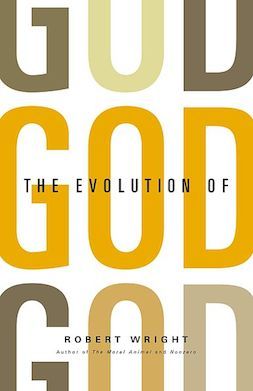 So where do the possibilities come from? No glib answers please, unless you can show you have read the book. I probably haven’t succeeded in conveying what’s so good about it, but I must publish this today. I just picked up another book from the library (see pic at right), one which threatens to muddy the waters into a great swirling cloud of intoxicating ideas, which will inevitably behave promiscuously with those of Thomas Nagel and myself in an orgiastic threesome whose scintillating highlights I may not have energy left to record for your edification, dear reader.
Excellent, excellent post!
Reminds me of what I said a few months back about that old riddle, “If a tree falls in the woods, does it make a sound?” It's points like these where we butt out heads (not just you and I, but everyone) at the difference between the subjective and objective, where the line between them gets blurred. The riddle's answer rests entirely on whether sound is something that exists out there apart from anyone, or whether it exists completely in our experience of it. I would believe, naturally, that the waves that give rise to the sound exist on their own, but whether that can be called “sound” without a benefit of an ear to hear it is, honestly and humbly, beyond my power to answer. One could almost right this off as an argument of semantics, but you and I (and Mr. Nagel too, it appears) know there's a lot more to it than that, don't we?
Reminds me of the never ending pursuit of enlightenment.
Is it better to immerse yourself in the chaotic world of human society or adopt a reclusive posture on a mountain somewhere? Which perspective provides a path to enlightenment?
Should we believe our lying eyes? or examine the subject scientifically to determine it's true nature?
The possibilities (of perspective and insight) appear endless. And yet, we can be so sure of ourselves at times. And we must, in order to have the confidence required to navigate through life.
These are good questions, Charles. I'll ask you another. What is enlightenment? And (depending on your answer) how do you know it exists – objectively, I mean?
Glad you liked it, Bryan. I'm thinking of adding an addendum, which chimes nicely with your “Deathbed” post. Or perhaps I'll sketch it in here. He considers the problem of human identity, the link between mind and body, and “whether it might be possible for my mental life to go on in a different brain.”
Even more spookily, referring to the speculations of another writer, Parfit, he talks about replication of a human being. He ends by saying:
“But I also think now that the series-persons themselves, if they were of human origin, might simply be deluded to think they survive replication–and that like us, they would not be entitled to the 'Phoenix' concept of themselves.”
All this was in an end-note.
I don't think the questions is whether or not it exists, rather, is it attainable?
Perhaps it is, but through a small window, and for a very short time. And these moments can provide clarity.
If enlightenment is unattainable I'm not sure how one can prove that it exists. And I still want to know what it is.
But as you are talking about something that can be perceived through a small window for a very short time, a glimpse beyond the subjective and the objective, both at the same time, I'd agree with you that that exists. Unless I am mistaken, it's something I've tried to describe here a few times.
But I would not want to call it enlightenment, in case that got confused with the Buddhist nirvana. Yet it might be synonymous with the Zen satori.
Oh, the trusty OED (I mean Oxford English Dictionary, not Online …)! It says:
SATORI: A sudden indescribable and uncommunicable inner experience of enlightenment.
I don't think the existence of that is to be doubted. Even if a neurologist were to reduce it to a sneeze in the synapses.
When I hear about “attaining enlightenment”, it makes me think of that euphoric moment of clarity that some people talk about experiencing right before having a seizure or a stroke.
Me, I'm just curious and interested. I feel like it's out there, and you go looking for it. I can't really conceive of enlightenment as something you “attain” by sitting around humming with your legs crossed funny. I just think of enlightenment as another one of life's moments, here and there. You have epiphanies and inspirations and realizations. I was talking with someone earlier about when I finally understood how the Monty Hall Problem works, how it was like a switch going off in my head. It's little things like that. Sometimes it's abstract and intellectual; sometimes it's more personal and spiritual: The rain and the light come together in a certain way that makes you feel giddy for some unaccountable reason, or maybe you notice some expression in your child's face that reminds you of your spouse that you never saw before and for a moment everything has this weird glow and you have to catch your breath. But this idea that there is this one, over all, all-encompassing enlightenment that can strive towards just sounds like a big load of horse pucky to me. I'd hate to even think that there was such a thing. I'd hate to think that you could take this big messy business that we call life and bundle it all together into one big monolithic thing. It feels cheap and sterile to me.
Also, I don't like how passive and finite it sounds. I feel like it leaves creativity out of the picture. I don't just want to know the grand sum total of all things; I want to make something new to add to it. And I don't think that there are any limits to the possibilities of what that new thing might be. To say that enlightenment can be “attained” suggest that you can put a cap on all that, bottle it, hold it all together, not just all that is but all that could possibly be. I don't believe that, not at all.
Great post! I will watch out for Nagel. In my great ignorance I've never yet grasped why realism has any case to answer, or (which is the same thing) why idealism has any case to put. It sounds like Nagel would explain the fundamentals of the issue with reasonable patience and impartiality.
Idealism has always been my Achilles heel, Michael. From an early age I was drawn to things mystical and as I grew to man's estate I discovered that such things had no place in a materialistic view. They were like light and darkness: when one enters the room, the other flees. So Nagel is like an answer to my unspoken prayer. (I'm sure I've said this before somewhere, about unspoken prayers you're unaware of having uttered till they're answered.)
Bryan, right after this I must look up the Monty Hall problem. Pucky I can guess without looking up. In fact, if I looked up, I might accidentally walk in it.
I applaud your brief critique of Buddhism and the like. Yes, widening the topic a little, anyone puts their hope in 'attainment' is someone who looks up all the time, (“I will lift mine eyes up to the hills, whence cometh my help” Ps. 121), whilst obliviously stepping straight into the horse pucky.
“Yes, widening the topic a little, anyone puts their hope in 'attainment' is someone who looks up all the time, (“I will lift mine eyes up to the hills, whence cometh my help” Ps. 121), whilst obliviously stepping straight into the horse pucky.”
Ha, that's a good way of putting it.
It sounds to me that Nagel just did for philosophy what Heisenberg did for physics… pointed out that just by observing your philosophy you alter it slightly. And by having someone else observe it, it alters even more.
Quantum philosophy.
Some may also describe it as consciousness. Perhaps a less contentious and more accurate representation.
I'm afraid the universe is too vast for us to comprehend in it's entirety. As a result, we can only be aware of a small portion of it at any one time. In many cases, it is impossible to accurately perceive reality in sufficient detail to grasp the true nature of it.
We each have a unique frame of reference. And, as intelligent beings, who have the collective knowledge of our ancestors to draw upon, we have the ability to be conscious of a remarkable scope of our universe.
However, we are flawed. Inhibited by our egos, emotions and prejudices, we can easily misinterpret, filter or misrepresent reality.
I am drawn to philosophical views that challenge my own perceptions, but limited in my ability to adopt them.
I think Dave sums it up nicely.
To call it consciousness might be a more contentious representation, I suspect; for the OED doesn't list a meaning for the word which approaches what we're talking about. But it does talk of “consciousness-expanding”, i.e. psychedelic.
I'm interested when you say that we are flawed, meaning by “we” the whole human race. Now that is rather contentious. Is a bicycle flawed because it's not a Cadillac? No. Is a slug flawed because it can't move fast, has no weapon to resist predators? No. I say this because bicycles and slugs have survived. They continue to survive.
Perhaps a typewriter is flawed because it can't do what a word processor can. Yes, but this is only true in retrospect.
But as always you have interesting points to make. Nagel – let's not forget him, the patron saint of this post – points out all sorts of irreconcilable differences within the “unique frame of reference” which “we each have” – quoting your point above. We can see subjectively and objectively, a kind of binocular vision where the two images never quite coalesce. We are forever split.
And if you are suggesting that the flaw consists in our egos, emotions and prejudices, and their tendency to misinterpret, filter or misrepresent reality, you may be unconsciously reflecting a religious viewpoint, whether Christian (flawed by original sin) or Buddhist (flawed by our earthbound karma). And I would dispute both those viewpoints.
I love your penultimate para: drawn to views that challenge your own perceptions, but limited in your ability to adopt them. Absolutely. Just as I am drawn to beautiful women in the street but limited in doing
anything about it more than slyly looking.
By Dave, I assume you mean darev2005?
Rev, your quantum philosophy puzzled me for a while, and I thought you were making a dazzling leap into genius without revealing any intervening steps.
But then I thought you must be referring to the “orgiastic threesome” I referred to in my piece. Needless to say that was an exaggeration, because it can't really be demonstrated that Robert Wright and Thomas Nagel have altered their philosophy as a result of my reading their books. But I cannot prove that their philosophy hasn't been altered in that process, either.
For the philosophy doesn't reside in the alphabetic marks on the page, only in the understanding of the writer or reader. And that never stays still.
So in that sense, philosophy has always been quantum philosophy, only nobody has bothered to point it out. It's only extraordinary when it occurs in physics.
Am
of course
a
stranger
among paradoxeis:
Would, perhaps
prefer to spend time
among doxies.
* oops – paradoxies
Paradoxy: specially-trained emergency harlot, esp. one dropped by parachute. cf Paramedic.
Or perhaps summoned up by a pact with the devil:
Faust. One thing, good servant, let me crave of thee,
To glut the longing of my heart’s desire,—
That I might have unto my paramour
That heavenly Helen, Which I saw of late,
Whose sweet embracings may extinguish clean
These thoughts that do dissuade me from my vow,
And keep mine oath I made to Lucifer.
Meph. Faustus, this or what else thou shalt desire
Shall be perform’d in twinkling of an eye.
Re-enter HELEN
Faust. Was this the face that launched a thousand ships
And burnt the topless 2 towers of Ilium?
Sweet Helen, make me immortal with a kiss. [Kisses her.]
I don't know where the 2 crept in between topless and towers. So much for paracopy&paste.
(am guessing that Helen had two tits. Wry, perhaps evil, grin).
(um, breasts, not small birds).
Davoh, this site is intended to inflame the intellectual and spiritual appetites, not stimulate the fleshly nerve. Where might we end up? Some puritan might complain to Google, and then you'd have to deal with this kind of warning:
“The blog that you are about to view may contain content only suitable for adults. Blah blah …”
And then you'll have to click a button:
“I understand and I wish to continue.” OR
“Oh-oh. Get me out of here, fast!”
Ha, I waiting to get one of those warning screens one of these days if I keep pressing my luck.
You ever check out the Monty Hall Problem there Mr. Vincent? You never know. It might set you on the path to attaining enlightenment ;D
Yes, I did check it out, that is, I read the Wikipedia article.
When I read that “even Nobel physicists systematically give the wrong answer, and that they insist on it, and they are ready to berate in print those who propose the right answer,” I questioned my own motivation. There are lots of easier ways to set switches going off in my head.
Tony Blair is famous for saying “I think that most people who have dealt with me think that I am a pretty straight sort of guy – and I am.”
There are people who have dealt with me that might think I’m a pretty rational sort of guy, and others who might think the other. I don’t need to prove anything, especially something difficult, like proving I understand maths better than Nobel physicists.
Or as Nagel said in The View From Nowhere, “people who want to be able to run twenty-six miles without stopping are not exactly irrational, but their reasons can be understood only from the perspective of a value system that some find alien to the point of unintelligibility.”
To this observation, he adds a mysterious footnote: “though one never knows where it will strike next: it’s like Invasion of the Body-Snatchers”.
It's not as daunting a thing to figure out as the “Nobel physicists” might lead you to believe. It's just a bit counter-intuitive and your own natural assumptions block you from seeing it. It's actually pretty simple. I'd suggest Youtube over Wikipedia. It helps to SEE it explained, rather than just read it.
But hey, it's not like the world's going to come unhinged or anything if you don't. So I can understand taking a pass.
This comment has been removed by the author.
Hmmm, maybe I could take a quick stab at it.
The Monty Hall Problem gets its name from the show “Let's Make a Deal” upon which it's partly based. It describes a scenario where a contestant can choose between three doors:
(1)
(2)
(3)
There is a genuine prize (like say, a big bag of money) behind one of the doors and bogus prizes (like say, a pair of novelty dentures) behind the other doors.
The host knows all along which door the real prize is behind (this is a key point.) So when the contestant picks a door, the host opens one of the other doors which he knows is one of the two with the novelty teeth behind it. Thus, he narrows down the possible location of the bag of money to two doors rather than three:
Contestant picks door:
(1)
(2)X
(3)
Host reveals novelty teeth behind door #3:
(1)
(2)X
(3)Dentures
Now two doors remain:
(1)
(2)X
Here's where it gets interesting. The host now gives the contestant the choice to stick with the door they've chosen, or to switch to the other door. At this point, most people assume that the odds are even for the bag of money being behind either door. Makes sense, right? Two doors. One of them has a bag of money. The other has a pair of fake teeth. 50/50. So, all things being equal, people figure they might as well stick with their first choice and take their EVEN chances.
Well, turns out their wrong.
The odds are actually 2 to 1 in favor of the bag of money being behind the OTHER door, the one the contestant hasn't picked. It's here that many people have a hard time accepting this.
The easiest way that I can explain it is that that when the contestant makes their initial choice, they have a 1 in 3 chance of picking the right door, and they separate the doors into two sets, the one they picked and the other two doors:
(1)
(3)
&
(2)X
Since there is a one in three chance of the money being behind any of the doors, that means that there is a 2/3 chance of it being in Set (1)(3) and a 1/3 chance of it being in Set(2)
Now, it's a foregone conclusion that at least one of the doors in Set(1)(3) has a pair of dentures. So when the host reveals the dentures, it does nothing to alter the odds.
66.6%
(1)
(3)D
&
33.3%
(2)X
66.6%
(1)
33.3%
(2)
And voila'
There are many different ways of explain it, but they all arrive at the same conclusion. It's coming to see and accept the conclusion that can be difficult sometimes. That's the switch. Well, maybe not THE switch. Just a switch. One of life's many switches.
If you have Nobel Prize-winning doubts about the veracity or any of this, I can promise you that I demonstrated it conclusively to my daughter in practice. I took three playing cards, one Ace and two Jokers. I picked one of the cards blind. Then I showed the other two cards to my daughter (their backs still facing me) and told her to eliminate a joker. As predicted, 2/3 of time the Ace was the remaining card that I hadn't picked.
I never had any doubts about the veracity. I just couldn't summon the motivation to make the mental effort. But now, thanks to your explanation I get it. Even though I think your explanation is wrong.
The initial odds of winning are 3 to 1. You said “So when the host reveals the dentures, it does nothing to alter the odds.”
No, the odds are now 2 to 1, because that door has been eliminated as a choice.
By choosing again, the contestant takes advantage of the improved odds; even though choosing again in some cases might mean changing from a right choice to a wrong one.
I am indebted to you, dear Bryan, for a moment of enlightenment.
But another one was Rev's mention of “quantum philosophy” and the reverie it inspired as reported in comment above.
Well, to be precise, I was talking at that moment about the 66.6% odds of the card being in Set(1)(3), not the player's overall odds of picking the bag.
As for the player, yes, his odds are 1-in-3 of picking the bag at the outset. I would say that his odds of winning the bag stay the same after the dentures are revealed IF he sticks with his initial choice. However, if he switches, his odds are now 2-in-3.
But the point is that you get it, which I knew you would. It's not all that complicated. I have a hard time believing that there are Nobel Prize-winning physicists who can't wrap their minds around it. Perhaps someone spilled a little hyperbole over a Wikipedia.
Also, I can see how you'd say that the odds are 1-in-2 after the host eliminates one of the doors with the dentures. There are 2 doors, so now the odds are 1-in-2, right? But that's precisely the mistake that you don't want to make here, because it leads you right back to the idea that the odds are even that the bag is behind either of the two doors. This is where everyone's mind slams on the brakes, because it seems like simple basic common sense. It's behind one door or the other. 1-in-2.
But look at it again. The player picks a door at the outset. There is a 1-in-3 chance that they have the right door. Conversely, that means that there's a 2-in-3 chance that he has the wrong door. In other words, there's a 2-in-3 chance that it's behind one of the other doors. And bear in mind, we say this already knowing that there is a pair of dentures behind at least one of the other two doors. So when the host reveals these dentures, it comes as no surprise to us. The odds are still 1-in-3 that the player picked the correct door at the outset, and still 2-in-3 that they picked the wrong door. In other words, the odds are 2-in-3 that the bag of money is BEHIND THAT OTHER DOOR.
So the odds are 1-in-3 for the door the player has picked, and 2-in-3 for the door he has not. The odds are never, ever, ever 1-in-2 in this scenario. Now if the the host was to shuffle the remaining two doors and the player was to make a fresh pick, then yes, the odds would then be 1-in-2 of it being behind either door. As it stands though, it's 1-in-3 for one door and 2-in-3 for the other.
See, that's where we struggle, with this idea that the odds are contingent upon the observers, i.e. what they know or don't know and the choices they've made. It all sounds downright Heisenbergian, does it not?
I assure you though. It can be demonstrated conclusively in practice. It holds up perfectly.
P.S: I split this rather fine hair just to make the point that if the player switches after the reveal he isn't taking advantage of 2 to 1 odds(as you said), but rather 3 to 2 odds.
P.P.S: I think the problem is that you're looking at it like a simple matter of a door being eliminated and the player being given an option to choose between the two remaining doors. If that were the case then, yes, the odds would be 2 to 1, 50/50. Everyone from the Nobel Prize-winning physicists to the average Joe on the street would agree to that. There's no big mystery in seeing that.
BUT THAT'S NOT WHAT'S HAPPENING. The player isn't being given a fresh, blind, choice. He's being given the option to stick with his first pick or switch to the other, and it's seeing how that tiny little stipulation makes all the difference in the world, THAT'S the hard part.
Right, I see that I oversimplified it.
And I see how important it is to a professional gambler to have a proper understanding.
I'm not quite at the stage of understanding Heisenberg and his principle, or Schroedinger and his cat, but I do like Nagel's point that Nature's natural selection can only choose among the available choices.
As I understand it, the range of choices arises through random mutation as well as the combination of existing genetic traits.
I like to think of mutations as jokers in the pack. But that's probably an analogy of little value.
Thanks for the enormous trouble you've taken on this.
Oh good. I was all set to take one last run at it and explain that the host's choice of which door to eliminate depends on which door the player initially picks, and how this is a crucial point. If the player picks the bag of money then the host can eliminate either of the other two does, leaving the other set of dentures behind the remaining door. But this scenario only has a 1-in-3 chance of happening because it depends on the player picking the bag of money from the beginning. However, if the player picks one of the dentures at the beginning then the host has to open the remaining door with the dentures, leaving the bag of money behind the remaining door. This scenario, of course, has a 2-in-3 chance of happening because it happens any time the player picks a door with dentures at the beginning.
So, you're right, it isn't exactly Heisenberg. That was a bit of exaggeration on my own part. It is pretty damn confusing though.
And wow, I'd almost forgotten the whole reason that I'd brought this up in the first place. The point, as I seem to remember, was that even something as superficial and inconsequential as this can bring a kind of “enlightenment”, a kind of “Ah Ha!” moment where it falls into place. I was saying that I see enlightenment as a random scattering of such moments (some of the undoubtedly more significant and profound than other) rather than one end-all be-all key to the universe.
Free access to most of THE VIEW FROM NOWHERE.
http://books.google.com/books?id=AsL1EQ0D0wgC&printsec=frontcover&source=gbs_ge_summary_r&cad=0#v=onepage&q&f=false
Thanks for the link, Ellie. Google Books is an excellent resource for sampling without buying.
“This page intentionally left blank.”
That cracked me up for some reason.
I'll have to figure out how to view this on my phone, so I can look it over at work.
Is NOWHERE not a part of the physical world of time and space?
Ian Marshall and Danah Zohar wrote a book, Who's Afraid of Schrodinger's Cat, to explain the concepts of the new physics in the context of classical science. This quote crosses the dividing line between physics and cosmology:
“In Quantum Field Theory, things existing in the universe are conceived of as patterns of dynamic energy. The ground state of energy in the universe, the lowest possible state, is known as the quantum vacuum. It is called a vacuum because it cannot be measured directly; it is empty of 'things'. When we try to perceive the vacuum directly we are confronted with a 'void', a background without features that therefore seems to be empty. In fact the vacuum is filled with every potentiality of everything in the universe.
“…Unseen and not directly measurable, the vacuum exerts a subtle push on the surface of existence, like water pushing on things immersed in it . … It is as though all surface things are in constant interaction with a tenuous background of evanescent reality. …The universe is not 'filled' with the vacuum. Rather it is 'written on' it or emerges out of it.”
Blake
Milton, Plate 26 [28], (Erdman Page 123)
“And every Natural Effect has a Spiritual Cause, and Not
A Natural: for a Natural Cause only seems, it is a Delusion
Of Ulro: & a ratio of the perishing Vegetable Memory.”
Ellie, there is so much in what you say. You prompt me to respond in terms that I hope are not too much at cross-purposes with yours.
I think Nagel’s Nowhere is a viewpoint, one that’s just outside physical time and space. The primary axis of his book is subjective<->objective. Subjective is easy to identify: it is my viewpoint at the centre of my own universe, making sense of it from instinct, personal experience and sense-inputs. It’s a faculty that we have in common with the other animals.
As to objective, somehow we manage, or almost manage, to see things from a universal viewpoint, and thus glimpse reality as it truly is, free from the illusions and perspectives of subjectivity. Surely that is what Nagel means by “nowhere”.
However the book is also a critique of the world of time, space and matter as perceived professionally by physicists and evolved according to Darwin’s theory. If someone says that matter, time and space have evolved from the Big Bang, and that physics will one day be able to account for everything, (a quest which Blake astutely foresaw, arising from the work of Isaac Newton)—then, says Nagel, there must always be room in our concept of “everything” (the Cosmos) for the subjective view, i.e. the moment-by-moment experience of all the generations which have ever lived. Including, of course, all Blake’s visions.
I wonder if you meant that the “quantum vacuum” in your first quote equates to the “Spiritual Cause” in your second. After reading Peter Ackroyd’s biography Blake and Kathleen Raines’ William Blake, inspired to do so by your website, Iwent on to read James Gleick’s Newton. I think it would have been wonderful if those two enthusiasts, Newton and Blake, had been able to meet. I think they may have attained a rare understanding of one another, if Newton had come out of his shell; and consider it entirely possible that Newton would have understood and agreed with your quoted lines from Blake. For Newton, as Gleick points out, was himself a pre-Newtonian, in the sense that he didn’t live to see the extent of the scientific and cultural revolution he had set in motion. (He was the one who defined the word “motion” in its narrow sense! It meant all sorts of things before.)
If the objective viewpoint is based on sense-based data it doesn't help us escape from the subjective viewpoint. A non-sensory source of information must be postulated to escape from the prison of the material. Blake's objection to Newton's Laws of Motion was that they created a more secure prison confining man to a material interpretation of his experience. Blake recognised that time and space (the framework for matter) are not ultimate; his alternative was eternity (which like the quantum void can be 'written on' but not measured.)
Blake used poetic language rather than scientific language because he didn't desire single, simple definitions or descriptions. His symbols were flexible and open to containing varying content. The choice for him was not between subjective and objective but between sense-based and the ability to perceive the infinite. The imagination can be thought of as providing the connection between the individual and the infinite world of Eternity. Prophet that he was, he attempted the introduce his readers to the use of the imagination to enter a world of vision unknown to the 'senses five'.
On a vaguely jocular note – WOW, free dentures!
Could, perhaps, progress; in real life; with teeth. Has anyone noticed how 'teeth' are a prominent part of 'society'? Yep, am aware that this a sort of philosophical side-track – but, at a base level -teeth are the basis of defence and aggression.
David you have breathed new life into the Monty Hall problem. We must now imagine a contestant who has no use for the car but hopes to win a set of dentures. Bryan, please recalculate the odds. I see a fresh “aha!” moment on the horizon.
Thanks again, Ellie. I defer to your understanding on this. I don't imagine any better interpreters and champions of Blake exist than you and Larry.
Ha! I love it.
I wouldn't want to guess at the exact odds, but I'd say that if you have your sights on the dentures they're definitely in your favor.
Seven years later, I arrive here and marvel at the liveliness of the blogosphere in those days and wish i still had a notion of something that seems worth writing about. This is to you, Bryan. I’d like to write a post to gladden you, and dedicate it accordingly.
That’s a line from a poem written in the fifteenth century by François Villon. It’s hard to keep talking when no one is listening. I say that, but instantly know it is merely an excuse concocted to suit the moment, as I do several times a day.
[…] https://rochereau.uk/2011/12/04/john-grays-straw-dogs/ https://rochereau.uk/2012/11/01/the-view-from-nowhere/ https://strangeparadox.blogspot.com/ https://rochereau.uk/2012/11/19/the-evolution-of-god/ […]