

My last three posts must have acted on my subconscious like postcards from 1976, inscribed on the back “Wish you were here?”, for I dreamed of that time last night. I wouldn’t have the audacity to recount it without the pathfinding example of Bryan M. White’s Encyclopedia of Counted Sheep, which offers vivid proof that telling your dreams need not be a bore to everyone else. Before I tell mine, here is some background.
As in real-life, I was in a small project team, our task being to deliver to the client a “turnkey system”: the complete set of hardware and bespoke programs they’d need to automate their business.
We were Zeus-Hermes Ltd, situated off London’s Tottenham Court Road occupying premises previously used in the “rag trade” (fashion industry).
It was a cool place to work, with an open-plan central area for events (lectures or live bands) and themed buffet lunches to which we’d invite influential people like the editor of Computer Weekly. You’d have to dress properly for those events, but the company’s T-shirt, with pics of Zeus and Hermes* in purple on white, was considered formal enough. The project team reported to the salesman who’d made the contract with the client. So this was the deal: keep the customer happy and make sure they paid the balance owing, on that wonderful day when formal Acceptance of all our hard work took place.
In computing, 1976 was the year of the Mini. Till roughly that point, computers were for government and big business, housed in rooms whose air was cooled and filtered, staffed by trained operators handling punched cards, magnetic tapes and fanfold stationery. But now, we also had minicomputers †, needing no special room and supporting several VDUs† (visual display units) which sat on clerks’ desks. Direct input at last, no more punched cards or paper tape! We used to deliver a VDU to the Chief Executive too, but that was just for show: he wouldn’t know how to use it. This was before the days of PCs, but minis were the bridge to corporate computing as we know it today. Our group sold to outfits who’d never had anything smarter than a typewriter before. Typically we would automate their order processing and stock control functions—with rudimentary versions of the very same ideas which have made online businesses like Amazon the giants they are today. I have the distinction of having been in the vanguard of a brand-new new concept called “user-friendly”. It’s fanciful, but I even wonder, looking back, if we invented the term, in the actual team I led.‡ At any rate, I was good at putting it into the design: actually, it was my only strength, as I was very poor at programming. You could design a system which was so friendly it all but hugged and kissed the user; but the user would treat this interloper with cold disdain. Any software lacking user-friendliness had no chance at all. They were ditched at the first opportunity. So that’s the background.
OK, so here’s the dream
I’min a project team, we are lounging about chatting, in poses not unlike those in Manet’s famous Déjeuner sur L’Herbe, except that the young women in the team have clothes on, and we’re sitting on floor, not grass. Despite the relaxed attitudes, it’s a team meeting to discuss progress. I bask in the sense of togetherness and equality, as if we are jazz musicians jamming our improvisations. We respect one another’s zest, wit, and genius. There’s so much mutual admiration and complacency, we could easily forget our agenda.
I gradually begin to notice a phenomenon. Perhaps I imagine it, but it seems as though the others are imitating my own attitude, lounging on the floor because I do, coming up close so that our limbs touch; agreeing with me, or at any rate seeing things my way. I find it gratifying. Slowly it dawns upon me that in fact, I am their team leader. This causes me a secret anxiety, because it’s plain to me that a progress meeting must be based on target dates, and I don’t know what they are. Nor, in fact, do I have any idea of the requirement, the client, the hardware (ICL? Honeywell? DEC? Data General?) or the programming language (Business Basic? COBOL? RPG?); but these are mere details. I can surreptitiously pick them up from other team members: “Oh, Jack, could you pass me your copy of the spec? I don’t have mine to hand.” But I do need to know the delivery date, if nothing else! For if I am team leader, then I’ve already done the spec. My job now is to go out for pizzas when we work late, and make them feel good about working like demons: get the pace right, set the mood.
The frantic quest for the date is what wakes me up. In my dream it’s still February: 1976 not 2012. Are we to hand over to the customer on April 2nd? Then I must know today, as it will be very tight indeed. My other guess is April 23rd. That we can achieve, I’m sure. I’m surprised that Richard hasn’t discussed it with me lately. (Richard is my real-life colleague, who commissions me to do occasional jobs). Fully awake now, I’m still wondering for at least five minutes if I have an ongoing project involving a whole team. Richard & I had a long ’phone call the other day, even discussing his skiing holiday, but he never asked about this. Perhaps it was too obvious to be mentioned. It took a long time to become convinced that it was all a dream, a flashback to 36 years ago.
It really was like that in 1976. I was completely dependent on my team members and they were brilliant and I did admire them, and they were fiercely loyal to me, and I did bring them pizzas when we worked all night, doing things I never even tried to understand. And that was the best working experience of my career. Thank you, dream, for taking me back.
* Zeus-Hermes’ main business was to produce system software, as opposed to programs requiring the design of a direct user interface. There was much piecemeal development in the Seventies which has been rendered obsolete by the Internet & World-Wide Web.
† Minicomputer, VDU: the “Minicomputers” article on Wikipedia is defective in mentioning “market entrenchment” in the 1970s without a single reference to VDUs. The earlier mainframe generation depended on computer operators backed up by data entry staff using punched cards and paper tape. Once, the only input-output device was a teletype machine in the computer room itself.
 The whole point of the minicomputer in commercial use was to offer input and output to the user directly, based on a hierarchy of menus, which provided the gateway to user-friendly screens, and gave even some CEOs the illusion that they knew how to use a computer.
Look up “computer monitor” or “history of display technology” on Wikipedia and you get the same feeling that this bridging period is whitewashed out of the record. Yet if not for those days around 1976, when I and others showed that “ordinary people” could operate computers, and made it possible with our designs, you wouldn’t be reading this today on your own screen.
‡ From the Oxford English Dictionary:
User-friendly: 1. Computing. Of hardware or software: easy to use or understand, esp. by an inexperienced user; designed with the needs of a user in mind.
It goes on to log its first recorded use—in 1976. So there!

 a wayfarer’s notes
“We used to deliver a VDU to the Chief Executive too, but that was just for show: he wouldn’t know how to use it.”
This reminds me of the old Dilbert strip where they gave the pointy-haired boss an etch-a-sketch and told him it was a laptop.
LikeLike
“User-friendly” is a great term, and like all great terms it encapsulates a complex idea that would take three paragraphs to explain in a couple of simple, recognizable, words. Almost everyone understands what “user-friendly” means at the first encounter with it, without needing further explanation. It is itself a very “user-friendly” term.
As for the dream, it reminds me of a dream I occasionally have where I'm back at school all stressed out about some test I have to take. I didn't study; I don't know the material, ect. ect. But then it dawns on me. I already graduated! I'm just back at school visiting, just hanging out, just as a lark, just doing the work for fun. I can ditch the test in the trash if I want, because I already graduated.
I'm always left with an odd mixture of feelings after such a dream. One part relief, one part nostalgia, and one heavy dose of melancholy, because I think about how sad it would be if I actually went and hung out at my old school like that in real life.
LikeLike
Yes, I've had those dreams many times – about school, university and my first big community – the ship which brought me from Australia to England aged four. It took six weeks, so of course I thought it was my home. It was a dream about the space itself, and till a few years ago I never knew it was about the ship, for the decks had turned into galleries, and the main staircases at each end were like the boarding school I was sent to a couple of years later.
And the feelings in those dreams are the same mixture that you describe!
LikeLike
Yes, it's difficult today to imagine our initial reaction, as programmers to the term “user-friendly” when we first encountered it. Believe it or not, “user” was just as novel a concept as “friendly”. Until 1976, for me at any rate, there was no such thing as a “user”. The computer belonged to the Data Processing Department, and served the entire organization.
LikeLike
Re the pointy-haired manager.
I opened at random my copy of “The Psychology of Computer Programming” (1971), to see if there was any mention of “user” (none!) but I found this:
“Lately the terminal has become the number one status symbol for programming managers. No matter how short of terminals the poor workers may be, the project manager must have his terminal by his side for all his guests to see. What he uses it for is rarely known, or at least is a well-guarded secret.”
LikeLike
Ha, I detect something anthropological, something cavemanish, in this description of the project manager. He has to have the terminal to display proudly as a sort of mystical talisman, displaying his power in order to frighten and subjugate the other males in the tribe, and displaying his virility for any potential mates among the females drinking coffee in the break room.
I love it!
LikeLike
My father worked for IBM for many many years before retiring. I recall his enthusiasm when he was able to bring a terminal (the size of a huge suitcase) home occasionally to work on. He thought it would revolutionize the field. Then I recall his horrified look when the idea of the “home computer” came out. The look of the high priest letting mere acolytes into the holy of holys. The secrets of programming and computing would be available to the common people, and not just the priesthood. I met many of his friends that felt betrayed in just that way. I'm assuming they got over it eventually. Dad seems to have.
LikeLike
Management is a many-splendour'd thing, Bryan. I have discreetly emailed you about a choice specimen whose vainglory has not dimm'd over the years, bless his darling heart.
LikeLike
Rev, I wonder if what your father brought home was an IBM 'luggable' – check this link – but they didn't come out till the early 80s. Accountants used to lug them to clients' premises to speed up their audits.
LikeLike
Oh no. That monstrosity Dad brought home was even earlier than that. I guess I was in error calling it a “terminal”. There was no screen involved. No disk drives of any kind. Every thing about data storage was still done on big tape reels at that time. It typed everything out on paper. You hooked it to the mainframe by putting the phone receiver into a cradle and hoped nobody called you because that would break the connection. This must have been around 1970 or so.
LikeLike
Rev, I think your dad was just just bringing home dead bodies to dispose of, but he put some kind of LSD in your juice glass so that you would misconstrue what you were seeing.
LikeLike
I am a programmer and a developer also, and I can tell you two things:
1. It has been better than I could have imagined. I would have done it for free, and more importantly,
2. Meeting deadlines, designing user-friendliness, all delightful. I am sure if I am around 36 years from now, I will remember the joy, and not the rest of it, which is stressful and aggravating as often as rewarding.
It is easy to look back with fondness on the good things from a safe distance. That is why I picked up the computer from the yard, brought it back into the house, and continued on with the project. Just to be safe, I closed my window this time.
LikeLike
Vincent,
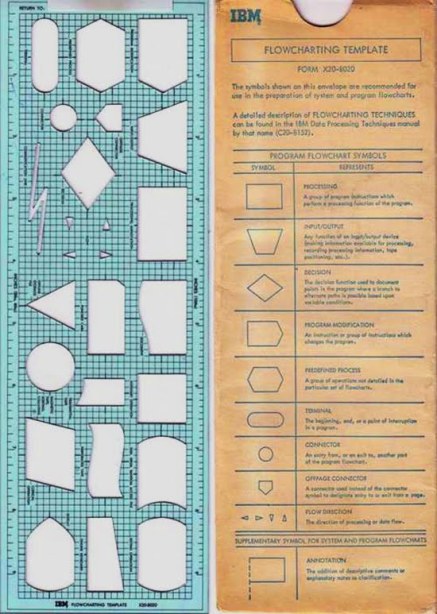
I do feel nostalgic to that IBM template, a small, skinny booklet of Assembler Language, and manuals after manuals in our office cabinets plus a set of all the basic systems programming manuals at my home, but I don't miss the work.
When we used to use the word users, usually we meant application programmers, but when I went consulting, there were many words I noticed that consultants were using in different meaning because we all came from different background. We spent many hours straighten out such problems.
It's funny that I received an email from a recruiter today. My name is still somewhere in the internet, so once in a while I still get legitimate inquiries. But today, the requirements for the job listed were like the ones for aliens. I have no idea what they are such as follows.
Cocos2D or Box2D, Chipmunk, or any other physics
Engine. Objective-C, (JSON, SOAP), openGL and/or openAL is a plus.
As I said, I don't miss the work!
LikeLike
heh..
D
LikeLike
Bryan- That wouldn't surprise me either. My Dad is a very strange man.
LikeLike
I myself worked for Zeus-Hermes around that time. I was a naive youngster at the time I remember going down to have an interview for a job, when the interview finished they excused themselves for about 5 minutes, came back in and said “do you want the job”. I agreed. It was then approaching lunch time the director asked if I was doing anything much afterwards, I said “no” and got invited down the pub and was bought a pint and got to know the management. Although we worked hard, we played hard. The XMAS parties were legendary, one employee would order barrels of beer and lovingly look after them in the office, one year I remember a steel band, a tom jones impersonator another I think. The other thing I remember was our receptionist was always singing tom jones numbers in between taking calls, so it was no surprise to us that one day she resigned, having decided to go to the USA and become a groupie!
LikeLike
Eric, your name rings a bell. You were indeed an eager fresh-faced youth, and I think you worked in my team! And as for that receptionist, she was lovely, wasn’t she? As I recall it, she got a job in a record company, Polygram, being star-struck and very young, I recall her eighteenth birthday. Wasn’t her name Theresa?
I shall email you, see if we can jog one another’s memory further.
LikeLike
PS Eric & I reunited in a café not far from here in 2017, with our respective spouses.
LikeLike
[…] as its Test Manager. I’m not the managerial type, but the weekly rate is slightly higher. At Zeus-Hermes I was happy to work as a team leader, though I never began to understand the language they were […]
LikeLike
[…] Dream Project […]
LikeLike
[…] Feb 21st , ’12Vincent19 Comments […]
LikeLike