
 I often “dwell in the past”. It’s a fabulous museum, where you can look at the same exhibits time and again, and discover new ones you hadn’t noticed before, and see the familiar ones from new angles. My fondness for this pastime owes a lot to my sense that I didn’t live my life fully the first time round.
It was by sheer chance (idle browsing on the Internet) that I learned of the four-hundredth anniversary of my old school. Whilst not keen on social gatherings in general, I felt I had to be there. We started with a plaque-unveiling ceremony, attended by the Lord Mayor, wearing his chain of office, and the Lord Lieutenant of the Isle of Wight, Her Majesty’s representative, in his Major-General’s full-dress uniform. I was impressed by the heavy braid epaulettes and the spurs. Much more impressive was his fine speech, in which he remarked that centenaries are common enough, but quadricententennials are exceedingly rare. Our school was already quite old when it found new premises in 1610. These survive to this day, having changed little since the mid-Fifties, when I carved my name on the hallowed bricks. I wrote up some school memories three years ago on this blog, using sometimes real names, sometimes pseudonyms for the characters involved:
My New School
The school yard
He was a veray parfit gentle knight
Memoirs Continued – At Mrs Jenkins’
Head’s Sermon at St Thomas’ Church July 1958
School was the orchard, so to speak, in which we had been planted as fresh-faced saplings. Here was a unique chance to muster one last time, saplings turned now to gnarled trees, still blossoming and fruiting more than fifty years on.  I’m fascinated by the differences between then and now. Old photos can only capture moments, but they perform a vital role in assisting recall. My own memory seems to consist of mental snapshots too. It has a disrespectful habit of condensing years of acquaintance into a single incident, which comes up on its own whenever a certain name or face is presented. In my piece three years ago on The School Yard (see link above) I mentioned a couple of these. On Saturday I met the boys concerned, but they could not remember the incidents I see so vividly in my mind’s eye. I immortalised one for his utterance of a colourful epithet I’d never heard before. I could mark an X with chalk on the very spot in the playground where that occurred. And as for the other, I have only to see his face on a school photograph, or (as on Saturday) read his name-tag, to recall the only fight I ever got involved in there, a fight engaged on his behalf. Again, I could mark an X at the spot where I challenged the boy who wronged him, though I cannot remember the wrong itself.
  I could draw a circle to mark the circle of boys who quickly gathered to watch the fight. Yet I remember nothing of the fight. I think it was stopped before any serious blows were exchanged, by the intervention of a a prefect or the school bell for resumption of class. The boy I championed doesn’t remember the incident, but assures me that in later life he learned very well how to stand up for himself. On hearing one or two of his subsequent adventures, I can only say that he’s done bolder things than I’d ever dare; and taken responsibility for the consequences too.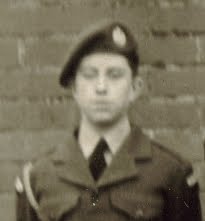
Several of the boys who attended the school after my time approached me, seeing my name tag, to say I’d been a kind of legend. My name had been on the board, hung in the school hall, showing all the head boys and their dates, and they’d heard it said of me that I was the brightest boy (i.e. most academic, highest-exam-passing, most book-wormish) the school had known. I can imagine how they may have felt comparing themselves to this mythical figure. Naturally they wanted to know what I’d done and how I’d ended up. To some I said simply that “I went into the computer industry”, making it sound like a fate which swallowed you up whole, leaving no trace behind. To others I said that it had all gone downhill after I left school. Both are true: I don’t seem capable of telling an untruth. I noticed how their initial awe changed to a friendly relief, discovering that I was one of them, after all.
My old headmaster, PWF Erith, constantly held before us the ideal of the Christian gentleman-warrior, a kind of Chaucerian figure he may have invented. As I’ve said in a previous post, there was a boy called Parfitt. The Old Man (as we called him) could never mention Parfitt’s name without closing his eyes and recalling one of Chaucer’s tales he seemed to know by heart: “He was a veray parfit gentil knight”, epithets which could be well applied to himself.
Apart from its longevity, what could the school be best proud of, I wonder? In what ways did it excel? I don’t know. I look back to it with enormous affection and gratitude. Perhaps it was a shining beacon to modesty, caring more for everyday decency and kindness than for outstanding success in anything.


———
Notes on the photos.
1) The old school badge, quite definite about its supposed founding in 1610.
2,3,4) Four boys as they were in old school photos.
5) The same four boys last Saturday: the twins being as indistinguishable (and inseparable) now, as they were then.
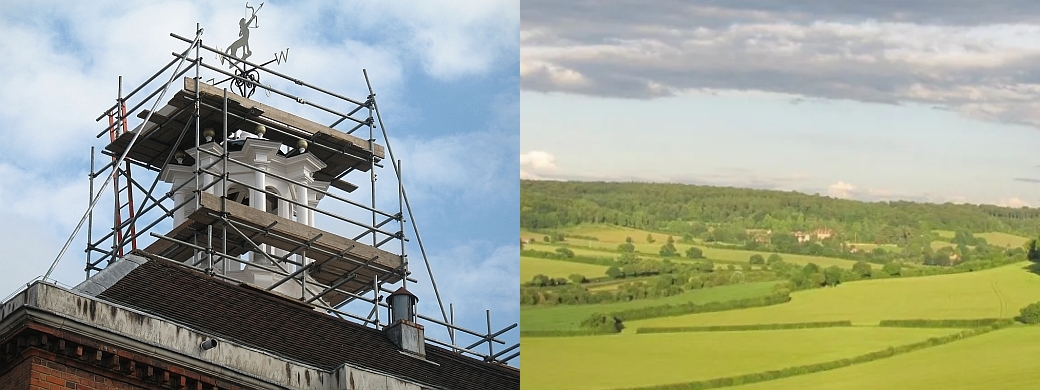
6) Commemorative stone embedded into the school wall. Founded when? It looks as though it was changed from 1611 to 1614 or vice versa.
7) A view of the school. For other photos, refer to older posts via links above.

PS Since our reunion, I have been visited by what I call an angelic messenger: a kind of voice that tells me something. Sometimes the mouthpiece is a person I meet, or an incident that seems suspended between this world or another. In this instance it was a single sentence in angel-language which I am not sure if I can adequately translate. It reads something like “You are more than you give yourself credit for”. I feel that applied to everyone I had been to school with; and perhaps everyone I know. In any case, this message has been sustaining me lately!
Ha! If you have gone downhill, then that is lucky for those of us down here. Otherwise we might not have had the opportunity to directly correspond with a first rate writer.
Rawley Creed: “A genius does not waste any time on success.”
Re the voice: moments like these offer such sustenance. It's good that you listen and hear.
I like the way you report the blend of memory and current observation.
Did you know that you'd become emblematic of school success?
Hayden, I certainly didn't. When I left that school I had such a miserable time, for decades, that I wouldn't have wanted anyone to know, and made no contact with old boys. (We never use the word alumni in this country.)
I don't know that i was emblematic of school success in any other way but passing exams and winning prizes. I think the only success is to be happy with one's life. The school does boast one conventional success story, David Battie the antiques expert known to millions from TV appearances. Sadly he did not show up to the reunion. I'm shy to contact him now, even though I knew him at school.
Thanks Raymond. I have always been meaning to ask you. Would you count Rawley Creed as one of your “angelic voices”?
Yes, he and Carla are such folk.
From my book:
“Who are Carla Ansantina and Rawley Creed? They are voices I hear at times, often in the middle of the night, voices who are less modest and more certain of things than I would dare to be. Carla and Rawley are more heretical, and yet they also seem more dogmatic toward their heresies, than I would think proper. I am not comfortable with their candor; their thoughts are troublesome and thus potentially transporting for me. Rather annoyingly, Carla and Rawley can contradict themselves and don’t have to explain. I wish I had that license.”
very touching. your photos are an eye opener, how time works. how bright young fellows, mischief in their eyes, turn into docile lethargic old men after a few years. the wrinkles portraying all that they have faced in this life. they all started at a point where they were oblivious of the future. now they gather to take stock. end of the day, you are at the same point where you were, only the journey in between was terrific. i loved this post.
This comment has been removed by the author.
Vincent, Your opening sentence immediately draws me in. It’s fascinating how we see or saw ourselves compared to others. I always find it awkward to answer the “What have you been up to” or “What do you do now” questions. The answer is always truth, but may change, or different aspects highlighted, depending on who’s doing the asking.
Lovely photos. Nice to see you smile and having a good time with your boys. I like what you say about your school, “Perhaps it was a shining beacon to modesty, caring more for everyday decency and kindness than for outstanding success in anything.” If only this could be infused in all educational institutions, we may be a better world.
What a beautiful message you received from your angelic messenger. I’m glad to hear that it has had such an impact and I hope that you continue to hear the messages.
Rebb, thank you.
Ghetufool, are you accusing me of being a docile, lethargic old man? Come over here, and I'll challenge you to a duel, European-style, with your choice of weapons, naturally.
Thanks, Raymond for the description of those voices.
By the way, if you have the time I have another book to recommend. K is spellbound by it, as am I: it's a long time since I've seen her actually read a book.
It's Hitchhiking to Heaven, the autobiography of Lionel Blue, who's a Rabbi and a Christian mystic at the same time, as well as being gay and a much-loved contributor to BBC Radio 4's 5-minute God-spot, “Thought for the Day” (and a good teller of Jewish jokes).
And it's easier to read than Amis's Money!
Thanks Vincent, I will order this one tonight. My recent major interest has become “interfaith prayer.”
Speaking of faith, Martin Amis' protagonist John Self has Luther's “faith not works” down well. Of course this is ironic, but nevertheless the phenomenology of realizing one's status as a perfectly okay product of the Maker (whoever She or It is), involves a dynamic that works well inside or outside of religion.
oh no! i don't dare to face you. have mercy! after your reply, i am looking at the post from a new angle 😛
We appear to have resolved this matter as gentlemen. I embrace you fraternally. I didn't mean to threaten you, honest!