

I have just decided, on behalf of humanity as a whole, that not knowing is good. In any event, it pervades our lives as a fact. How many times a day do we say, “You never know;” or “God knows,” with its unsaid “(I don’t)”? To endorse the virtue of uncertainty, I finally stopped dithering and rose from my bed at 3am to set down these thoughts on the subject before they are washed away by any further slumber.
I was thinking about Michelangelo and van Gogh, as examples of restless creative genius: driven men, pushed into action by that kind of continuous irritation that, in the oyster, produces a pearl. What these men have in common—as opposed to Shakespeare, of whom we know nothing—is a corpus of written work which lays their ideas open to the world. With Vincent, it was the letters to his brother. With Michelangelo, it was his letters and sonnets.
In both cases there was material enough for Irving Stone to write long biographical novels. I can well understand how Michelangelo must have felt towards Pope Julius II, in relation to the Sistine Chapel ceiling project: exploited, absurdly underpaid, artistically misunderstood, stupidly naïve to throw away years on this wretched fresco when he could have been following his first love, sculpture. In his life, the ceiling became monstrous: beautiful in itself, but monstrous in the way it devoured his time, his health, and the comfort of his bones. Yet he survived it, to a ripe old age.
These thoughts are prompted by having handed over the project I referred to in my last, that has devoured a mere three or four months of my life. My patron, the Pope Julius in my life, likes it well enough, though I haven’t given him a copy of the software for his personal examination, out of fear (that he will suggest this or that change or enhancement). He surely knows that I am more protective of it than any she-wolf of her cubs. Inevitably, I’ve had to hand over a copy to our mutual client and end-user, with a presentation in which I concealed as best I might the emotional ties between programmer and programmed. If allowed to spill out, those feelings would manifest in hostility to any criticism, and a sense that the users must prove themselves worthy to be users at all, and handle the product only while wearing white gloves, to avoid damaging it. There is a little madness in the creative mind.
But now I am to transfer that creativity to a project of my own devising, and that is where I always draw back. I find myself too ready to put my skills in someone else’s hands: to help someone else edit their stories, or as happened two years ago, be a volunteer handyman helping elderly people maintain their own homes. This, though, is where the not-knowing comes in, that not-knowing that I started the piece with. For if these blog posts compare to anything, it is to the correspondence between Vincent and his brother Theo, not Vincent’s substantive output. What shall I do for my own self? Programming software, though it may get out of proportion and swell into a Sistine Chapel ceiling of complexity (in my imagination), is not really my thing, but a displacement activity. It demonstrates a certain dogged perseverance, that’s all. What is to be my substantive work? What do I really want to do with my life now that I have the freedom?
Many questions, but do they really need to be answered? My interim answer is “no”. Within this lack of sharp focus, I see three forces wrestling with one another. Wrestling or co-operating?—I’m too close to see clearly. What I do see is (a) a dedication to the medium (of writing) regardless of content; (b) an obsession with saying something about the nature of life, whilst always leaving it not quite said (whether through incompetence or intention); (c) the irresistible fascination of observing life and living it.
Later: I recall that the system I’d been struggling with was for a company called Oxford Gene Technology. No wonder I couldn’t sleep.
raymond
“a dedication to the medium (of writing) regardless of content”Reminds me of Fernando Pessoa: “The first and last rule of love is that the beloved object should be loved for what it is and not for something else, loved for being the object of love and not because there’s a “reason” to love it.”
Hayden
I struggle with this same question – what is it that I want to do for me, that matters above all else in this strange heart of mine? I say, always now (now that I’m brave enough to admit it) that it is writing that is my first love. Still, I occupy myself with painting walls, planning farms and doing odd, spontaneous research projects instead of writing.If writing is my beloved, why do I not court her with all my intensity?Mystery.
Vincent
Hayden, I agree it is a mystery but perhaps one which has a straightforward practical solution. You wait until she courts you. For to me it now seems obvious that the impulse from within takes precedence over the conscious thing we call “I”.
Vincent
Raymond, yes, and yet. What is Pessoa talking about there, and with whose voice? What is the beloved object he talks about. Sometimes he believes what he is saying, and sometimes he speaks and says that he doesn’t necessarily mean it. Which I like because it is liberating.
ZACL
I like the suspension of thought in this post, it also leaves the reader, equally as suspended in personal thought too. There’s a gentle symmetry here.
Vincent
ZACL, I like the way you so consistently spot what i am trying to achieve. thanks!
raymond
Hi Vincent. I think that Pessoa’s love was the freedom to write with both sincerity and insincerity, to write without limits. To me he seemed to think that this method was the only sincerity that was possible. “It is impossible to live life according to reason.”
Luciana
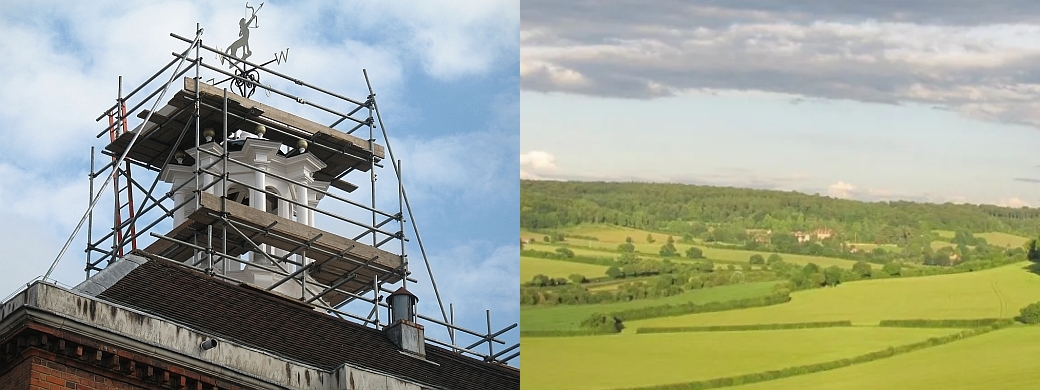
Nice photo! I like the idea of blogs being letters to the world. I´d say they can be windows to ourselves that do not really show what we create, but what moves us to.The poet is a pretender and he´s so good at that, that he pretends the pain he indeed feels. That´s ‘autopsicografia’, by Pessoa. Of course my broken English version doesn´t do any justice to the original in Portuguese.
gentleeye
Mar 10th , ’10
9:18 pm
Edit
I wish I was as dedicated to the medium of writing as you, Vincent. I feel that if I don’t get on with it soon, it will be ‘too late’. Yet I seem to be always procrastinating.
Like
Unknown’s avatarVincent
Mar 15th , ’10
5:24 am
Edit
Gentleeye, I have procrastinated my answer to you here! It cannot be too late to start writing, in my opinion; but then I am biased because I too am waiting to start. All I do here is practise, and (in a sense) procrastinate what I conceive as “the real thing”.I stand by what I said to a friend a while ago, that writing looks deceptively simple. We learned the basics in our first ten years of life, but rare is the child dedicated to writing as an art at that age. I told my friend that it needs a minimum of ten years dedicated daily practice) before one could consider oneself a real writer. But now I think that for many of us it may take a lot more than ten years; and that I may never make it. Can you see the point of a pilgrimage never completed? If you can’t, then “too late” may apply. Another way to see it is that each day, each practice piece, is a mini-pilgrimage, complete and self-contained, from which we can rest, weary, triumphant—and still dissatisfied enough to try again.
Like
Unknown’s avatarVincent
Mar 15th , ’10
5:30 am
Edit
“The poet is a pretender and he´s so good at that, that he pretends the pain he indeed feels. ” Luciana, yes! this to me is the most liberating and instructive lesson I have gleaned from Pessoa: one that I have yet to learn to apply.It is like an actor who can only reach his true self by playing a role scripted by someone else, and thus “pretending” to be someone he thinks he is not; thereby discovering what he is.
Like
Unknown’s avatarVincent
Mar 15th , ’10
10:52 am
Edit
Do you know about this “Literary Translation” site, Luciana? I can’t remember if it was you who told me about it. It is run by the British Council and has an exercise in translating Pessoa into English.
Like
Unknown’s avatarLuciana
Mar 16th , ’10
6:17 pm
Edit
No, I was not the one to mention that to you.That is a great link! I browsed all their workshops and they seem really helpful. Thanks!
Like
Unknown’s avatarTom Davidson-Marx
Jul 2nd , ’10
12:40 pm
Edit
Thanks to Raymond and of course you, Vincent, for these observations. I am quite fond of Fernando Pessoa. This insight strikes at the heart of the task of meditation, I feel–to see things as they are, to cut through the veil of thinking, and, perhaps to love for no reason. The heart naturally opens of its own. Wonderful piece.
Like