

 Children these days seem to discover “the world” at a very early age, if my small sample of three grandchildren is anything to go by. Before their fourth birthday, they know how to stretch on tiptoe and describe arcs with the furthest reach of their fingertips, chanting “big as the whole world” as a kind of magic spell, their eyes round with the wonder of it. But they don’t take it seriously. They discover it’s OK to make fun of this concept they’ve picked up from grown-ups.
Perhaps I was the same, but the first thing I remember was a wall-chart at school, twice as tall as I, showing on lacquered cloth a Mercator’s projection map, in which the British Empire was coloured red. Around the edge were insets: an artist’s impression of the various races, as diverse in skin colour as their national costumes. The Red Indian wore a feathered head-dress, naturally, and was reddish-mahogany; the Hottentot was black and curvaceous, with a short grass skirt covering very little; the Chinaman wore a coolie hat over a yellow face; and so on. I looked for my own kind, but it wasn’t to be found, except for a tribe called Caucasians, with pinkish skin like mine, represented by a pert Dutch milkmaid in clogs. Never mind, the general message was that we British were the top dogs and had little to fear from the World, as evidenced by historical fact: when World Wars came round, about twice a century, we invariably won.
A rather more solemn notion of the World came from evangelical books I was given to read as a birthday present. The World is that which God loves; specifically “God so loved the world, that he gave his only begotten Son, that whosoever believeth in him should not perish, but have everlasting life.” Which is rather like saying that a passer-by so loved the drowning boys that, subject to strict conditions, he was willing to fish them out of the filthy canal into which they had fallen.
It is no trouble for a child to hold diverse concepts of the World, so that you can visualise being a top dog and a drowning child almost simultaneously, even where neither image has direct relevance to your daily life. But that is surely the whole point of education, to build up concepts of the world like a stamp collection. Very soon, especially as a small boy at boarding school, you acquire hundreds of stamps, and make sense of them through classification, fixing them to different pages of your album. Stamps tell you something about the world, but not much. I acquired a large collection of French Colonial stamps, but didn’t trouble to find out where Djibouti, Réunion or St Pierre et Miquelon actually were. “Stamps of the World” were part of an arbitrary world in which I was dictator.

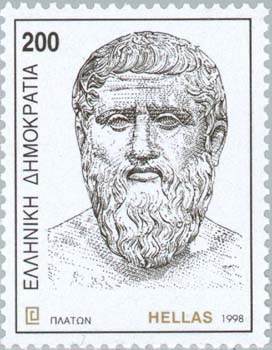
Is there something “out there”, any fixed referent for the word “World”? No, there isn’t. It may be our fancy to assign it the attribute of being the most solid thing in existence, and by virtue of a Moon-landing and satellite photos, we even have images to prove our theory, but World is an abstraction. Like all abstractions, it acquires meaning only within a given context: just like good, evil, love, hate, happiness. That old man Plato has a lot to answer for with his Doctrine of Ideas: “Plato taught that ideas are ultimately real”, summarizes Wikipedia. If only we could prise him off his plinth! But he’s hard to dislodge, even half a century after Wittgenstein produced a crowbar adequate to the job: “The meaning of a word is its use in a language”.
Today’s children are given a new concept of “world”—not the one that small children rightly find so amusing—“something bigger than you can possibly imagine”. How then can you imagine it? Not the one about God so loving the world that he sacrificed his only begotten son to provide an escape route for an unworthy wretch like me. That has been swapped for something equally solemn. In the new concept, unworthy wretches like me are carelessly driving the world’s species on land and sea to extinction, wrecking its weather and generally making an unholy mess of everything, by burning up petrochemicals and using fresh plastic bags for every supermarket visit. As with Christianity, there’s an approved path to salvation. As it happens, I personally dislike car-driving and plastic-bag usage, and feel a little virtuous because of it.
 The world is an abstraction, an imaginary sum of our ideas about it; not forgetting the viewpoint of every specimen of humanity that wends its way along the Desborough Road. Perhaps I should include the nocturnal visitors to my bathroom: slugs, spiders and woodlice. Their stories may never be told but they too have their worlds.
Let us free ourselves from other people’s useless baggage. In the crowded global airport, I leave such heavy burdens unclaimed on its ever-turning carousel.
 a wayfarer’s notes
Interesting, Vincent. The 'one-world' idea always implies that someone must be in charge. I think I like the idea of 'overlapping worlds' better.
LikeLike
I didn’t think of “one world” as implying someone in charge, but someone who stands as an authoritative observer in possession of a correct view. Once it was the Pope, perhaps; now it is the scientists. I have no fight with either; only that we need to liberate ourselves from the fashionable baggage, whencesoever it may come.
LikeLike
“Which is rather like saying that a passer-by so loved the drowning boys that, subject to strict conditions, he was willing to fish them out of the filthy canal into which they had fallen.”
lol!!
so much sarcasm! I wish you meet who is as conservative as you are cynical. it would be interesting if you record the conversation and write it here.
Your blog is getting better and better visually, almost dragging the reader to delve deep. This language was very easy and straight for a dull guy like me to get a grip of.
LikeLike
I especially enjoyed looking at all the old postage stamps. Long ago, for a short period, I also collected stamps.
LikeLike
Wittgenstein like Vincent, was a crisp clarifier.
He gets us so clear that we become afraid there might be nothing left. Somewhere Wittgenstein said, “There are no ethics; there are only esthetics.”
That could either be the “truth that sets you free,” or the clarity that makes you want to end it all. Heaven and Hell, each about a centimeter away from the other.
Welcome to the postmodern world, where even the kids see through the fabric of reality. But we don't have to despair; like Ecclesiastes we can decide that it is always time to have a party. We can love life unconditionally, that is to say: For no reason!
LikeLike
I’m fascinated by your boarding school expeirence. I bought “Old School” by Tobias Wolff, but I haven't read it. It’s in the U.S.
I’m also very appreciative of learning about English life. It seems different from America.
LikeLike
I’m interested in this view of “one world.” It never occurred to me that there might be a implicit meaning that someone was in charge. To me it was a poetic metaphor of the truth that this world we live on is one globe, one interconnecting ecological entity, and contaminating (or healing) one part contaminates (or heals) all. But then, I have an ecological view of most things.
Yes, yes… there are many worlds, many views, many many many ways to live in the world. Enjoying the multiplicity is key to thriving…
just as the earth itself needs many different organisms in many different eco-pockets, in order to remain healthy and balanced.
LikeLike