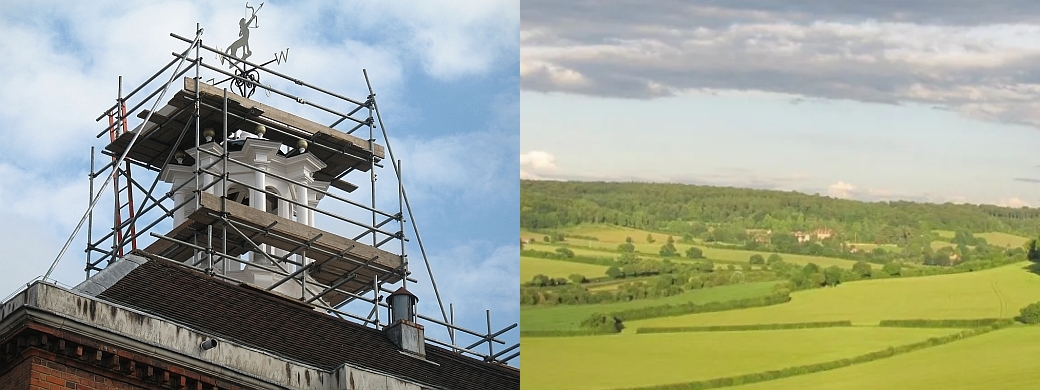

This blog started out with the title An Ongoing Experiment. What the experiment was designed to investigate was never clear to me. It was ongoing: its discoveries would define its objectives. The spirit of the “perpetual laboratory” remains, though it later changed its name to As in Life, emulating a still pool reflecting the sky—art imitating life. Then, when I was working for some months at a global computer corporation, which I code-named MaxiRam, locating it in Babylon Town, I found it necessary to go wayfaring for an hour each day, in my lunch-break, to retain, as I thought of it, my sanity. “Sanity” was a shorthand for something I had not troubled to analyse, but all the same had felt deeply. Right outside the revolving doors that led to the company’s Reception lobby was a low wall colonised by an exquisite lichen that affected the eyeballs with its extravagant yellow like van Gogh’s paintings of harvest or sunflowers. See this post.
Beyond that was a little path unknown except to pedestrians like me, which took you through a small shrubbery, still on Fujitsu land: and here it was that one of those shrubs spoke to me, not in words of course but its own language; and our conversation was affectionate. See this post. I won’t describe now all the places I went and the vivid memories of Nature amongst the pavements and buildings of that industrial park and beyond. Some I have written up and some remain to be described. There was a place with a large pond, originally associated with a water-mill but now catches rainwater displaced by all the concrete and asphalt of the surrounding developments. When there were floods and storms, the excess water raised the pond’s level, letting it flow into main sewers without overloading them. In rebuilding the pond for this purpose, the authorities created a nature reserve at the same time, with various sedges and aquatic birds; as well as cafés and paths for strolling or jogging, and boardwalks for fishing. There was well-managed woodland too, and paths to reach the park via underpasses so that you could walk or cycle there safely. At one time I planned to write a full-size book of essays entitled “Mill Park”, fed by whatever came to me when I visited that place; for it flowed with ideas as much as water. See this post.
I write this in the dead of night, anticipating the dead of day, for we are near the Winter Solstice, and in this frost my instinct is to stay in a warm place, curled up reading a good book, rather than go a-wayfaring. And then I discover how hard it is to read a book through, as I used to do, when going by train to work. I get out my pen and notebook, for I cannot read passively: my own thoughts interrupt the author’s. But what has moved me this morning in the darkness is an essay by David Abram, “The Ecology of Magic”, in Ecopsychology (Sierra Club Books). He speaks of visiting Bali as a magician, not an academic, and understanding what the shamans there really do, and interacting with animals. He was a guest of a magic practitioner there, whose wife each morning would take little offerings of cooked rice on woven palm-frond platters, to the spirits. Curious, he went to look for himself after she had left them a little distance from the house, in several locations. A small trail of ants came along, climbed the heap and took away the grains of rice one by one. He learned that to these animistic Indonesians, spirits were not like those taught by the missionaries. They were forces of nature, which magicians and simple people understood. Translating this act into his own Western understanding, he saw that feeding the spirits kept ants away from the kitchen, without the use of poison.
There is much more, but this is enough. A book is too much, but a blog can distil an essence into a nutshell.
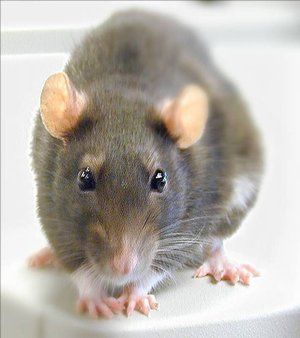
A mile beyond, in the town centre, again reachable by footpath without crossing any road, stood a supermarket. The joy of that mill pond turned sombre when I saw little green boxes at the base of the supermarket walls, with a hole at each end, designed to poison rats in privacy, without killing pets too. What saddened me was this: that the rats would not have flocked to that locality, would not have nested and reproduced in any numbers, if they had not been drawn to the irresistible aroma of man-made food products. Instinctively, I felt that this was an ugliness: a minor one, doubtless, in the bigger scheme of man’s ugly behaviour. I only responded to it because that day I was feeling sombre already, as my post that day records.

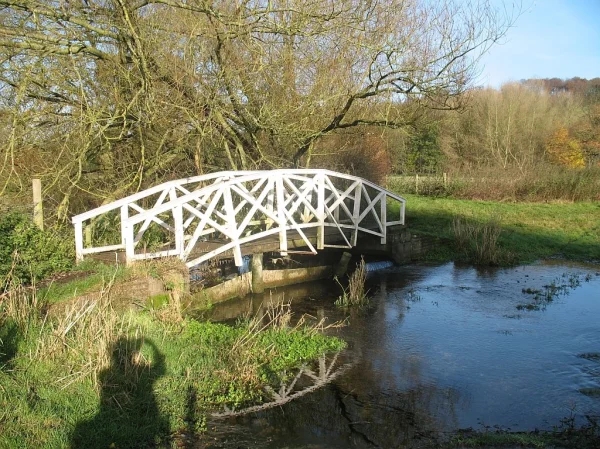
Note on top picture: the white bridge elegantly spanned a patch of dry mud when I first encountered it, comic in its incongruity. A bridge needs water just as much as water needs a bridge.
The ongoing experiment turns out to be a bridge between nature and mind. Why do we need a bridge? This earth is undergoing a bigger challenge than the one faced by Noah in the Book of Genesis. Let’s see what we can do with a bridge before we build an ark.
 a wayfarer’s notes
Those rats are indicative of the “thoughts of men,” aren't they Vincent? We build grand societies, leaving heritage in the dust, then turn around to build more structures to deal with the burden of forgotten heritage.
The spirits are restless, and want for the attention they are due. Oddly, if we humans were cleaner animals, the rats living among us would be clean as well. When I was younger, I had a common rat for a pet whom I appropriately named, Rat. They have a built-in propensity for grooming and keeping their environments clean. It's really a shame about poisoning them, as you've mentioned.
LikeLike
Yes, Tim. What David Abram says in his essay, and so do other authors in Ecopsychology, is that we have become so disconnected from our environment—sky, rocks, plants, animals—that we are destroying it and our own sanity at the same time. Sorcerers (shamans) and others connected with earth-wisdom know how to live in harmony, sustainably and in joy.
So the thoughts of men become toxic, not just their actions. To the earth-people, spirits are a way of describing relationships within matter that they don't understand scientifically, but only sympathetically—which is good enough and better for the planet.
LikeLike
Your example is that encouraging love as sanity embraces nature, but . . In-love is insanity because our passions discourages respectful balance.
Your title changes show how science can respect nature with bridges rather than chaLLEnge courses of natural flow.
LikeLike
even psychopaths have reasons why, only lovers are insane……
rationale is a function of the left-brain, that which attends to details and minutae…..and material things.
and cannot afford to fall in love.
the right brain is of the spirit however, and can recogise the essential nature of the bright intelligent rat, as opposed to the diease carrying vermin he has become known as in our urban prison.
LikeLike
brad4d, Alistair, thanks for finding something in this not-so-clear post.
LikeLike
As you may detect, I found this post so unsatisfactory that I changed the manner of writing thereafter.
LikeLike