

Suddenly I learned that I was not half Dutch, as I had believed for fifty years, but half Australian. I had spent my life wanting to belong somewhere: to feel a kinship, a sense of family, to be able to say, “These are my people. I am home.” I had resented England from the moment of arrival. The first time I opened my mouth in front of my grandmother, she winced as if stabbed, and told my mother over my head “You must get him to speak properly” as if I were a badly-trained puppy, rashly acquired. Which I was.
Naturally I had an Australian accent, picked up from other boys in the street. While I stayed with my grandparents, she’d say “we don’t want people to think you’re a guttersnipe.” Merriam-Webster defines the word as ” a homeless vagabond and especially an outcast boy or girl in the streets of a city.”
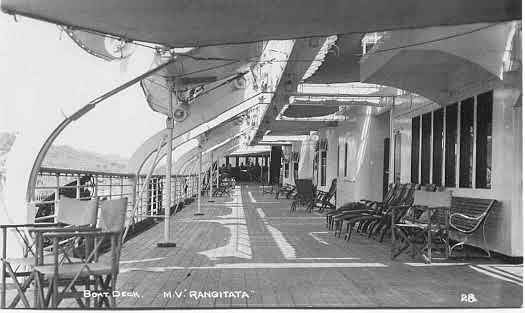
We had only just walked off the gangway. When the Rangitata arrived at Tilbury, my grandparents were waiting to greet us on the jetty: so near but so far. We waved, they waved—for several hours.
There was scarlet fever on board and the English officials wouldn’t let us off. They did not want us to pollute their sacred soil. Australians don’t put up with this kind of thing, especially from Poms, even Australian women don’t. Our ship had carried twice its peace-time load for six weeks and it stank. We clapped and jeered the British officials as they went back and forth with stern faces. Finally the crew went on strike. No food would be served, no toilets unblocked, no patients with scarlet fever nursed in the sick bay. Shuddering at the vociferous rabble—the war brides & me—the officials relented. They melted away and we disembarked in triumph.
But I didn’t finish the tale of my birth. After hearing I was the product of an interesting liaison, I could not bring myself to discuss it with my mother. How to start? “By the way, it seems I am a bastard. Do you want to talk about it?” In the end—to cut a long story short—it came out. When she had calmed down, and realised I wasn’t going to chop her with a machete, my mother started to talk. Her Larry—my progenitor—was a boy living with his parents on a farm. She had been looking for riding lessons and hired him. I imagined their two horses following a lonely trail in the shadows of the setting sun, where they found a sheltered place to dismount . . .
But she wanted to tell me more. Long before, she had spoken vaguely about my “elder brother” who had died prematurely. When I was older I understood she’d had a secret abortion which left her seriously ill with peritonitis. All this to prevent her husband Jan Jacobus losing some job, because his contract stipulated “bachelor status”. When he found out he was furious.
But then—this was her new story—he’d contracted malaria during a jungle posting and a specialist had told him his sperm-count was down, and he could never be a father. She feared her recklessness would be punished by dying childless. To forgive her (or end her nagging), he yielded pride and tod her to get pregnant “by some man”. He’d treat the child as his own.
Everyone had been noble after all. Shall I believe that? It doesn’t matter. Here I am. I was born.
 a wayfarer’s notes
it's always interesting how a wandering soul finds a body in this earth. in your case, it's more so interesting.
brilliant writing vincent. carry on.
LikeLike
I agree with ghetufool.
LikeLike
so do I!
LikeLike
Catching up with some blog reading. I add my agreement to the brilliance of your writing, which seems to have taken on a new dimension, perhaps the subject matter is the difference. Thank you for allowing me the honor of sharing in these stories.
LikeLike