
…by Anthony Burgess
© 1986 The International Anthony Burgess Foundation. What follows is an edited version of an essay that appeared in the Writers’ Monthly in 1986: Flame into Being: The life and work of D. H. Lawrence, first published in 1985, will be reissued by Galileo Publishing in June
Your editor has asked me to give you some practical advice about the kind of labour involved in planning and executing a book of the kind I have just published – a work of some 80,000 words about a fellow-author whose name is D. H. Lawrence. I would not normally be willing to give such advice, since no writer’s method of work can be of much value to another: a method is an emanation of a personality. But Lawrence is, in a sense, one of the patron saints of all who struggle at the damnable craft of putting words together and trying to earn a living out of it. Like every other writer, he began as an unpublished amateur. He succeeded in becoming a prolific professional. But the fight to impose himself on the reading public went on all his life. As the son of a Nottinghamshire coal miner he was not born into the literary establishment and he had to prevail against the disdain of those who were. He wrote about sex when sex was a taboo subject. His style was highly individual and not easily acceptable by a public who thought that a book should be read as easily as a daily paper. He died at forty-four of tuberculosis, far from rich, and set upon by the smut-hounds who declared that they would cut their children’s throats rather than permit them to read Lady Chatterley’s Lover. A hundred years after his birth he belongs to the ranks of the British classics. But he still has enemies.
I was asked by Messrs Heinemann to write a brief book honouring Lawrence, but they left the commission rather late. I had a visit from the managing editor in January 1985, and I was told that, in order to put the book on the market in time for the centenary of Lawrence’s birth in September, my typescript would have to be ready by the end of April. The notion of writing a book quickly has never really appalled me. I rather enjoy the challenge of racing the clock. Writing a book about a novelist has to take rather longer, however, than writing a novel of one’s own. You don’t enjoy the luxury of invention. Moreover, you have to read all that novelist’s novels.
Lawrence, of course, was more than a novelist. He was a very fine poet, travel-writer and playwright. He was a quirky sort of social philosopher and a master of the short story and the discursive essay. He wrote much, as all professional writers have to, and one of the tasks of a writer about him is not merely to read, or re-read, all his books, but to note in these books certain recurring themes and images. There is also the business of comparing different versions of your author’s works. For instance, the Penguin edition of The Rainbow keeps in a sentence that the original Heinemann edition leaves out. It’s about the bridegroom undressing before getting into bed with his bride – unacceptable to Lawrence’s first readers, but not to his later ones.
And, if one reads too quickly or carelessly, it’s easy to miss in that same novel a reference to a white peacock – a theme in Lawrence’s very first novel, and even the title of it. It seems, once you’ve re-read all the work, that there’s a kind of ornithological conflict in Lawrence – between the white peacock of the woman and the phoenix of the man.
So the work has to be read and re-read very thoroughly, and notes have to be taken. I’m not good at notes and never was. I try to hold ideas in my head, sometimes with disastrous results, but they have a better chance of staying there than if committed to bits of paper – which the wind tends to blow away. The importance of cultivating the memory if one is going to be a writer cannot be stressed too often.
After the author’s work, his life and personality. Lawrence died in 1930, and there are few living people who remember him. But it was necessary to travel to Eastwood, the mining village in Nottinghamshire where he was born, to see the houses he lived in as a boy, to hear the local accent, and to ask the citizens what they thought about their famous son. (For the most part they didn’t think much: “He were a mardarse that married a German woman and wrote dirty books. He lived abroad, too, as though he was ashamed of his own country”.) It was easier to concentrate attention on the topographical aspects of Lawrence by making a television film about him. This I did. The eye learns things that the ear and the intellect often overlook.
If you can’t find living people to tell you about a long-dead author, you have to consult books written about him. Such books will be the memoirs of friend or enemies, also dead, and they may not necessarily be reliable. Moreover, most of them are likely to be out of print. We’re living in an age when books go out of print with terrible speed – one of the curses of an epoch in which too many books are published, warehouse space is short, and publishers concentrate on the new rather than the worthy. But any writer on Lawrence has to bless him for being a compulsive letter-writer. Read his letters, some of which are long and detailed, and you are reading a rough and ready autobiography.
I’d been commissioned to write a short book – about 40,000 words – but I found that I couldn’t say what I had to say in under 80,000. This didn’t mean that the publisher was going to double the advance I’d already agreed to. If the book had ended up as a mammoth tome of a million words the money would have been the same. The important thing is to know roughly the size of your book before you start writing it. This is analogous to a composer’s knowing the length of the symphony he proposes writing before even calling on his muse to provide him with the melodies. It seemed to me that my book would end up as 200 pages of typescript, about 400 words to the page, that it would probably break down into eighteen chapters, that the first chapter would be about Lawrence and myself and the last one about Lawrence’s present reputation and his general significance to the modern world. In between there would be the business of dealing with his work in something like chronological order and relating this work to his life. I discovered that the book was not an easy undertaking.
 Indeed, there are times when the author who has accepted a commission to write a book, who has completed his research, and who may even have composed a rough draft, finds himself unable to push through the task to the end. He may also have received an advance on royalties and spent the money. Now he has to return the money and ruefully look back on months of wasted work. The situation is not uncommon. A friend of mine undertook the writing of a biography of Marie Antoinette, worked hard for a year on the project and then gave up. She could, she realized, have produced a book of some kind, but it would not have satisfied her. There is no other trade in the world that offers such time-wasting and such frustration.
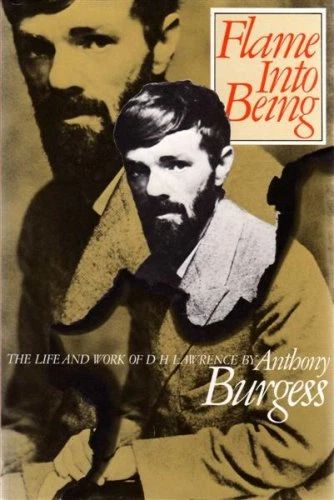
I call my book on Lawrence Flame into Being. That’s a phrase he uses at least twice in his work. I’m not sure what it means, but it sounds right. Am I satisfied with the book? Of course not. It is, I think, my fiftieth published work, and none of the fifty has been satisfactory. When the critics attack me they are doing a job which I could do far better. I know my faults far better than they ever will. The trouble with writing a book on Lawrence is that so many have been written already. Is it possible to say something new and compelling? Only if you’re writing out of your own critical sense and imagination, if you’re pouring honesty into it, if you’re presenting yourself as much – or nearly as much – as you’re presenting Lawrence. All the research in the world won’t help you if you lack the flame of conviction. Every book you write is fundamentally about you. And it is your peculiar uniqueness, good or bad, that the world wants.
 a wayfarer’s notes