


Initially drafted on Tuesday 19th May, 2020
There’s an unhealthy gulf which didn’t use to be so wide. It separates Christianity from the rest of the world.
It’s not a healthy gulf. This area of life is not one of those which supposedly benefit from tooth-and-nail competition. Christianity has always become corrupted and in need of reform. This is everyone’s business. It’s even more obvious in the case of Islam, but I shan’t speak of that.
Let’s say that religion’s rival is Liberalism, which pressurizes us into what can and not be said and is fairly definite about what is evil: mainly the abuse of power through violence or other means.
The only thing which reforms liberalism don’t see both need to be reformed, in such a way as to close the gap, so that you could leap easily from one to the other in a single sentence, or failing that a paragraph
Both need to revise their notion of God. You cannot be an atheist if you don’t have a notion of God—the thing that exists if you’re a Christian but doesn’t if you’re an atheist. There can be as many answers as the speakers on either side of the debate
As a non-Christian outside the fold with no axe to grind, I find no logical reason for supposing that the Bible is the “Word of God”. It’s an anthology of writings by many authors. Some would have witnessed apparent miracles, or cruel oppressions; from which they would have developed activist agendas. Those writings may have been posthumously edited for various purposes. The tale of Noah’s Ark seems to be derived from a much older one. You can find one version in the book of Gilgamesh. There may have been eye-witness reports, but the tale of Abraham and Isaac is not one of them.
From more modern authors* and my own experiences I conclude that God, as agent for creating and influencing this world, is unknowable.
All we can know is the movement of our own hearts as an inward pouring of Love, which prompts us to give back what we can in thanksgiving; and turn to it in supplication when we feel empty or afraid.
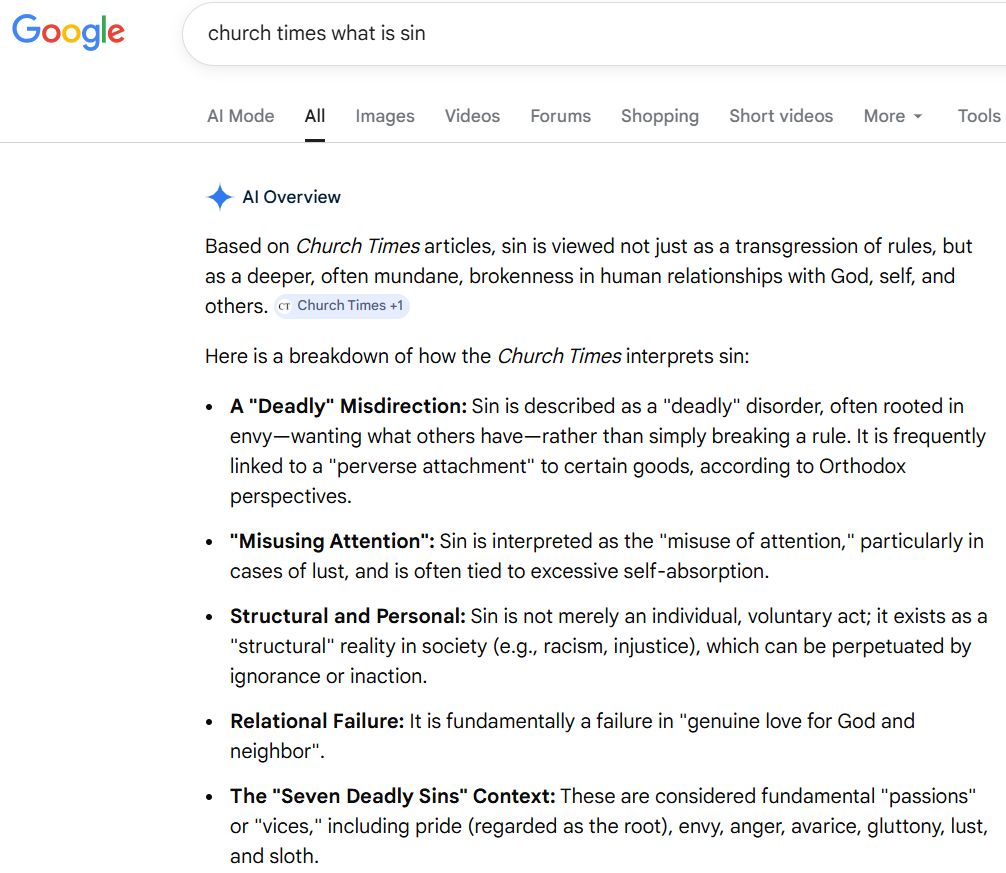
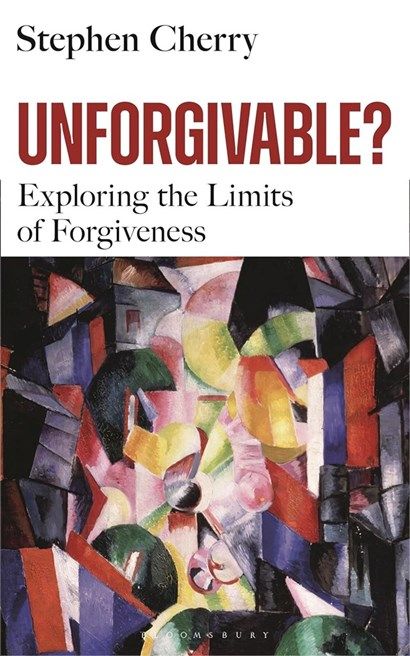
So, let us arrive at the topic of sin, one of the major stumbling blocks that distinguishes Christians from the others. I find an article in the Church Times reviewing this book by Stephen Cherry.
*The authors I specially have in mind are Thomas Traherne, Martin Buber, Etty Hillesum, Simone Weil, Roger Scruton—his philosophical treatise, Sexual Desire.
Traherne was in holy orders of the Church of England, but found scope within it to write beautifully about God’s love discovered personally, with homilies about the attainment of felicity.
Scruton was a traditionalist and non-believer who played the organ every Sunday at his local Anglican church.
Buber, Hillesum and Weil were free-thinking Jews, each profoundly affected by the Holocaust. What kind of God could allow this to happen without as it were showing his face and reassuring the faithful?
Update at 3am on 20th May:
This from Church Times:
disbelief, like belief, is often rooted in more “instinctive, inarticulate and intuitive” reasons than its evangelists like to admit . . . An interesting section of the book examines how, from the 1960s, humanist ethics has often tried to make religion look redundant. Faith’s substitutes in their many forms consequently come into their own, and God-free ethics is the one that claims the most plausibility.
See also this, from John Gray:
their racism was integral to the view they all held — Kant, Voltaire, and Hume, the three great Enlightenment thinkers; no one would doubt that, at least in the 18th century — which was that only one kind of civilisation was consistent with Enlightenment and reason: a developed version of the civilisation that existed in Europe, but purged of its . . . Jewish and Christian elements. That would be the highest civilisation that had ever existed — higher than any that had existed before; but it would also replace all the other civilisations, that’s the key point. Not only that it was the top, as they thought, [but] all the others would disappear or die out. So, they weren’t just less developed or primitive. . . they were destined to disappear, they were destined to die out.
 a wayfarer’s notes