
… mulling on the meaning of words.
 “Who the fuck are you lol. Cool website.” Never was a message more timely. It came through six days ago on my contact form. Confronting but not hostile. I replied that the site exists to answer that very question.
Though I write here publicly, I’d like to think of these words as addressed to myself & not intended to be read in my lifetime. For everything I write, even this sentence, becomes something left behind, reflection of a self already past by the time anyone reads it. Let me be free, not bound to what I said or did yesterday. (I’m not talking about commitments and obligations.)
It doesn’t mean that I can’t edit or rewrite what I wrote years ago. I can do it with no fuss, at no cost and with no one’s permission. I have the temerity indeed to tinker with my best attempts to express the truth of a moment felt long ago, and turn it into fiction. This is what my favourite novelists do anyhow. It’s easier to express past feelings when you’re not feeling them any more. All you need is the vivid memory.
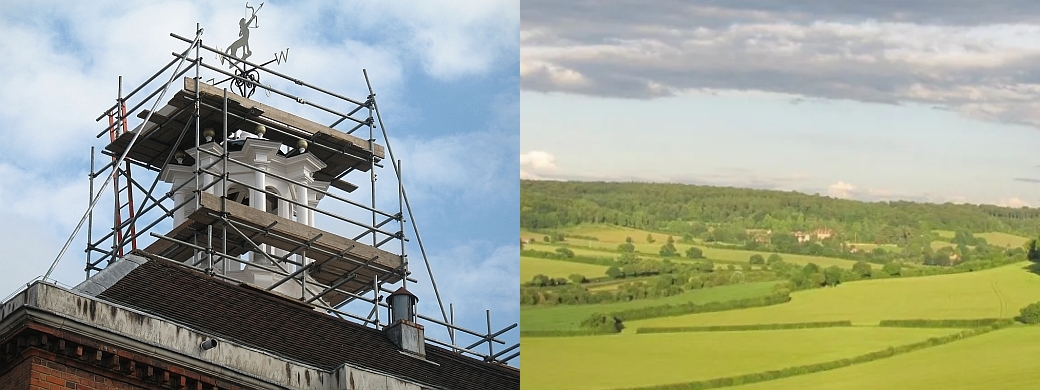
This site is not a blog as such, more like my collected works, but only in the sense of being gathered in one place. They could equally be called scattered works, like sheep on a hillside not yet marshalled into a neat format by a sheepdog or curator.
Any substantial piece of writing has a reader in mind: a certain level of intelligence, life-experience and imagination. Language itself presupposes a sharing, but does not rule out sharing with oneself. I can use it to crystallize a moment, to protect it from the ravages of time and forgetfulness.
In the past I’ve depended on readers’ feedback too, in the form of comments and private communications. Depended on? Sometimes wooed. And be no better than a politician? Not a good idea.
What inspired me to write here at the time was a new-found joie de vivre.
I’d had a personal website since 1997, and turned it into a commercial one, ITskill.com which survives in fragments thanks to the Internet Archive. I’d also been member of a thing called Ecademy.
The joy, and the impetus, persisted. But it was a kind of shackle too because there was a darkness worth writing about too, if only I could—like Fernando Pessoa in his Book of Disquiet. His descriptions of alienation and unhappiness are strangely uplifting, and I’m not the only one to say so.
I confess to having been profoundly unhappy between the ages of 6 and 12. And yet I couldn’t say anything about that, only the positive highlights. And so it went on, from age 18 onwards, not without positive episodes. There are decades about which I have nothing to say. The few remaining pangs of guilt and regret don’t haunt me any more. Mercifully, much has been forgotten.
What is this word “unhappy”? Is it just a construct of our age? The OED traces it back to 1325, but not in the modern sense till 1878, with this quote:
R. Browning La Saisiaz 30: “Life thus owned unhappy, is there supplemental happiness . . . in life to come?
Owned in this context means “admitted to be”, not “possessed”. A few lines later, the poet uses the verb “want” in the older sense of “lack”, not “desire”
What is this meaning of happy, whereby it is possible to say one is denied it on earth but find it compensated, in “life to come”?
 a wayfarer’s notes