
 My sister emailed me:
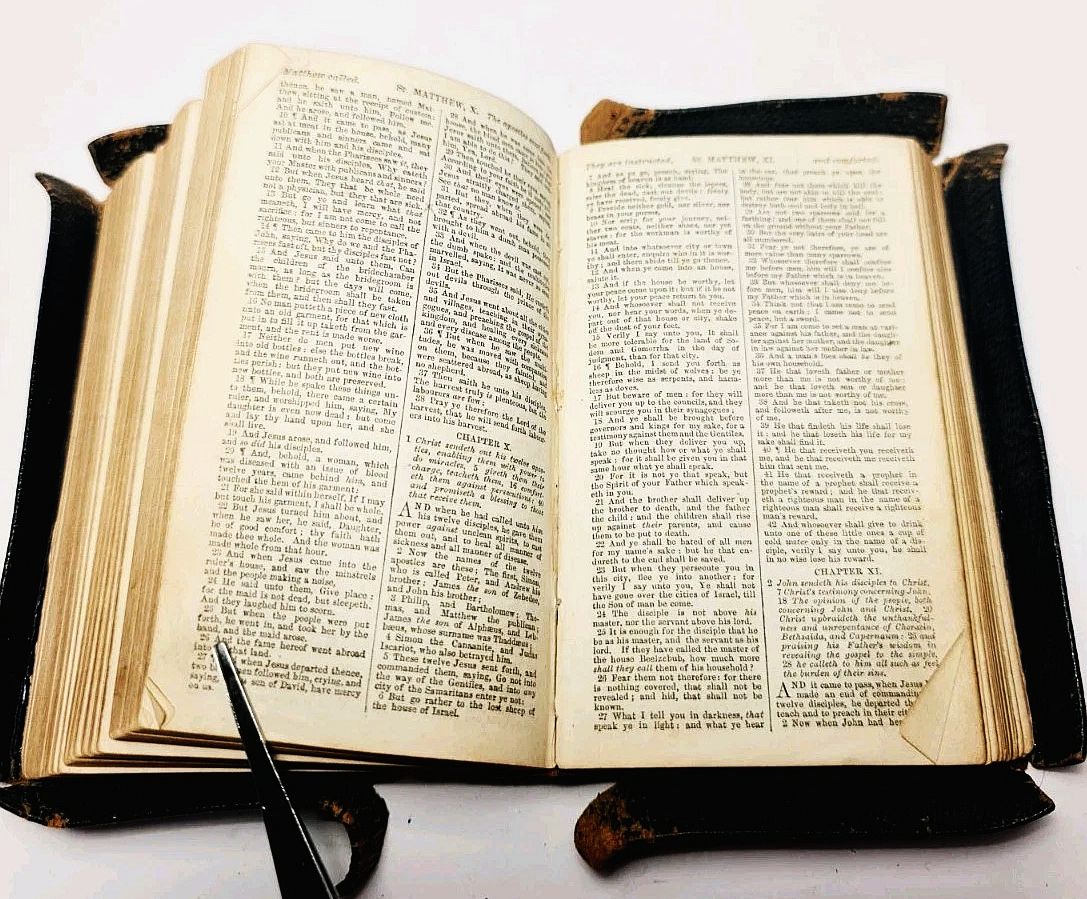
I have been sorting through old books & I have just come across this New Testament belonging to you, do you remember it ? Let me know if you’d like it ? 2& half ins x 4ins in size !
I replied “Thank you! I would certainly like it, things like that can bring back memories.” I didn’t tell her what memories it evokes. I cannot tell her that living in her father’s small flat—he being my first stepfather—was the worst experience of my life. Someone recently asked me “Do you have unresolved issues about your childhood?”. No, I blame no one, there is no one I need forgive, least of all myself.
We were an ill-matched trio: my mother, Kenneth (the name I give my sister’s father in Wayfarer’s Notes) and me. Arriving back in England a widow at the end of the war, my mother was in need of a husband. We were staying with her own genteel but impoverished parents. Aware of my precocious intelligence, she determined that her main duty now was to give me a good education. I think I was an accidental as opposed to a wanted child, but in either case she was remarkably lacking in maternal instinct. Kenneth was tall and bronzed, a 57-year-old bachelor, a man of property. He fitted her exacting requirement. I believe she got pregnant again so as to trap him into marriage. If so, the ploy worked: but had she given any thought to the consequences?
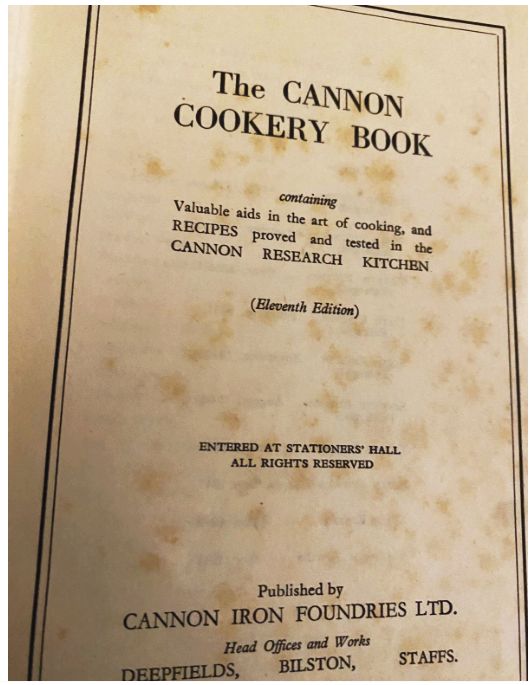
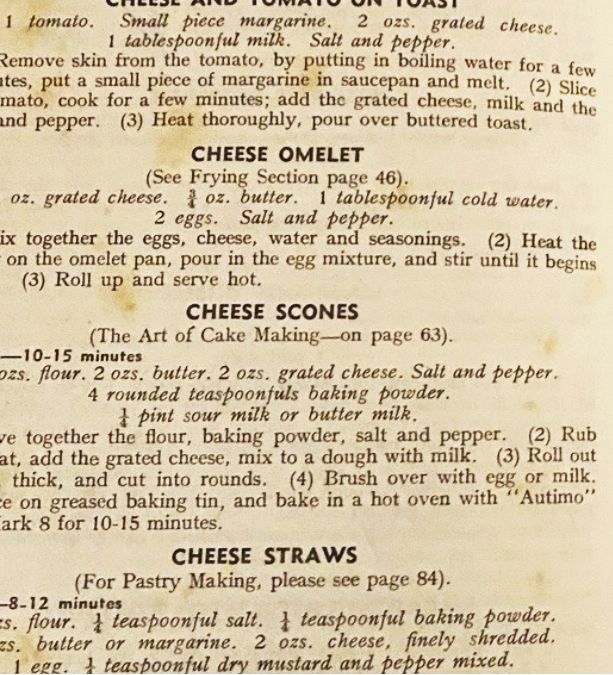
Kenneth had been a sickly child brought up in London. He came south to Sussex, worked on his physique, practised “Nature Cure”, body-building, living an outdoor life—all to make himself strong. For years he lived as a solitary pig-rearer, saving every penny till he could give up farming to buy a string of properties. Some were holiday lets (seaside bungalows, one week or two, change on Saturdays), others were long-let town houses divided into flats, self-contained or otherwise. He lived in the upstairs part of one of these: enough for a bachelor, dire as a family home with a child and one more on the way. He seems to have been determined not to change his settled life-style.My mother had never cooked in her life. Kenneth’s kitchen was dark & Victorian, cluttered with tarnished silverware on a table, a drab museum like all the other rooms. She demanded new fittings throughout, but had never cooked in her life. (When they got the new gas-cooker it came with “The Cannon Cookery Book”. She studied it carefully.) Her parents had had servants. When she married her Dutchman in Singapore, they had servants. In Australia where I was born, we lived in a boarding house, with meals provided. She had no clue how to be a wife, he had no clue how to be a husband. I’d never had a father (never met my own) but observed how fathers behaved when we walked through the park. They bought ice-cream for their children. Kenneth refused. They carried their small child on their shoulders. Kenneth refused. He didn’t even slacken his pace for his new (pregnant) wife and short-legged step-child, not yet 6. In the flat, I had to sleep in the bathroom, on a folding camp-bed.
 The newly-weds got on so badly that I ended up being ignored by both. When they went out in the evenings to “shows”, or in the day for long walks, they left me in the house. (The verb >“babysit”, first noted in 1946, had yet to reach England, where anything less than bombing raids still felt like safety, and children were not cosseted.) I got out sometimes and played with the local ragamuffin kids on the Green, and its playground with swings. I was given a fountain pen as a birthday present and proudly showed it to them, same day. I was happy to trade it in for a generous handful of marbles, plus some cigarette cards in complete sets. After which I was forbidden to go out alone. Let this be a sufficient vignette of my life before I was sent to boarding school, in September, coincidental with my mother’s giving birth to my half-sister. Grandpa drove me to the school. He knew the headmaster. The strange thing is that I have no memory of my sister at all in that flat. Perhaps I spent most of school holidays with my grandparents on the other side of town.
So when my sister sent me the pics of that New Testament, it evoked misery. Undoubtedly it was given me by Kenneth: he came from a family of evangelical Christians. He also gave me an evangelical story book for children, printed by some Tract Society. My sister refuses to hear ill of her father, for he loved her. He decided that the whole point of his ghastly marriage was to have the daughter that he’d always wanted, etc. He obtained custody unopposed when they split up. We hardly knew one another in childhood. Like me, she never had a proper parent, for he neglected her too. She occasionally came to stay with our mother as a guest, for she was told to take all her things with her when she went back. She remembers that clearly.
I wasn’t stupid, I would have understood that in filling in the flyleaf where a child would normally write “this book belongs to . . . “, I was signing up to a membership, a new form of captivity, within the captivity I already suffered, and then the captivity of boarding school to which I was assigned.
So when I wrote in my last that I was “otherwise neglected”, it seemed like a neutral thing, almost a kind of freedom. But that Testament, with my writing on it, made me feel the hurt of it. I was emotionally abandoned. It makes me understand a cause for the bitterness of atheists who blame religion, and the Bible, for countless ills in the world. I surmise that they too had parents who used God as bogeyman, babysitter and substitute for parental love.
Thus religion has more to answer for than simply sexual abuse. Which I never suffered, other than 2 feeble attempts by strangers and one from an older pupil in boarding school. Probably because “I was not pretty enough.” I take the phrase from Jonathan Meades, who describes his own postwar childhood in An Encyclopaedia of Myself
2 thoughts on “Religious abuse?”
ellielarry
Ian,
Although I am saddened to hear what you endured as a child, I see that everyone concerned acted out of their own woundedness and pain. Maybe you can’t remove the suffering you felt long ago, but by embracing in forgiveness those who failed to offer love, you may be released from bitterness and alienation.
From what you have written about your experience I know that you crossed many hurdles and reached higher than those who raised you. Perhaps you can now look at the inscribed New Testament and the handful of marbles and laugh because you are free of any tyranny they may represent.
Trying To Be Helpful,
Vincent
Thanks Ellie, I don’t seem capable of bitterness and alienation, but it has been a long climb, as you suggest, & made me more sensitive to others’ suffering. & it’s a rare thing that reminds me of that tyranny, and then it is just a twinge.
You are always helpful!
 a wayfarer’s notes