
 An essay by Frances Towers in 1920, a few years after the first publication of manuscripts by Thomas Traherne from the 17th century.
BETWEEN the covers of the Centuries of Meditation lies a spiritual kingdom. It has a close affinity with certain other kingdoms of the spirit, and the wanderer who crosses that threshold is conscious of an atmosphere in which some devout men of the same period had their being. Herbert, Vaughan and Crashaw, all three lived in a spiritual home not very different from this—a cloistered peace. But less than any of these was Traherne touched by the great world outside.
The literary adventurer in the seventeenth century has much to distract his thoughts. He is not very far removed from the greatest age of English literature : the thunder of the Elizabethans still rumbles on the distant hills, and a far-off reflection of their lightning lights up the dimmer and frailer poetry of their successors. The sweet singing of the Caroline lyrists tugs at the heart. Little poems, frail and exquisite as butterflies, are blown about the streets, and the sound of a lute comes from the tavern. From the churches the voices of the divines roll forth in sonorous periods. It is an age when preaching is an art and priests write literature. The people, tired perhaps of the indecency of the theatre, have turned to the Church for that mental excitement which would seem to be necessary to those who live in great cities. The lonely music of Milton sounds from the heights, as if in answer to the far-away echoes of Shakespearean thunder. The diarists record the scandalous incidents of the Court, and the country is edified by a display of licentiousness, ribaldry and excess which has never been surpassed. But no hint of this diverse world appears in the writings of Thomas Traherne, except an echo of the Metaphysical School, something of the tortuousness of Donne, the tranquillity of Herbert.
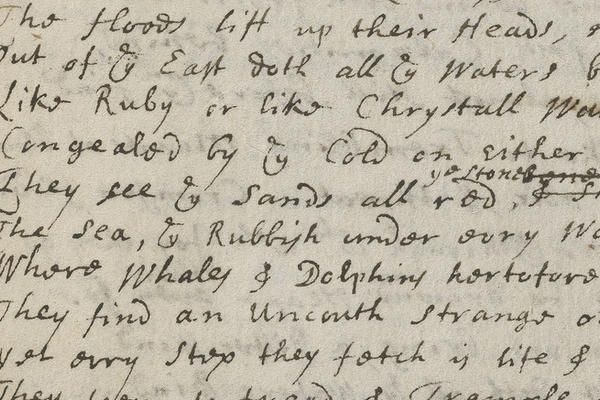 The wanderer in this motley world of roundhead psalms and cavalier marching songs, majestic prose, obscene comedy, delicate lyrics and sublime poetry, meets a rustic priest in whose eyes burns the flame which proclaims him one of the brotherhood of mystics—that serene band who stand apart from the turmoil of the seventeenth century ringed with the white light of peace. He beckons, and with the sign of the Cross flings open the doors of his kingdom, and the wanderer stepping over the threshold is conscious of a world as remote from the actual life of the time, from history, art and politics, as though these things had never been. He stands in a valley of sublime beauty, spangled with myriad flowers. The voices of nature, brooks and bird-songs, the sound of wind and the thunder of surf, are blended and lost in another sound—a strange and all-pervading harmony —as if these were only a few of the instruments in some far-off celestial orchestra. And the wanderer, straining the ears of his soul to catch the meaning of that strange, sweet music, turns with a question to the priest, who answers with child-like simplicity—’The harps of Heaven.’
After listening awhile to the heavenly harping, which drowns the voices of earth so that bird-song and the rune of the sea and the wind soon lose their precious earthly meaning, their individual poetic significance, the wanderer turns to the flowers that star the grass. Earth’s flowers are so excellent, their appeal so personal and intimate, that the soul, a little bewildered and lost, drowned and deafened in the music of eternity, turns with longing to these little tokens of its earthly happiness. But the flowers of the mystic are jewelled chalices, filled with sacramental wine. Red roses wet with dew, emblematic to the lover of the grace and fragrance of his beloved, in the transcendental gardens of mysticism are cold and scentless jewels dedicate to the worship of God. The tall, white lilies, heavy with golden dust, are candle-sticks at the foot of the Throne of Grace. The poppies burning in the ‘orient and immortal wheat’ are flames on God’s altar. And all the delicate flowers of spring, so intimate, lovely and caressing, little flowers beloved of the poets—daisies, daffodils, violets sweet as Juno’s eyelids, eglantine, thyme and starry wild rose—which are bound up with the tenderest thoughts of man and are dear as the kisses of children, the smiles of the beloved, become for the mystic merely a pattern in the ecclesiastical embroidery, a beautiful design woven for the glory of God into the garments of earth.
Out of the red-brown earth, out of the grey-brown streams,
Came this perilous body, cage of perilous dreams,
 and man who is of the earth earthy, who adores the earth for her sensuous appeal, who is grateful to the sun for the warmth of his beams, to the sea for its wild and pagan mystery, who loves or hates his fellow-creatures for their individuality, may well find in the ardent abstractions of Traherne a strangely bewildering substitute for the human ties which bind him to the world. The image of Aphrodite rising from the sea, sea-born, enchanted, alluring, with the mystery of the sea in her eyes and the beauty of the sea in her body, calls with a subtle appeal to the lover and poet in the heart of man : but the mystic sees only God brooding upon the waters. The restless, whispering, haunted sea, which for the poet is seething with drowned passions, wild hopes and winged dreams, in whose depths lie golden galleons, dead kings, enchanted weeds, and pearls and painted fish, is for the mystic but the mirror of eternity. Traherne, who speaks of nature with ardent love, sees her as a glittering jewel, not as a living soul. She appeals to him intellectually or spiritually rather than sensuously, and his attitude is more appreciative than adoring. He notes her manifestations and draws conclusions from them, as if she were a wonderful work of art, a picture painted by the Master Hand, or a poem hiding a heavenly secret. The pageantry of earth never leaves him speechless with a sense of his own spiritual unworthiness or ignorance. It would seem, indeed, to add to his spiritual complacency. He could gently moralise under the midnight sky, and it is only when he reaches out beyond the confines of earth that he attains the greatest height of his poetic inspiration. ‘ Stars sweetly shedding to my pleased sense On all things their nocturnal influence,’ conveys an attitude of serene and tranquil contemplation very different from the awe-struck pain of Hamlet’s consciousness of a roof majestical fretted with golden fire,’ or that intimate and beautiful whisper of Blake speak silence with thy glimmering eyes And wash the dusk with silver.’ Even the oft-quoted—’You never enjoy the world aright, till the sea itself floweth in your veins ; till you are clothed with the heavens, and crowned with the stars,’ which captivates the mind with its poetic grace and has been claimed as containing the essence of everything that has been mid by the poets who have sung of the relation between the soul of man and the spirit of nature,’ betrays the complacent attitude of the man whom the stars have never laid under a spell, who has never heard the whisper of the sea in his heart.
Traherne’s spirit soars above the warmth and colour and passion of earth into eternity. The harps of Heaven throb through his prose and his thoughts are luminous with starry dust, but of the poetry of earth, her delicate, hidden soul, which she reveals to her elect, poets and shepherds and those who go down to the sea in Ships, be knows nothing.
He is as far removed from the intimate spirit of nature as he is from the beating heart of humanity. He will not acknowledge man’s kinship with ‘the red-brown earth, the grey-brown streams.’
Your enjoyment of the world is never right till every morning you awake in Heaven,
he writes,
but those who love the earth with the passion of the lover and poet know that it is enough to awake in her arms.
‘This little cottage of Heaven and Earth,’ beyond whose bounds even the Titanic imagination of Shakespeare did not seek to stray, was to Traherne but a censer smoking in the blue mists of eternity before the Throne of God. He quotes the answer of the wise men of Greece to Amasis, King of Egypt, who asked ‘Quid pulcherrimum?’ but in spirit he is very far removed from that ancient wisdom which knew the beauty of the world.
The pipes of Pan are drowned in the ringing of church bells, and it needs a greater mystic than Traherne to hear that haunting earth-music which is the sound of the sorrow of the world and the sound of her exquisite joy. The chants of Palestrina could not drown that sound for Blake. He knew that the Tree on which the Son of Man was crucified might once have sheltered a Dryad. He has the sublime mysticism which reaches beyond the stars to the heart of God’s pity and descends into the depths of Hell where chains of misery bind the broken-hearted to the wheel of life.
‘Piping down the valleys wild,’ Blake is the eternal Pied Piper, and our feet dance to his music because he knows the secrets of the earth. The silver-washed dusk and the lonely dawn are his sisters, and the lambs and the birds his children. He looks with his burning gaze into the eyes of passion, and sin does not affright him. He blows bubbles of crystal song for children, as airy and pure as the soul of childhood. He knows—none better —the secret of the shadows of earth, the ghouls and goblins of darkness which haunt the human spirit—poverty, crime, disease —those sinister shapes of whose very existence Traherne would seem to be unaware. It is Blake’s knowledge of the stuff of life which gives him this power of twisting the heart-strings. He has the true poet’s vision. It is the lack of this knowledge which makes Traherne’s appeal so limited.
Traherne, so brimming with happiness, so anxious to bestow this priceless gift on others, is impotent to impart his joy. So pure and rare a mind cannot face the facts of life. It most of necessity transfigure and glorify the stuff of which life is woven into something new and strange aged men into immortal cherubims. And young men glittering and sparkling angels and maids strange seraphic pieces of life and beauty.’ He shows almost a wilful perversity in ignoring the dark threads in the tapestry. He would have us believe that the pattern is all white and golden, scarlet and blue and silver, glowing with deep, pure colours, like stained-glass windows. The grey threads of sorrow, the black threads of despair, the blood-stained threads of anguish, shrivel away in the flame of his mysticism, and though he burns with a fiery, impersonal love for his fellow-creatures, he knows; nothing of their heart-aches, their groaning, their bitter tears.
All great poetry speaks with the voice of troth, and the greater the poet the nearer he is to the truth at the core of life. He cannot see life more beautiful than it is, but he sees it with a clearer vision than do those who are denied his spiritual insight. Religion and love from time immemorial have been the two great sources of inspired art, and it is a significant fact that the latter theme has inspired the greater poetry. The reason is not far to seek. In dealing with sexual passion a poet is writing of life as he sees it. To the ancient Greeks love was winged, innocent, ethereal ; and so Shakespeare sees it, so Shelley. And the young lover, aflame with a passion which is as much spiritual as physical, knows that their vision is true. He, too, has seen the winged and dazzling purity of the spirit of love. And though he may turn aside to dolly with lust and proclaim as true prophets those in whose pages that creeping figure takes the place of the golden radiance of Eros, in his secret heart he knows that theirs is a false vision.
The religious poet is on a different plane. He is not striving to look at life, to catch a glimpse of her hidden spirit of wonder. He endeavours to look beyond life into the white light of eternity and those who are not like-minded with himself can only wonder that he should be so concerned with that which lies outside time and space.
There is a sublime calmness in the way in which Traherne dismisses this same matter of sexual passion, as if he were quite unaware of its strange and awful potency, as if he had never guessed (as, indeed, he probably never had) that here was one of the golden keys that unlock the gates of dream, the only key whereby a great part of mankind attains a fleeting glimpse of the vision of beauty. ‘Suppose a curious and fair woman. Some have seen the beauties of Heaven in such a person,’ he says with gentle tolerance, forgetting that such visions have changed the destinies of nations. The leaping flame that burns in great epics, that flickers still in portraits of long-dead women, that lives imperishable in words of immortal beauty, has never seared his soul. Traherne had another key to the gates of dream—the mystic key of religious ecstasy. The flame in his soul was not that which leaps about the roots of life : it was the steadfast radiance of faith. Artistically and humanly speaking, this is where he seems to fail. The poetry of earth, the language of passion, are impregnated with light and warmth; in other words, with that atmosphere which is the breath of life in art. ‘They love a creature for sparkling eyes and curled hair, lily breasts and ruddy cheeks,’ he says with mild wonder, and proceeds to enumerate the hypothetical qualities of every child of Grace, for which alone apparently a woman should be loved. It is the speech of a man who has been denied a vision of that puissant beauty which came into the world with Eve ; to whom, therefore, the greatest art of all ages must be inanimate, who would miss the poignancy of the greatest poetry of love, and would underrate the anguish of the human heart. Marlowe’s vision of delicate virginity, girls
Shadowing more beauty in their airy brows
Than have the white breasts of the Queen of Love,
would have left Traherne untouched. Neither its poetic grace, nor its subtle enchantment, would have penetrated to the fastnesses of that lofty spirit. But the key of religious ecstasy undoubtedly unlocked the ivory gates for Traherne. He is both mystic and poet, but it may be questioned whether he would have been a poet had it not been for the mystic flame which eel his soul on fire. No other poet of his time shows so little regard for tradition. There is scarcely a hint in his work that he cared for the great poetry of the past. He might never have read a line of Shakespeare, and it is probable that Shakespeare did not touch his imagination.
Traherne’s verse gives an impression of unstudied artlessness ; as if he were so concerned with the matter that the manner must needs take care of itself. As indeed the manner does. There is a spontaneity, a fresh impromptu grace, in his style, which to a twentieth-century reader possibly constitute his greatness Here in a writer so on fire with love of his subject that his natural speech becomes poetry—the flame is so pure that the vessel glows with a great light. After the lapse of more than two centuries a wind seems to blow from his pages, a wind of icy freshness and purity—as though it had travelled over wide and frozen spaces, over uncharted seas. His style is the natural expression of a crystal purity of mind, and glows with an inward light as if hie thoughts were luminous.
More than any other writer, Traherne conveys an impression of dwelling upon the mountain-tops of thought, of being independent of the common needs of life. Even Thoreau does not seem to have reached this complete detachment of spirit. It is as if the rarefied air of his mountain-top were meat and drink to him ; or at least as if the meals of which his humanity would force him to partake were sacramental feasts. He would break his daily bread as though it were the Body of God. So from his mountain does Traherne survey the world, and if he has not the clear vision of the poets in the cities who ‘ see life steadily and see it whole,’ he has an ethereal and radiant vision of what he would have life he.
The sources of Traherne’s inspiration are not far to seek. His naturally contemplative, pure and gentle nature found a refuge in the Anglican Church. Her calm and dignified utterances were his spiritual refreshment, and the performance of her rites and ceremonies a satisfaction of the practical side of his nature. Though he would appear to owe little or nothing to his English predecessors, it is more than probable that he was acquainted with contemporary religious poetry. But the Scriptures are the sea from which he gathered his delicate shells of thought—coloured though they are with his own radiant and graceful personality, they are yet murmurous of their nativity ; scarcely a page that does not reverberate with echoes of the Psalms, the Book of the Revelation, or the Song of Solomon. But the terror of the Old Testament, the darkness, despair and bitterness of beset, cast no shadow over his tranquil spirit. He has never seen God as the Prophets of old saw Him, as the Psalmist saw Him. Even the cry of the dying Christ has scarcely reached his ears. Though his mind was so steeped in the Scriptures that the speech of tragedy must often have been on his lips, he would seem to have had no conception of Jehovah of the thunders, and from the calm heights of his belief in the mercy of God he could contemplate even Hell with equanimity.
The mystic torch was early alight in Traherne’s soul. What a poignant and haunting picture of childhood—the little, serious, eager child grieving that the world was so empty,’ at four years of age reasoning with himself about God; a little later finding, his soul and coming into his inheritance of imagination ! ‘When I heard of any new kingdom beyond the sea, the light and glory of it pleased me immediately, it rose up within me, and I was enlarged wonderfully . . . when the Bible was read, my spirit was present in other ages.’ ‘Felicity’ is the name he gives his ideal. It conjures up a vision of grave, austere beauty. Sandal-shod and tranquil-eyed was the goddess he worshipped. Her grey robes shimmered among ‘silent trees and meads and hills.’ Her inseparable companion was Traherne’s ideal of manhood, a being he called a ‘Magnanimous Soul,’ and they linked hands about him in his short passage through time. One seems to see him with the spirit shining through his earthly frame, his gaze always fixed on unearthly presences, spare, austere and noble, fearless of heart and brave of speech, delicate-minded in an age of coarseness: as if the grey robes of his goddess of Felicity were veils that hid the world, as if the voice of her companion were a music that drowned the shouting of the market-place.
FRANCES TOWERS.
3 thoughts on “Thomas Traherne: His Outlook on Life”
mpeverett
Nice comment, that of Frances Towers. Maybe T.S.Eliot was influenced by this when he called Traherne “more mystic than poet”… apparently intended as a dismissal. I find it impossible yet to take sides on this, but I feel interested in reading more of both Traherne and Towers.
Vincent
I discovered a brilliant exposition of Traherne’s written works. More have been discovered since Towers wrote her piece a hundred years ago. I’ve uploaded it here with the title “Desire & Redemption”.
It’s a PhD thesis by Denise Inge (d. 2014. aged 51) who shaped her life’s work around Traherne.
mpeverett
Good thesis, I’m learning a lot from it!
 a wayfarer’s notes