
I wanted to write something inspired by Darius’ comment “… most of us have psychological stuff that interferes with getting in touch with the depth” but had no opportunity to post anything till now. Who in the world can be classed as normal, I wonder? Jung, in his Memories, Dreams, Reflections, ascribes the theory of sexuality to an incurable neurosis on the part of its author Sigmund Freud. For his part, Freud thought Jung’s seduction by the occult invalidated his theories. What chance for the rest of us, trying to understand the difference between sanity and madness?
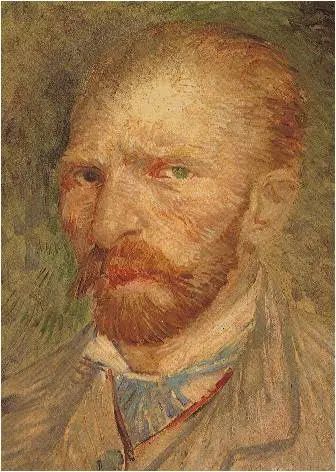
There are all kinds of “psychological stuff”, i.e. what Freud and Jung would call neuroses, and we may start with the assumption that none of us are free of it. Some varieties get in the way of our contact with the depth. But if we are too much in touch with the depth, we may have to retreat to the asylum, like poor Vincent van Gogh.
I’m watching that excellent 1956 film, Lust for Life, based on Irving Stone’s book written in the 30s. Vincent is portrayed with the same enthusiasm, in its archaic sense of “ecstasy arising from supposed possession by a god”, as Jesus in The Last Temptation of Christ. In both cases, passionate intensity is a kind of madness, if you measure it by the loss of touch with “reality”. The individual is possessed by a fiery impulse which transcends the instincts of self-preservation that make most of us lead sensible lives. I’m not saying that Van Gogh was like Jesus or that either of them was mad, just commenting on the fictional characters so effectively portrayed on the little home screen via the wonderful invention of DVD.
The “psychological stuff that interferes with getting in touch with the depth” is so common as to be endemic, so there is no name for it. Gregariousness and extraversion are not forms of mental illness. Conformity to the prevailing culture is unlikely to be listed on any taxonomy of psychiatric conditions. Yet these tendencies keep us on the surface of life. The Gospel stories of Jesus going into the desert to pray have inspired hermits and monastics ever since. This site, Hermitary, is worth a look.
That is enough for today, even though I had wanted to weave in other topics such as Angels and the State of Grace.
PS (next day)
This must be a terrible thing to do in the world of blogging, but I’m censoring what I wrote yesterday. I realised on rereading the original of this post and in particular the comments from Darius and Hayden, that I had communicated badly. Not only that, but I saw in myself remnants of a certain way of thinking which I’d reinforced through habit and never questioned for 30 years. I’ve left Hayden’s and Darius’ comments intact. A revised version will be published today. It’s not just a rewording of the original post but a revision of where I stand. Dogmatic views would be so much easier, and U-turns are embarrassing. But frank admission is more cleansing.
Comments
Hayden:
(Yves, I’ve taken the liberty of linking to one of your earlier posts in my current. didn’t think you’d mind..) (I called myself Yves then, to go with Rochereau, African musician)
Vincent:
Honoured in fact!
Vincent
Further comments provoked by my PS
Darius:
I largely or entirely agree with what you’re saying here.
A problem is that language can be so difficult and loaded with connotations in this area. So in using “Grace” and “angels,” it will be impossible to communicate to people about this aspect of experience if they identify strongly with empiricism and rational thought unless you explain your metaphorical use of such words to the fullest possible degree. Which it seems to me that you have gone some way toward doing in this post.
Hayden:
I confess – this is incomprehensible to me, which in your terms means I haven’t got it, and since it’s a gift not earned, I can’t particularly hope to.
what a depressing idea.
I prefer to credit my own unmediated reality, and to think it does not exist.
But it’s nice to know that there are people in the world so comfortable in their skins and in their lives. That is a hopeful notion, even if grace is not.
I’m attracted to religion because I find it to be a poetry of the soul, a metaphor for the fears, hopes, horrors and beauties of the human condition. Life.
Vincent:
O Hayden, it just means I have failed to communicate, for there was no attempt on my part to promulgate a depressing idea, merely put in words an observed phenomenon.
Darius, you’re right in saying it will be hard to communicate and indeed opening Jonathan Edwards’ Treatise on Grace this morning at random I read the following: “The reason why natural men have no knowledge of spiritual things is, because they have nothing of the Spirit of God dwelling in them.” Now this is the elitism of a cult, because he goes on to explain that to have the Spirit of God dwelling in you, all sorts of things have to happen: all things which bind you closely into the beliefs and practices of the particular Protestant denomination which he represented. So I realise that this is not what I meant at all and it is foolishness on my part to have caused confusion, just because I like this word. O, what to do?
Hayden:
not so terrible, Ian, but rare and refreshing. sometimes people delete entire blogs poof and that’s something I hope /trust you’ll never do.
I was quite startled by your response.
authentic acts always amaze.
Vincent (31st May):
I have deleted entire blogs, Hayden, twice! This one rose Phoenix-like from those, with the precise intention of reaching at least one person, and of hobbling, not necessarily surefootedly all the time, towards a truth that might be authentic enough to stand. Then, thanks to you and others, I realised the power of dialogue. No! it was my old friend Rob who showed me that. He has been known to write one-word posts, such as “Hello!” and “Boo!” and his audience love it. I fear that he may become a guru in his own right – a terrible fate to befall anyone.
 a wayfarer’s notes