

 I posted this on another site, on Jan 29th, ’23, not long before being rushed to hospital for a diagnosis and tricky spinal operation. Now, there’s “all the time in the world” to get the job done properly; so long as impatience doesn’t get the better of doing a proper job.
Many years ago, when I worked at Zeus-Hermes, I read a piece in Computer Weekly mentioning Notes on the Synthesis of Form. I couldn’t get a copy anywhere till I found one on an obscure shelf in the world-famous bookshop, Foyles. I remember its brilliance and scope. He has a whole chapter on designing the best possible kettle for the gas stove. The final section has a set of stylized drawings depicting an ideal layout for an Indian village, from the perspective of 1964. when design and architecture were in process of revolution. He mentions some of its notorious heroes. I wish I had that book still on my shelves, but it fell victim to changes of home—and marriages—along the line. So I’ve managed to glean what’s freely available online via Google Books, … blah blah, and so it went on.
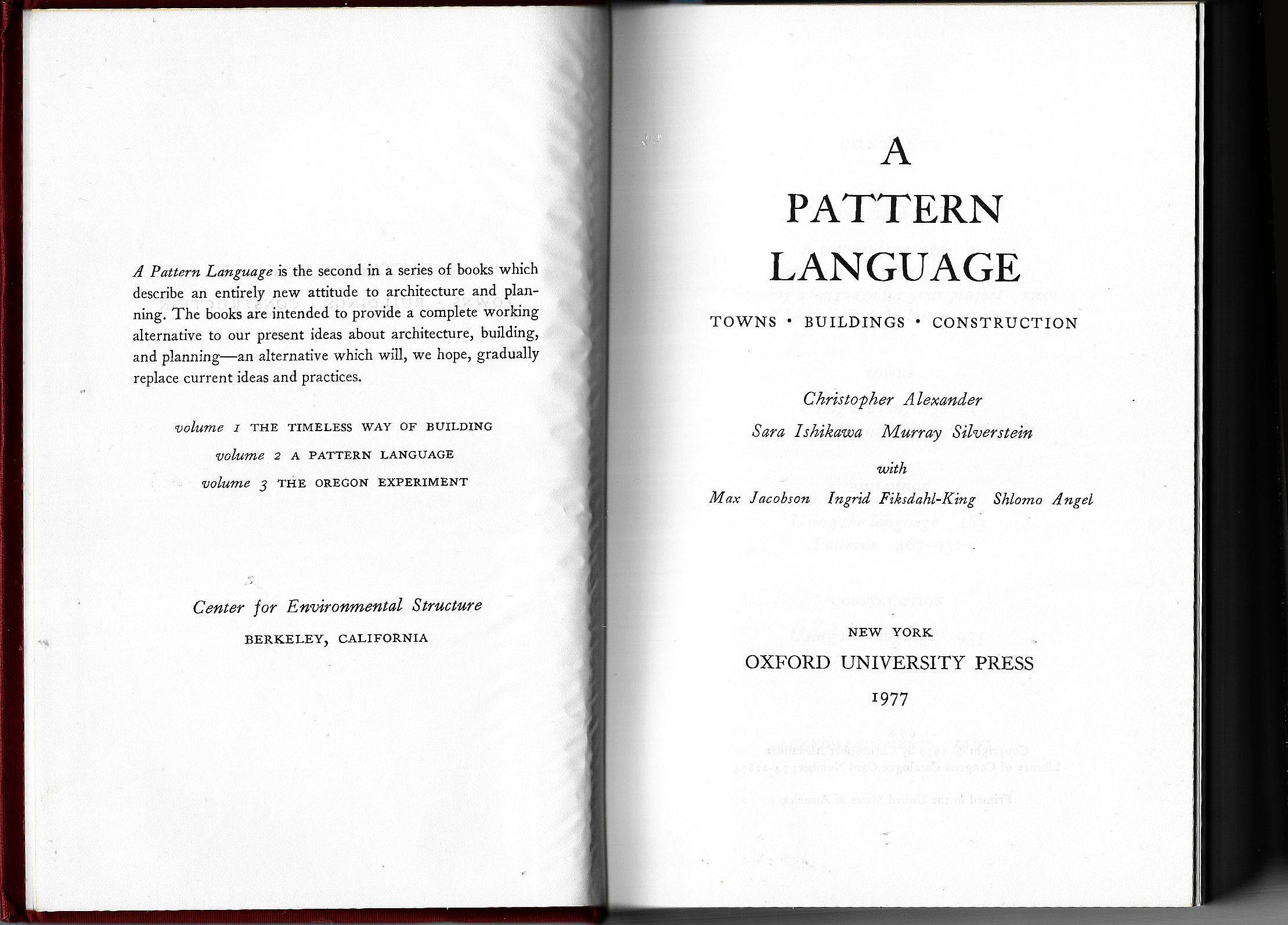 I must have bought another copy at some stage, for here it is. For someone whose topic covers the design of houses, appliances and Indian villages, where you’d expect diagrams and simplified lectures, Alexander’s writing is an entanglement of abstractions. He’s better in his earlier book A Pattern Language. It’s fascinating and well done in words, diagrams and photos, but wearisomely long at 1171 pages. Why? Because nothing is left unexplained. What is the meaning of its title? Well, we should use a special language, one that exploits the poetry of the English language, he says: which is enough for Pattern Language (published 1975) in this short piece.
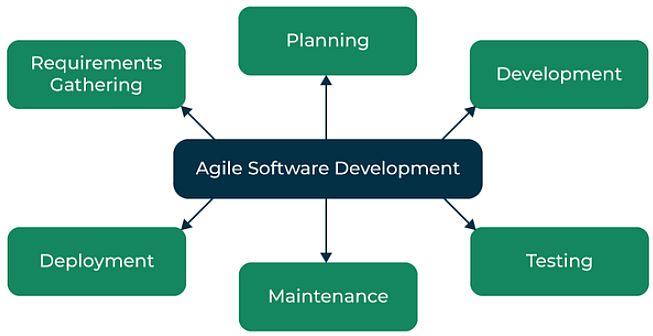
Notes on the Synthesis of Form came out in 1964, and the reason I heard about it was the inspiration it gave to software developers who got together and conceived “Agile Technology.”
Back in the Nineties, I found myself at loggerheads with a strict methodology, fondly known as Saddam for its dictatorial approach. It suppressed the creativity of team members. We were supposed to sing from the same hymn sheet, one which nobody had written, like a coherent poem, but something which had robotically emerged. from an imposed set of rules. Click SSADM to discover that the Wikipedia article as submitted doesn’t meet its criteria, being a bald mindless set of procedures. I worked on several huge software projects: HMSO, Eurotunnel and NatWest Bank. My co-workers tended to shrug. They could put up with the tedium: “fine by us, it’s a job for life!”
Which shall be enough for today More soon.
 a wayfarer’s notes
