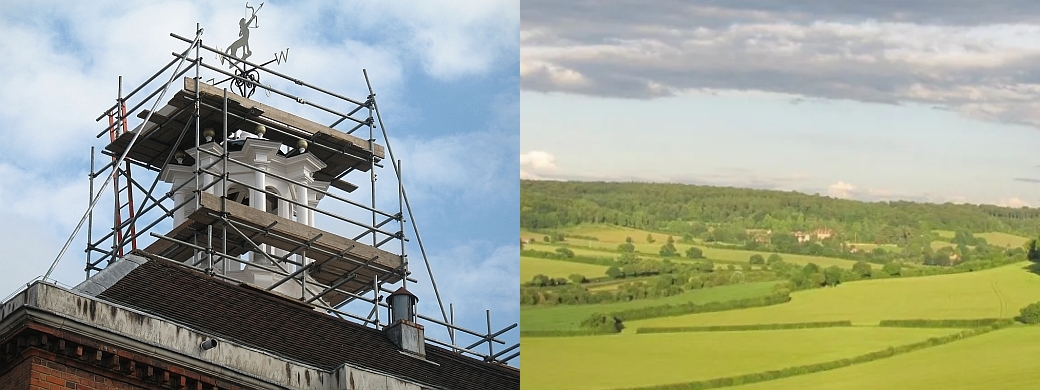

I last wrote about this book exactly 14 years ago.
I started reading it again recently, leaving a bookmark on page 38, where it speaks of the felt contrast between “subjective” and “objective”.
Objective reality, the realm of orthodox science “was, according to Husserl, a theoretical construction, an unwarranted idealization of intersubjective experience.” The “real world” is simply a collection of experiences… “And yet, as we know from our everyday experience, the phenomenal world is remarkably stable and solid, we are able to count on it in so many ways, and we take for granted much of its structure and character…
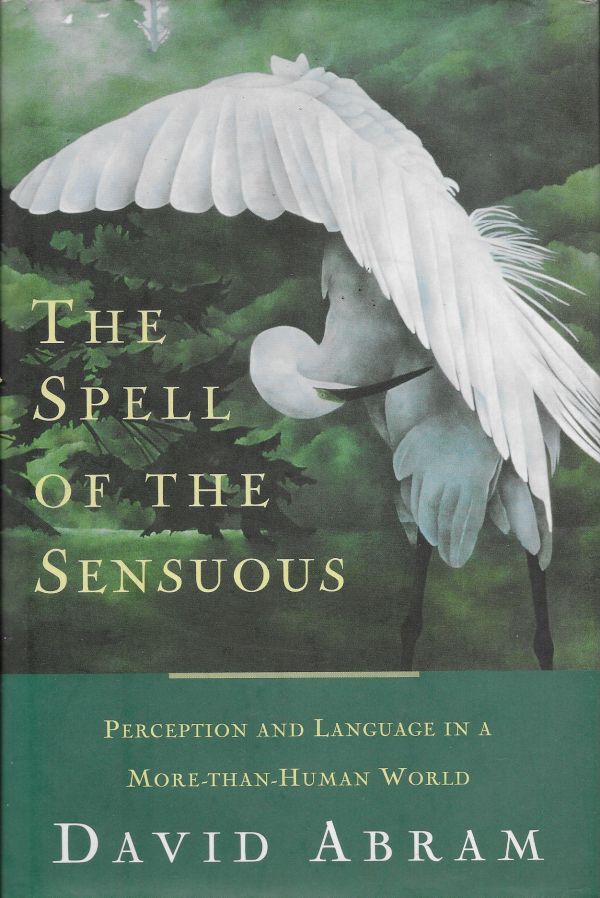
In earlier posts on this blog, there was a feeling invoked by contact with nature and my own body, Especially walking outdoors. It’s not the same today. Age and health issues limit my daily walking to the solid ground of pavements, where the 4-wheel walker needed for my bent spine can proceed without much trouble. Daily walks are essential, but cover familiar ground, without much thought of anything.
Fifteen years ago, I was able to write stuff like this:
The thoughts I carried and allowed to elaborate themselves in my head were somehow at one with the physical space through which I walked. It even felt as though this alley I walked was a corridor slicing through time, offering dim glimpses of the past and so adding an extra dimension to perceived reality. That was just a momentary perception. The “infinite depth” was something else, an inwardness present in this physical creation, or an awareness which goes beyond individual consciousness of the human “I”. It felt like a kind of immortality, though not of the self. In one moment I saw an eternal Here, as if this alley itself, or my own self in this alley at this moment, were enough to contemplate forever.
What am I trying to say? Certainly not with a sense of loss. On the contrary, I’m glad to have had the experiences, and the opportunity to share them here, hoping they’ve been of some inspiration to others, to a wider audience than could ever be reached in a book.
This piece also springs to mind. It begins like this:
Suppose everything is just as it should be, already? Suppose everything goes on being just right, no matter what? So whatever creatures do—even mankind—then Nature as a whole (which includes mankind) bounces back, fixing the consequences as best it may?…
… and continues
Suppose I eliminate from my thought, the phrase “We should …”? The next thing would be to eliminate the phrase “I should …”. It doesn’t come easy, because this is my culture, to constantly see problems and the need for me to participate in their solution. Then I must help fix the problems caused by solutions; and so it goes on. I don’t deny that the word “should” properly belongs in the English language. But I challenge its power over my life. I shall merely follow instinct, which is Nature in action.
I find myself struggling to express the perceptions I have these days. Where is my sense of intersubjectivity?—a word apparently coined in 1938. Abram conceives it widely as our connection with “the world”. This site sees it more as an interpersonal thing.
*On occasion, I walk up to 4 miles in one go, as described in this recent post.
 a wayfarer’s notes
Vincent!!!! I leave you, like all interests, every few years. However, I always return: never disappointed. I cannot recall a single occasion, as I write this, but I quote you often, as I would any author I admire. Your words have left a profound impression on me. I am pleased, and unexpectedly moved, that after nearly two decades, I find you are still writing.
LikeLike