
 Originally posted on Blogger, February 19th 2010
I really haven’t got time to write anything here. This makes it all the more important to do it anyway. I write in my blog for the same reason others do—to discover what I really think. Think? I’m not referring to “detached thought”, that attempt to be rational that we learn as a trick, as a performing seal balances a beach-ball on its nose for the sake of a reward paid in fish. I’ve learned ’nuff tricks in my time, but that’s all they are. I keep the box-of-tricks for it still comes in useful. Thanks for all the fish, but I must get back in tune with my whole being: sensation, emotion, the visitations of memory, the deepest promptings that defy analysis.
It’s a particular project which steals my time and saps my will to write here; a project now reaching its climax, after which I hope to be free of it: sell the copyright to a single buyer perhaps, and withdraw to a hermit’s hovel on a lake island: If I never get paid anything for the project, at least I can look back on a 45-year career in the software industry that wasn’t entirely abortive, for I finished it off with my best work, and proved I can concentrate for months at a time on a project; fuelled by nothing more than obsessive perfectionism, vision, obstinacy—and hate. You see, the career never quite suited me. I hate advanced technology, not for what it is but for its refusal to stop advancing. Is there no chance it can be stopped in its tracks? If it were a door-to-door salesman, I’d tell it firmly but politely (or politely but firmly), “No thank you. I already have all the advanced technology I need. Technology has peaked. It can only go downhill now.”
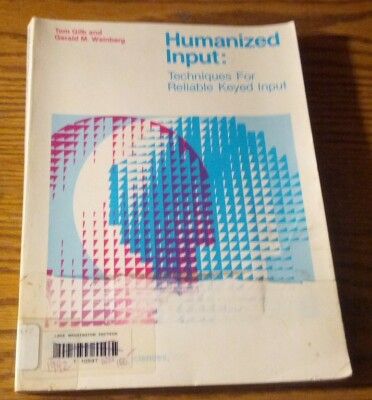 Some time in the Seventies the notion of “user-friendly” was invented. In 1977 I bought a book by Tom Gilb & Gerry Weinberg (they’re both still around) called Humanized Input. It’s written to solve problems which don’t exist any more, so much has computer technology advanced. It starts like this:
To the thousands of keypunch ‘girls’, who have saved so many awful designs by the tips of their fingers, we offer this work.
The thesis it pursues is straightforward: design computer systems intelligently for human users, and error rates will go down; that is error rates in punching the slots in 80-column cards. To me it remains fun to read and even instructive, if you transpose its advice to the issues of 2010. People still read the Holy Bible, though it too is hopelessly out of date: I mean, where today will you find death by stoning still adopted as a popular way of showing community disapproval? This doesn’t stop the devout from discovering in that book the Word of God, just as the demise of punched cards doesn’t stop me from discovering something, if only nostalgia, in Humanized Input. Each chapter begins with an excerpt from Lewis Carroll’s The Hunting of the Snark. This one introduces the chapter on “Default Messages”:
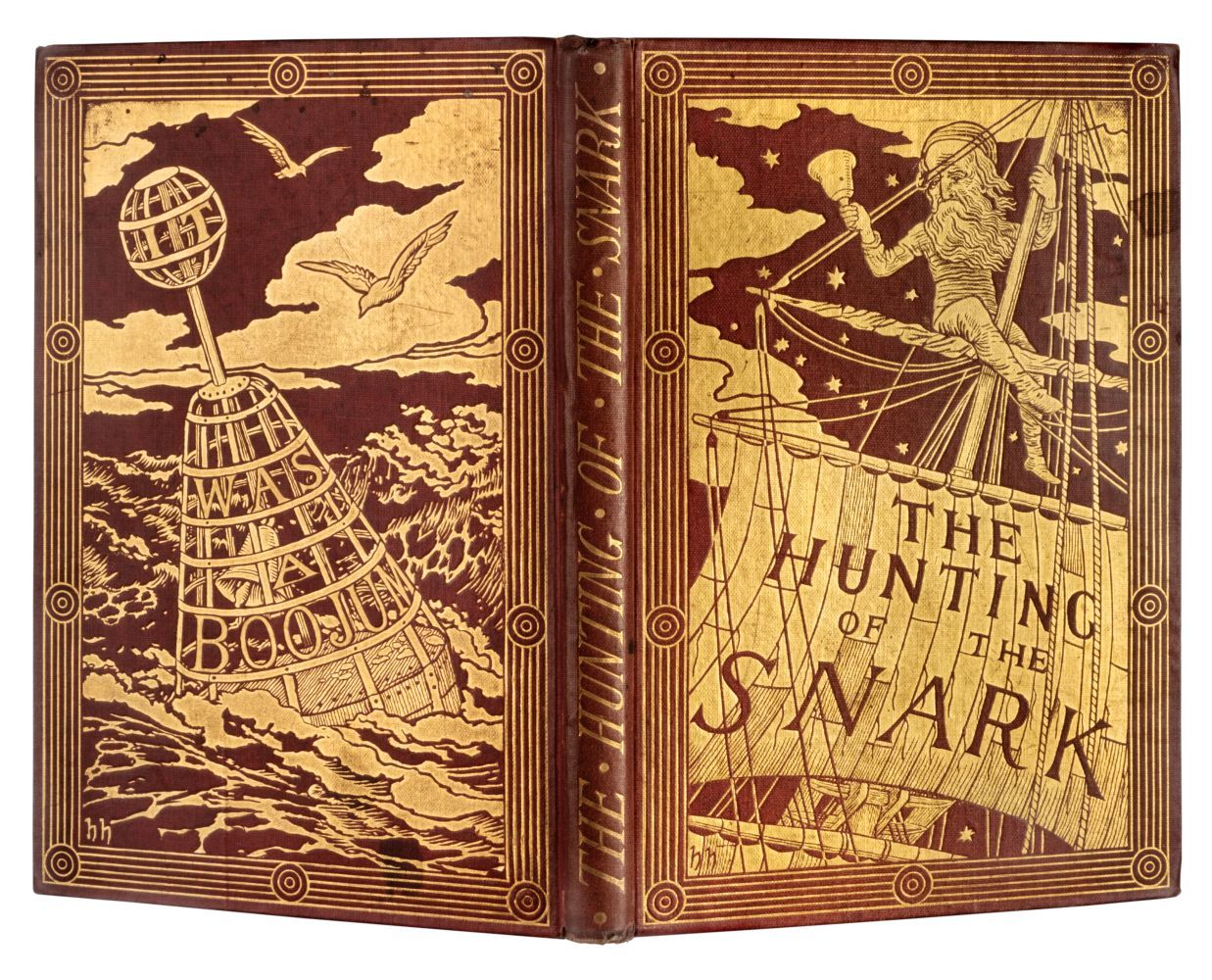 He had forty-two boxes, all carefully packed,
With his name painted clearly on each:
But, since he omitted to mention the fact,
They were all left behind on the beach.
The loss of his clothes hardly mattered, because
He had seven coats on when he came,
With three pairs of boots—but the worst of it was,
He had wholly forgotten his name.
But let me explain where the hate fits in: how it is possible to fuel your career with hate. A soldier hates the enemy of his country, of course. There is nothing wrong with hate! Like everything else it has its uses; but I personally draw the line at hating people, whether tribes, individuals or their personal attributes.
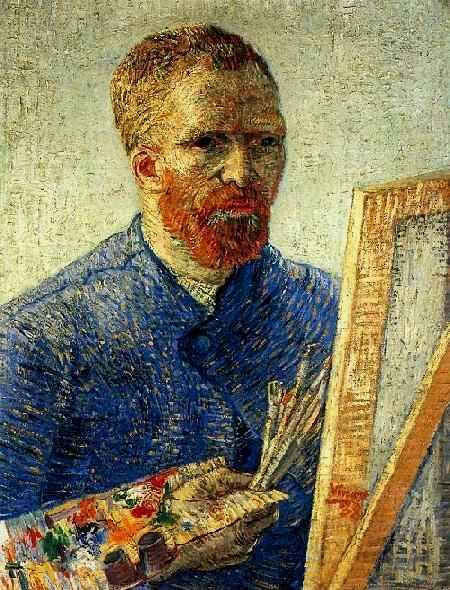
What I do hate is the crassness of technology: its love-affair with novelty, its “look at me” puerility, its desire that we should love it for its own sake. Actually it ought to be “transparent to the user”, that is to say invisible. A software package, a keyboard, a computer, should disappear from our consciousness so that “our sons and daughters will prophesy, our old men will dream dreams, our young men will see visions”. Let me spend years with the same user interface, so that I don’t see it any more. My computer should be (and to some extent is) like a paintbrush of Vincent van Gogh—the extension of my hand, eye and inspiration.
Recently a character in a book I was reading (Amis’ Money? Pessoa’s Book of Disquiet?) preferred hate to love; on the grounds that hate needs more energy than love and so doesn’t last. It wears itself out, and perhaps turns into a tolerant friendship. Love on the other hand is sticky, and so arrogant; you can’t get rid of the stuff. Either of those authors is misanthropic enough to say it, but I can’t be bothered finding the passage in question. Perhaps neither of them wrote it. Perhaps I made it up myself.
If I was being reasonably paid to write this software, I would have done the best I could in the time being paid for; and it would have been a botched job, with corners cut everywhere; a joyless ugly thing that the users would get used to like everything else, over time. But since I am hardly being paid at all for it (perhaps for a hundredth of the effort I’ve put in), there is no brake pedal to stop me. I’ve written documentation to a literary standard, designed desktop icons worthy of an art gallery, made it as user-friendly and transparent as longevity has had time to teach me to do. All this, in a vast disorganised argumentative team of one; and frequently in the quiet hours when everyone is asleep, hours which I like to think are reserved for me to finalize the posts you see here on this site.
If I could be as dedicated to writing as I have been with this programming swan-song of my career, then who knows? I might be able to do something with it. Perhaps I’ve now discovered the catalyst to focus my scattered thoughts into a sharp weapon: hate. Then like Michelangelo, I will see the pure form within the white marble of my silence, and devote myself—with malice—to chipping away the crassness, revealing an agile beauty within.
17 comments:
Charles Bergeman
I have worked with technology for the last 30 years or so. At first, I admit, I was as charmed by it’s wiles as anyone else. I even fought passionately over one branch of advancement vs. another as they competed to fill the same void.
I think time gives perspective on such things. Today I am more drawn to those things that are reliable, dependable, and sustain their benefits over time. So much of what has materialized in terms of technological advances ends up in the trash bin.
Looking back over time there are indeed advances that I have adopted into my daily life. However, so much of it is considered “improved” only due to the fact that it can be made cheaper, or allows you to perform a task more quickly. Some things should take time, consideration and you should appreciate the process.
Seems like a great deal of what I am told is an advancement is more style than substance. An old typewriter can have wonderful style and still be a great utilitarian device, even today. I kind of miss the feel of a type written page in my hand. The depressions made on the page by the keys are delicious morsels for the fingers. The moist ink jet print is far less satisfying.
I’m not in a hurry like I used to be. I’m fine taking my time. I appreciate the small things that others overlook or devalue in the interest of expediency.
User Friendly? Who says?
Davo
At the end (or beginning) of it all are human beings; with all their faults, flaws and aspirations. How wonderful they are.
(have just re-read “”the psychology of superstition” by Gustav Jahoda. Fascinating read.)
Reminds me of an apocryphal story that goes something like this …
There was a bloke who lived in the tract housing suburbs. Worked, day in day out, on the production line at a motor vehicle plant. Rarely spoke to his neighbours. Then, one day, a neighbour noticed that he’d installed a vast block of granite in his backyard. ?? thinks the neighbour. A screen of polytarp then went round it. Every afternoon, after shift, the neighbour heard ‘chip, chip’, and wondered; but never asked.
After several years, the polytarp screen was removed and there, in the backyard, was a magnificent sculpture of an elephant; in full glory of an angry charge, ears out, trunk raised, eyes afire.
Neighbour had to ask, noticed bloke one afternoon. “Oy,” he said, “how the fuck did you do that?”
“Dunno,” replied the bloke, “just chipped away everything that didn’t look like an elephant.”
Bruce
Back in the early 1990s, I got pretty tired of the continual churning over and turning over of operating systems and programming languages. I thought to myself that the point of an alphabet–both being technological alphabets of sorts–ought to be to get one down and then go on TO USE IT. Our Michelangelos of Fortran or Cobol ought to be finishing up on something about content, fer’petesake.
Ooops, no can do, gotta learn Java, oops gotta do Visual Basic, oops Linux, KDE, Berkeley’s Boston University’s whatever…
Nothing stands still, but it seems just *wrong* to be reinventing the wheel and calling it progress. I just don’t get it.
This is just the tip of the iceberg for me, but Vincent, you’re onto something here.
Vincent
Thing is, Charles, that commerce has to keep selling every year to stay in business. Technology’s products are so powerful in terms of longevity & reliability that they don’t need frequent replacement, but there are huge budgets for innovation even when it isn’t needed. Over the years I have seen Microsoft for example take one step forward and two backward in the newer versions of products which most have affected me – Windows & Access.
Yes, user-friendliness is only of value to the suppliers so far as it is an inducement to buy. They would far sooner groom a youth generation that prides itself on coping with ever-more complexity.
Vincent said…Davo, I’ve been wondering what my Australian genes think about things, and you always provide clues to that! Now I can talk about Michelangelo in down-under terms, with your story. As for the book you mention, I shall track it down and try and discover the source of its fascination, & whether to get hold of it.
Vincent
Bruce, yes, I like your comments. But as I said earlier in response to Charles, that wheel is so powerful that the commercial pressure to reinvent it is irresistible; so long as mankind wants to live by working furiously to buy the things with the wealth gained by working furiously. Instead of taking it easy and whittling didgeridoos from hollow branches.
ghetufool
“Perhaps I made it up myself.”
i liked this sentence.
i understand how to use technology, not how to develop it. but i am a techno-freak! the new developments enthrall me, at least so far.
i tend to change my mobile phones every six months, trying to get the best in the lot. my whole idea of getting a phone is not for calling, but i like the freedom and portability it gives me while browsing internet. i love to browse on the go, most Asians do, i heard. May be it’s in our genes.
i can’t comment on the herculean task you have taken, coming from you, i understand it is painstaking. as a software user, as most users, i don’t care how much energy the developers have put into it, i am bothered only if it is working smoothly, and vainly, how beautiful the interface looks! yeah, i am a shallow guy for you programmers.but why i like the sentence i mentioned first is that it happens to me too! i read up a lot, gobble up lot of things and produce something mixed and mashed, authors become characters, characters become authors and so on!! it shows the same shallowness of mine as a reader that i share as a technology end user. i know it’s a sin. but problem is, in the process, i also form my own opinion in my sub-conscious mind and when it comes in front of me, i always think i have read it somewhere!
may be you resemble me in this respect because australia and asia are nearby. we could be sharing the same gene traits!
Vincent
I don’t want to criticise anyone who changes their mobile phone every 6 months, just because mine is more than seven years old (a cast-off from my then teenage daughter).
What you say about your habits as a reader is neither shallow nor a sin, in my view. The sin is letting things get in the way of your own writing, dear Ghetu! Your tastes in technology and reading are part of who you are, and charge up your creative batteries.
Now I will have to check which book said that about hate being better than love – or what exactly it said – so as to quote it here.
Vincent
I didn’t make it up! From Penguin edition of The Book of Disquiet, snippet no. 348:
Nothing is more oppressive than the affection of others—not even the hatred of others, since hatred is at least more intermittent than affection; being an unpleasant emotion, it naturally tends to be less frequent in those who feel it. But hatred as well as love is oppressive; both seek us, pursue us, won’t leave us alone.
I ought to add that Pessoa’s book is written in the voices of one or more of his pseudonymous characters, and remains unfinished. So it ought to be treated as a kind of novel. In addition, he (or his character) explores myriad wild paradoxes, seeking for truth always in the opposite of what men commonly believe, somewhat in the style of Oscar Wilde, whom he does not otherwise resemble at all.
Example: he begins the next snippet, no. 349, with the following words:
“The most abject of all needs is to confide, to confess. It’s the soul’s need to externalize.
“Go ahead and confess, but confess what you don’t feel. Go ahead and tell your secrets to get their weight off your soul, but let the secrets you tell be secrets you’ve never had.
“Lie to yourself before you tell that truth. Expressing yourself is always a mistake. Be resolutely conscious: let expression, for you, be synonymous with lying.”
So there!
Davo
Mobiles?? Doubt if can claim to be one of ‘economic resource’ “Grey nomads” in their multi dollar plastic Winnebago trucks.
Do, however, travel the backblocks. Philosophy is not an option when there is no water.
Hayden
I’ve come back to this three times now, thinking about your words.
I have a thorough distaste for intrusive technology – mostly I simply can’t be bothered. Would rather forgo dubious bells and whistles for stability, since my attention is focused elsewhere.
Hate. Can hate be a sustainable driving mechanism? Or does it burn up the person using it for fuel, even outliving them?
I couldn’t have said this in my younger days, but right now I prefer even apathy to hate.
ZACL
No artist could express more pathos than you have done. You have drained the best you have for now, into this project.
I hope you are looking after yourself.
Vincent
I’m always glad to portray pathos, even if I am expressing what I don’t feel, as Pessoa (see my comment above) fictionally advises.
Vincent
You ask an important question, Hayden: “Hate. Can hate be a sustainable driving mechanism? Or does it burn up the person using it for fuel, even outliving them?”
I think it can, though we are shocked by the word. I would prefer a milder word, like distaste.
For William Wilberforce, distaste for the slave trade was a sustainable driving mechanism.
I think we must distinguish (1) being eaten up by emotion whilst doing nothing, from (2) using emotion to fuel action. We get burnt up when we rev up the car with the brakes on, endlessly using up fuel and getting frustrated.
Hayden
“I think we must distinguish (1) being eaten up by emotion whilst doing nothing, from (2) using emotion to fuel action. We get burnt up when we rev up the car with the brakes on, endlessly using up fuel and getting frustrated.”
Excellent distinction, thank you for that. It has a solid feel of truth about it, if there is such a thing.
Also your comments on dislike. Makes much sense as I look at what motivates me. Much of what pushed me to where I am, doing what I’m doing, is a strong distaste for what modern agriculture has done to food, nutrition and our environment. I do consider modern agriculture to be criminal in it’s impact and false promises.
So here I am, puny, aging me, throwing my body in the cogs, hoping by setting a tiny, self-sufficient example in order to set a few people to scratching their heads and wondering if a different way is possible.
I hope to set the same, quietly rebellious example that I observed/learned from in my grandmother and her cousin. They did it all “wrong” and it worked for them. They didn’t have money, but they ate well and lived happy.
This determination of mine is completely fuelled by distaste /disgust for the current paradigm. So you’re right, it’s a powerful motivation.
 a wayfarer’s notes