
The last two pieces posted here have left important questions unanswered: What can we really know? What kind of consequences may follow inaccurate assumptions? Do we have any chance of explaining the unexplained, and should we even bother? Is there a wisdom we can call upon, or allow to reach us, which we can use to augment our meagre intelligence?
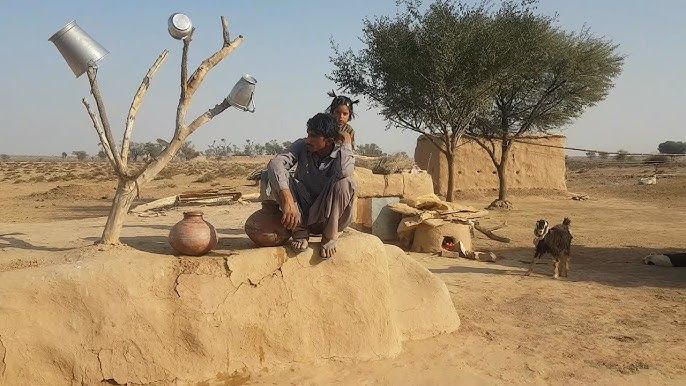 I read recently about a research project which concluded that simple people living closer to the soil, or other harsh realities of survival, had greater wisdom than educated urbanites. They were compared for accuracy in predicting inherently uncertain outcomes. Clever sophisticates didn’t fare so well. It was a piece in Newsweek headed “Rich People May Be Smart, but the Lower Class Is Wise”. It doesn’t say anything about simple people living close to the soil. I filled in the void with romantic imaginings.
The research—published Wednesday in the journal Proceedings of the Royal Society—found that wisdom-related qualities, such as open-mindedness, are more present in people of lower social class compared to those considered upper class. More specifically, the findings revealed that taking other people’s perspective into account and working towards an agreement was easier for the working class.
Perhaps this ties in with the intuition, recalled in my last post from half a century ago, that Providence exists to help the helpless. This is surely hinted in some of the sayings attributed to Jesus. It’s a phenomenon I’ve ascribed to angels, in various posts in Wayfarer’s Notes. It makes sense too. Once you have the notion of a guardian angel looking after you, it’s easier to keep a positive attitude, and not feel at the mercy of a cruel Fate. I particularly like the ways in which John o’Donohue extends the notion, e.g.
… the attraction between people. Where does it come from? What animates this attraction? How do two people meet? How do they manage to be in the same place at that particular moment …? Had they missed that moment, would they have remained strangers? Or would some other moment have gathered them towards this beginning? … Could it be that their ancient angels know how much they have to bring one another and without this their lives cannot become true? The angels are artists in the subtle chemistry of spirit….*
I’ll concede that angels are imaginary beings, like every other creature of myth. Does this make them unreal? I refer back to Kant, in Bryan’s potted version, so handy I should have it tattooed on the back of my hand for easy reference. No, they are not real, “they must be attributed to the mind’s own machinery”†.
Seriously, though, anything imagined has to be somehow cooked up from reality, fact, concrete existence, synapses, call it what you will. Not only this but it shapes future reality in concrete ways too. Cathedrals didn’t just grow in the night like mushrooms.
All this is nibbling around the edges of the point I’m trying to reach, a question I think may be important to all of us individually, collectively and for the future of our planet.
Is there a way out of human foolishness?
I’d like to take an example, one that pervades the British media and won’t go away, codename BREXIT. In 2016, there was a referendum in which 51% voted to Leave the EU. 48% said Remain. What these two words precisely meant was undefined, and still is. What definition, if any, would be good for the UK as a whole? Can this question mean anything? Who or what can encompass the UK as a whole and speak for what it thinks? Again, see Bryan’s post. The more opposition our Prime Minister encounters, mainly from MPs in her own party, the more “certain” she claims to be that she has secured not only the best deal (with the other 27 countries in the EU) but the only possible one. But here’s the thing—on top of all the other things. Some aspects of the deal are to be decided in coming years. By some future sub-deal. She assures us that everything will be fine. Her very certainty on the matter reveals it as a diplomatic lie. Honesty would have to say “It’s worrying, none of us have a clue as to what will happen, whatever deal we strike; nor if we fail to strike any deal at all, & just walk away.”
Que será, será
Whatever will be, will be
The future’s not ours to see
Que será, será
There is a science of uncertainty. It’s known as Chaos Theory. It applies to flowing water, clouds, road traffic—and the interaction of human beings, whether in politics or seeking a life-partner. It cannot be predicted.
The only thing you can predict is that whatever happens, by design or catastrophe, everyone will try and adapt to it. Wisely or foolishly. As I wrote in my last:
I saw each one of these soul-body mechanisms as interacting with infinite complexity, each with its own limited ration of free will. Imagine putting all their needs and dilemmas into a computer, so as to achieve an equitable outcome for each. No one could write such a program. How could each individual steer his or her life among all the hazards and unknowns?
In road traffic, each driver has a limited ration of freewill at each moment: usually enough to avoid an accident.
It would be nice to think we could tune into our “ancient angel”, who’s less limited by time and space than we.
If that were a possibility, then I hazard that it would be achieved by surrender of our own will to the Higher Power that has been so consistently imagined as true within every culture that’s ever existed, so far as I know, and been hijacked by every religion, prophet, soothsayer, faith healer and what-have-you that dares cock a snook at science. For Chaos Theory offers wiggle-room, uncertainty, “eddies in the space-time continuum”. (Ford Prefect to Arthur Dent, in Douglas Adams’ Life, the Universe, and Everything.) An angelic creature who can step out of time and space can perform all sorts of conjuring tricks.
I don’t know if any of what I’ve written today is true. But I don’t think anyone really cares about truth. We’re more interested in what advances our own agenda.
* John O’Donohue: Eternal Echoes: exploring our hunger to belong, pp197-8.
† Sorry Bryan, I quoted you out of context, mischievously and for rhetorical purposes. Perhaps I should have it tattooed, then I wouldn’t get it wrong so easily.
 a wayfarer’s notes
And I missed a typo in the part you quoted. Should have been “the mind”, although I suppose it works without it.
Regarding the Newsweek article: first of all, I’m terrified of the mystery celebrity that got too much plastic surgery in the links at the bottom. I hestitate to even mention her, for fear she’ll haunt my nightmares as retribution.
Secondly, I’m not clear about what this wiseness test actually tested. After all, what is wisdom? Who can truly say? How do you a test for such a thing? A quick Google search defines it as “the quality of having knowledge, experience, and good judgement” (also, as “the quality of being wise”, which isn’t very helpful.) Having spend the better part of my life in the lower decks of society, I can’t say I found those qualities in abundance among the people I’ve shared quarters with. Heck, I could hardly claim to have a surplus of those things myself. If you mentioned “good judgement” to them, they’d probably think it was the name of a new scratch off lottery ticket — see, you use a coin and scratch off the three gavels to reveal the prize amounts — and before you could explain yourself, they’d already be leaving the room and headed down to the convenient store to see if they could trade in their paychecks for “a whole reel of them tickets.”
I was hopeful when they mentioned showing the participants news items in the second test. I thought, “Okay, they’re testing their ability to predictively size up a situation, seeing if they can foresee the outcomes of the situations. Interesting. At least that’s a metric that you can hang a statistical hat on.” But the news items are fictional. And it never quite says that they scored them on predictiveness, only that they asked their opinions of what would happen.
So I found the article a little baffling. I have my doubts.
LikeLike
I do too. I probably should have stuck to the earlier version of the post, in which I could say anything i liked about a remembered article without identifying it. But it’s another example of how we clamp on to something we agree with, uncritically, reading only what we want to read, even when it isn’t there. Heedless of truth, doggedly pursuing our agenda.
By the way, I corrected the typo, added “the” in front of “mind’s”: your original and my copy of it.
LikeLiked by 1 person