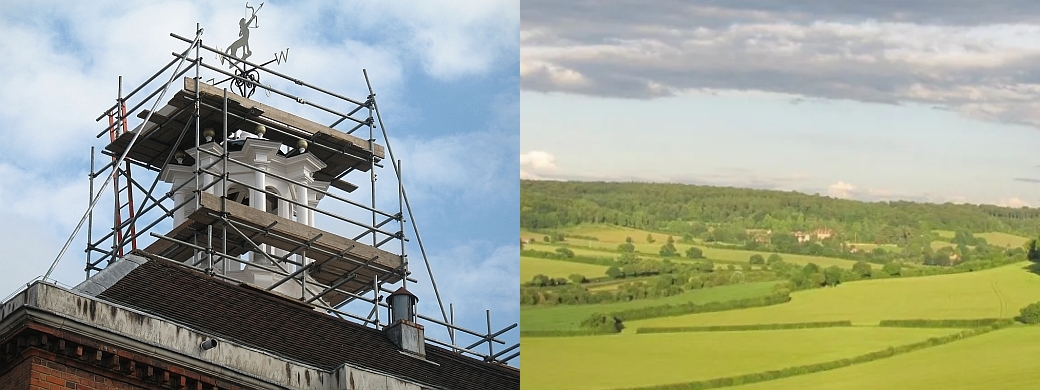



Days pass quickly, like the view from a speeding train. From another angle, I stand on a bridge above the line, hear the roar and clatter of the train below, watch it round the curve and disappear into the tunnel, leaving emptiness and the memory of its presence. Externally, each day resembles the one before; but so much happens in my soul’s travel that I can’t help regretting my failure to mark the days in coherent expression. Even my scribblings have diminished to a trickle. I view them as in a gallery (or graveyard) of unfinished sketches, going back to one afternoon of incessant rain, 80 days ago, when I went out with umbrella and voice recorder, sharing New Year greetings with strangers, and talking to myself on a slippery path through a wood. I still have the transcript somewhere.
More recently, I promised here to continue the memoir, having left it hanging with a sixteen-year-old about to start living at Swainston Manor. I’ve been going back there in imagination. Ghetu called it “time travel”, but you can get a special sickness from that. Your mature identity can get stripped away, leaving you shivering and naked.

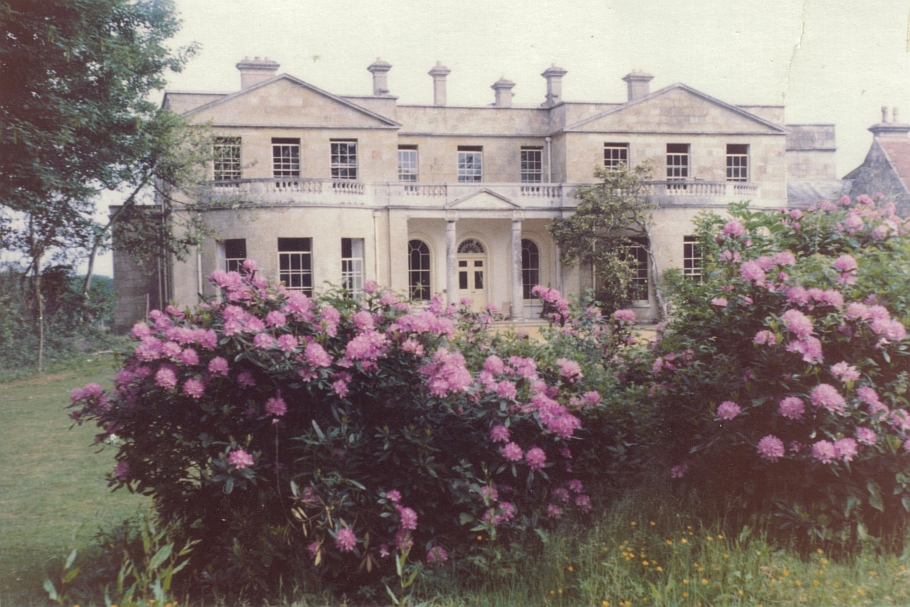
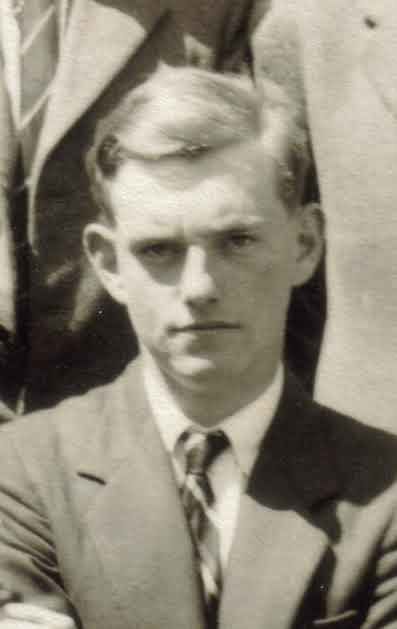
Swainston was unique: an 18th-century mansion with 12th-century chapel, yet brand-new too, having been magnificently restored after a wartime incendiary bomb. For me it was a special privilege, as if I’d unexpectedly inherited the house, all its acres and the title of baronet. For the first time in my life I really belonged somewhere. I’d earned this scholarship and was respected for it, looked up to by the young boys I must help supervise, seen as an equal by housemasters who were now my colleagues. And yet I shall skip rapidly over those happy days, inconsequential as they were, for they didn’t last and didn’t lead anywhere. The photo with rhododendrons, dating from the time I moved in, reminds me of our open-air performance of scenes from A Midsummer Night’s Dream in which I played Bottom the Weaver, my ass’s head skilfully constructed in paper by Michael Hinds (of the main school). For a while I was the only prefect at Swainston, but that summer there were three of us, when Norman Higson and John Leyton
Me and that van arrived to share the senior duties. We had plenty of free time to get up to mischief. One night we stole out to a steep grassy hillside studded with glow-worms, under a star-studded sky. Another day we borrowed a sliding-door Bedford van as in my picture: I don’t know why it was taken, but is part of the collection I’ve inherited from the headmaster’s daughter. John taught me to drive. It was off-road, so not illegal, he said. So I took the wheel along a narrow track through a coppice. He told me to slow down but I got the pedals confused and accelerated into a thicket. Even with the aid of a pocket toolset he always carried, it took a couple of hours to disentangle the van & put it back so no-one would know of our adventure.
John was the son of a rocket engineer—see cutting attached, from April 1959. John was always inventing ingenious things which didn’t work. One evening we went rabbit-hunting to test out his new bow and our archery skills. He’d laminated the arrow down its length to make it stronger and straighter, with the newly-available PVA adhesive. Unfortunately, he made the notch for the string in line with the join. Seeing a rabbit the other side of a low hedge, still as a sitting duck, he decided this was the moment for the weapon’s first test flight.
Rocket engineer(It never occurred to me then that John was mimicking his father’s speciality.) He pulled back the bowstring. The rabbit remained still. He released the string, which split the arrow clean in two. We could only laugh.
We roamed free and did what we liked. Swainston had a flat roof, newly covered in lead. Already an embryo chronicler, I suggested we carve our names and messages on the side of a chimney-stack, doubtless with one of John’s pocket tools. There was a loose floorboard in our dormitory, so we could hide things under it. I prepared another message for posterity, glued it with PVA adhesive to the underside with a sealing coat on top. Now of course, 55 years later, I want to go and read it, and tell you what it said; but I don’t see how it can be done.
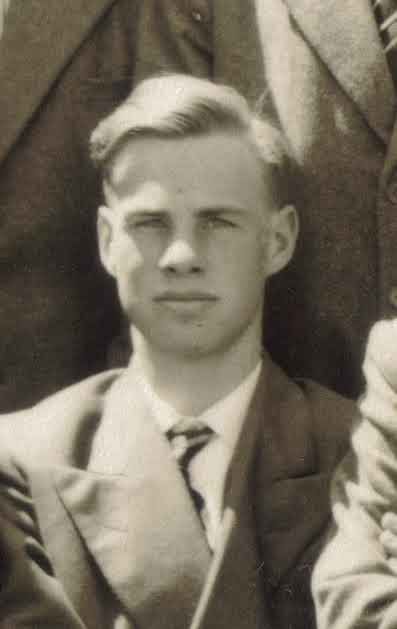
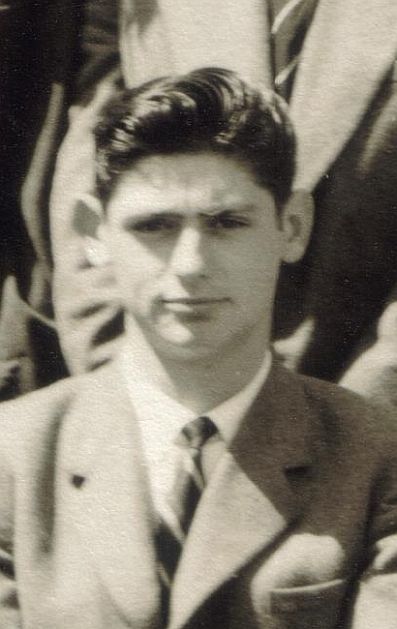
I could multiply the tales of Swainston whilst the days race past like trains on the Chiltern line, under the footbridge and into the tunnel. I might reasonably expect another five or ten thousand of those days, which seems plenty, but I can’t afford to do anything which doesn’t bring joy and blessedness. I can dwell in remembrance, realize what a blundering ignorant fool I’ve been, forgive myself for it. But to write all that stuff down? No: even though I would love to post something every day, like a blogger I admire who’s doing that, and using a typewriter for the purpose: try this link: http://talesfromthetyper.blogspot.co.uk/2013/03/the-sounds-of-silence.html. (in 2025 now defunct) .You don’t expect a masterpiece to come out every day, but at least with a short piece you aren’t overtaxing your regular reader.
Blessedness? What I mean is, when I live right, I feel right, my words come out right and everything’s right. And vice versa. But I’ve only ever been able to live haphazardly. Can any of us do better? Can we control our destiny? If we could, it would be a disaster. That’s the view I’ve always taken. But still, one wonders if there’s a universal key. And this is where one gets the idea of a Way, and perhaps a Master: a dead one like Jesus or Buddha, or even a living one.
These days I’m rather fluid in my not-knowing, starting to flow like water. But I’ve been rigid like ice, with a dogged male obstinacy that keeps me going even when I know I’m wrong. I stuck with a “master” for 30 years. It seems so suicidally absurd that I can’t think about it now without making excuses for myself. The thing is, I was in good company. We were children of the Seventies, though I was 28 when that decade began. After the Sixties’ hedonism, a new sense of discipline, sacrifice and puritanism was in the air. An older generation would have flocked to fight fascism in the Spanish Civil War, but we were ready to give up anything for a shot at sainthood. We were ready to eschew booze and drugs, embrace celibacy, or at least forsake promiscuity, all for some will-o’-the wisp “enlightenment”.
Have you seen The Master, with Philip Seymour Hoffman in the title role and Joaquin Phoenix as his wayward disciple? I easily recognized some common features: the sycophantic behaviour of disciples in the master’s presence; deranged behaviour behind the scenes, such as beating up the master’s enemies; failing to respect laws and common decency, when they stand in the way of the Cause. And I read in a book from 1977 on the Sutra of Hui-Neng how the Master Hua, in the City of Ten Thousand Buddhas, Calif., was preaching like this:
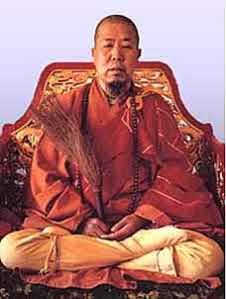
To lessen desire, it is not enough to be a vegetarian and to read Sutras. You must cut off all sexual desire!
. . . “Separate from wealth and beauty.” Do you see how clearly it says that you should not covet wealth, or the opposite sex, or fame? That is to be doubly complete, perfect in blessings and wisdom.
What binds the poor disciple to his master is not the efficacy of his doctrine and influence, but the impossibility of following it. Instead of giving up, he meditates longer, renounces more, perseveres even unto madness or death. And in the days of Hui-Neng, widely recognized as the Patriarch most responsible for shaping the “sudden” school of Zen, monks used to go crazy with jealousy. Hui-Neng was an illiterate lay-brother but when he was appointed successor to the previous Patriarch, he had to go into hiding:
Hui Neng arrived at Ts’ao Hsi where he was again pursued by men with evil intentions [followers of his defeated rival]. To avoid difficulty, he went to Szu Hui and lived among hunters for fifteen years, at times teaching Dharma to them in an appropriate manner.
The hunters often told him to watch their nets, but whenever he saw beings who were still living he released them. At mealtimes he cooked vegetables in the pot alongside the meat. When he was questioned about it, he would answer “I only eat vegetables alongside the meat.”
(From the Platform Sutra. We may read between the lines, and be sure it was written between the lines too, having been composed “during the 8th to 13th century”.)
But there’s a film too about fake masters, Kumaré, “a documentary about a man who impersonates a wise Indian Guru and builds a following in Arizona”. To me, they’re all impersonations of wise teachers, fashioned into existence by the yearnings of their disciples, however sincere the intentions of both. And does this matter, asks an article in Aeon Magazine: All gurus try to undermine their followers’ egos and expectations, so does it matter if the teacher is a real fraud? To my reader it may be of no interest, but it matters to me, having spent three decades with one. To say he had feet of clay would be a euphemism.
Everywhere there is chaos and imperfection. And yet there is also blessedness.
there were 28 comments, but I’ve cut them down to 17:
Chris B.
“Well, it may be the devil or it may be the Lord But you’re gonna have to serve somebody.” – Bob Dylan
Vincent
Yes, though the lyric comes from “Slow Train Coming”, written in his Christian phase of 1979, it reflects the rhetoric we guru-followers were spouting too. There’s an undertone of evangelical fanaticism and I have to remind myself of that otherwise I’d find myself caught in it all over again.
ellie
In 2010 I posted to our Blake blog concerning Blake and Dylan:http://ramhornd.blogspot.com/2010/10/blake-dylan-ii.html.I think I am enough of an anti-authoritarian to avoid seeking a guru. There are multiple paths to Truth and dead ends which direct us to seek elsewhere. But looking back I discover that every path I pursued had valuable lessons to teach. All is Blessing if we are seeking to love the Lord (or the best image of him that has been revealed to us.)
ashok
What a lovely post with a beautiful photo of a mansion. the flowers are gorgeous. I shall come to the post but in the meantime dropped in to mention that: you were mentioned in my most recent blog post at http://someitemshave.blogspot.com
ashok
Vincent, all through my life some inner compulsion has guided me from committing to any one or more human gurus, or even the teaching of any one single religion, especially religions that claim that it only through them that one will find salvation for that I regard as the biggest bull shit in this area, even more fraudulent then the false gurus (which in my view a large number of modern ones are) > however, I have listened to many and taken from their teachings what has appealed to me. In the end it is life and Nature that is the greatest Guru, one may interpret the some total of that as the Almighty Himself. But the original teachings of the greatest of the Spiritual Masters Jesus and Buddha the primary ones amongst them, in their original form as best as one can make out from their presently available edited versions, and not their interpretations by followers have been a source of much knowledge and peace.
Vincent
For some reason I had stopped regularly following your blog, Ashok, but I’ve remedied that and left you some comments. Having always lived in India, you would have grown up with the notion of gurus, and not reacted with the excess enthusiasm and gullibility that started to affect young people in the West fifty years ago, when they started their overland pilgrimages East.
Vincent
Ellie, I confess to you also that I haven’t been regularly following the essays that you and Larry have been writing on Blake. I’ll try and catch up again. I was fascinated by the two posts on Blake & Dylan. Thing is, I was an anti-authoritarian too and so were the other followers of this guru, at first. We allowed ourselves to be manipulated, and lost our powers of discrimination, having been persuaded that they were what stood between us and enlightenment. But I shall not be trapped into defending my indefensible past. ”All is Blessing if we are seeking to love the Lord (or the best image of him that has been revealed to us.)” Yes, I’d agree with that except that my life-experiences have undermined the idea of “Lord” as a metaphor expressing what I can only call the underlying Presence.
ellie
Words are what makes it so difficult to think and write. Actually I don’t like the word ‘Lord’ either because it implies arbitrary authority. But we can communicate with one another by remembering that words are only the garments that clothe the ideas which cannot be grasped (two meanings).
ashok
Yes I have read your comments Vincent. Have not always lived in India. I have spent around ten years in Canada and four in the Middle East too.
ashok
Yes I found all those comments Vincent and have replied to them. Thanks. They add much value to the post.
ZACL
What a trail of life, circuitous, vapour trails of psychological ambles, trialing them, discarding them, losing them, finding them and now dissecting them.
Rebb
Lovely piece, as usual, Vincent. I’m too stubborn and headstrong now, but I wonder if I would have been swept away with following a guru had I been of your time. I don’t know that we can fully control our destiny even if we tried.
Vincent
Yes, Rebb, one’s reasons for following a guru were part of the rhythm & destiny of the time. In the Sixties the youth of England and America learned to be free, i.e. rebellious, and dissolute, rejecting the restraints of earlier generations. There was talk of the Aquarian Age. The values of the parents’ generation were repudiated. The Cold War seemed fake, the Vietnam War seemed a ghastly error that plunged its anti-communist participants into every kind of evil whilst proclaiming the good. Many of the youth were fed up of being dissolute, sought a wisdom that didn’t come from the corrupted West; unaware that corruption knows no frontiers. My own case was particularly extreme, in terms of follies committed and needing expiation. Destiny, as I see it, is a constant improvisation; always offers scope; like a hand of cards as described in that song “The Gambler” as sung by Kenny Rogers. To paraphrase: you can make the best of the hand you are dealt, and within that limitation, still end up a winner. And what’s true for the individual is true for the Universe, of which each one of us is a part, and perhaps a microcosm too.
Vincent
ZACL thanks, you have made some sense of the piece, a very accurate sense!
Vincent
I’m glad, Ashok. My comments tend to be spontaneous and unreflective, and in particular I like to defend my own country, when it’s negatively reported abroad. There’s a great rivalry of course between countries; India and China particularly are keen to rid themselves of negative coverage which seems to perpetuate old stereotypes. (China has had food scandals in the past, e.g. with powdered baby-milk, so must be glad to discover something bad in imports from Sweden.)
Vincent
“Words are what makes it so difficult to think and write.” Yes, Ellie, and one could also say that words are what make it possible to think and write. It would be instructive and wonderful if there could be a symposium between William Blake and Ludwig Wittgenstein on such matters, and if we could have ringside seats. William Blake and Isaac Newton would be another. Derek Jarman did Wittgenstein in film very successfully, and in literature I think of Van Loon’s Lives: Being a true and faithful account of a number of highly interesting meetings with certain historical personages, from Confucius and Plato to Voltaire and Thomas Jefferson, about whom we had always felt a great deal of curiosity and who came to us as dinner guests in a bygone year. Hendrik Willem van Loon was interested in humanist personages, but the same format could be used to introduce difficult visionaries to a non-specialist audience. I confess to finding Blake too obscure much of the time, despite the extraordinary efforts of you and Larry.
ellie
Thanks for the guidance. Very amusing. I’ve heard that Einstein was not such a great mathematician. His skill was in ‘thought experiments’.
Brian Spaeth
On the topic of gurus, I feel that perhaps we are living (fortunately) in an age of de-mystification. All (almost) of the formerly hidden and esoteric mystical techniques of the ages have been liberated from the covetous control of the high priests, stripped of their obscuring religious trappings and are now in the hands of the masses. A democratization of formerly forbidden knowledge: a do-it-yourself toolkit of very powerful techniques. (Mantak Chia’s series of books on ChiGung come to mind as an example). As a result, we can see the amazing modern profusion of Kundalini Yoga classes, (as just one example) populated by suburban moms, who now have easy access to the secrets of the ancients. In general I like to steer clear of any priesthood (East or West) and create my own magic and inner alchemy. Having said all of that, I should note that I once (a few years ago) caused some lasting damage to one of my cervical disks by a gross (I’m an idiot and I over-do everything) misapplication of directed Chi/Kundalini energy, and could have used the guidance of a competent teacher (guru)! Have I just negated my own argument? (lol)
 a wayfarer’s notes
the two photos at top were found on on my old blog ian.mulder.clara.net via FileZilla
LikeLike