

Rediscovered today
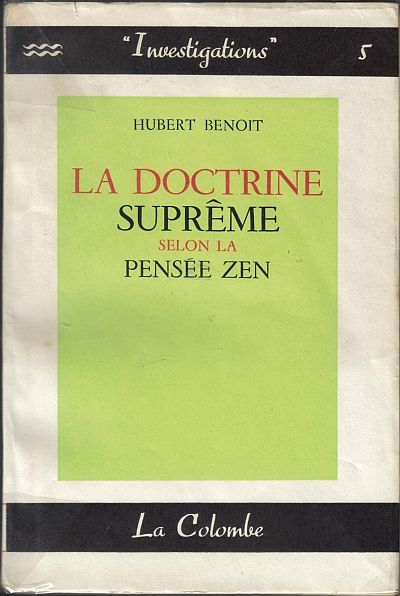
I bought this book in Paris fifty years ago. It became a kind of Bible to me, to read and re-read till I grasped its difficult meaning. Years later. in a fit of extreme decluttering I gave it away along with all my other worldly goods; whereby hangs a tale, somewhat related to this one, but not edifying enough to detain us now.
The other day I acquired another copy of the book, this time in English, hoping thereby to squeeze out the meaning more easily. I wanted to measure my progress since those student days, here at the other end of my life; and to re-examine this fascinating word satori:
Satori
Etymology: Japanese, = spiritual awakening. Zen Buddhism. A sudden indescribable and uncommunicable inner experience of enlightenment. (OED)
And what is the consequence of satori? We shouldn’t even try to imagine, says Benoit. But then his imagination disobeys his own rule, with this:
Only he who has attained satori can say: “A wandering cur who begs food and pity, pitilessly chased away by the street urchins, is transformed into a lion with a golden mane, whose roar strikes terror in the hearts of feeble spirits.”
Fifty years ago I myself was a wandering cur, down and out in Paris and Marseille. These days I’m merely tamed; not yet transformed into a lion with a golden mane and terrifying roar.
I took up the book again parti pris: my mind already made up that I’m so much wiser today; that the book can hardly be relevant any more. Surely I bought it for a trip down memory lane, to revisit a once-favourite haunt? I was ready to take the line that Benoit had a lot to answer for, blighting my youth with misleading promises, being a false prophet. I started scribbling some pretty uncomplimentary things. I’ve transcribed a few of them below in blue, out of 24 manuscript pages penned so far:
I don’t find it disappointing. I find it utterly appalling. For one thing, he addresses a very narrow class of reader, in particular one more miserable than himself & one who admits to knowing less than he.
Benoit succeeds in misunderstanding everything, including satori. And he thinks he will attain enlightenment by some kind of intellectual backward somersault.
He addresses the wrong part of the reader’s brain. His intellectual style inhibits all possibility of triggering a non-rational realization.
Thus I spoke as a know-it-all, someone sure of having progressed beyond his mentor. But the tone of my notes gradually softens:
He has some very good observations. . . .
I salute Benoit, not as an old friend, but the friend of my younger, wilder self.
I want to say, “Don’t you know that this wisdom is everywhere? Especially in ordinary life? . . .”
Then I see that yes, he does know that. This is precisely what he’s saying, in his own very personal way. I also see that it’s not he the author who’s miserable but I the youthful reader, when I first came to him, my remembered unhappiness adhering to the remembered words. Now that I’ve revisited them, and hung them on the line in the wind, their mustiness is dissipated. I see that they come straight from that “sharp air” I spoke of in my last two posts, that touch of nature on the soul that sweeps my head clean. O joy, that words, even posthumous ones, can do this! But I had to make the effort first. Like Zen koans, his intellectual ideas have to be cracked open as you would do with nuts to reach the meat.
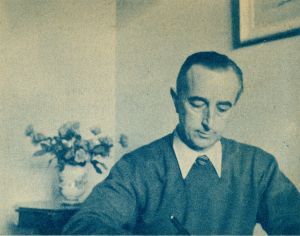
A few days ago I started a draft of this post with these words:
He wants to quench the reader’s thirst, but you can’t fetch water in a wicker basket. His prose is intricate and psychologically profound, but the part of the brain which it stimulates can’t convey its meaning to the soul.
Today I recant those words, not as dramatically as Thomas Cranmer, who offered his writing hand first to the flames when bound to the stake for burning, but frankly and joyfully. Benoit is the man. I am ready now. And his book, which I first regretted having bought again, is back in my possession and might occupy me for the years I have left*. Though he died in 1992, let him be my companion once again in wayfaring. I thought he belonged to my past. I thought I’d said goodbye to him in my piece “Buddha and Corpse”, written a few years before I started blogging. Not till now have I had the opportunity to discuss his work with anyone. Till recent years, there was no mechanism to enable fellow-readers to come together & share their experience, when the work in question was esoteric. But now you can trawl for them with the aid of a great Net.
Part of my trawl was to try and discover something about his translator, who remains unacknowledged by the publisher. The author’s preface to the English edition ends with these words:
My special thanks go to my friend, Mr. Terence Gray, for his translation of my book; he has solved perfectly the very difficult task of giving a faithful rendering of my thoughts.
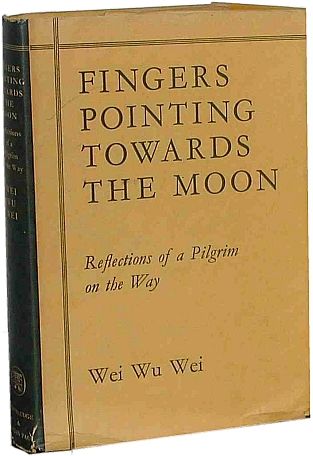
Who is or was Terence Gray? I was astonished to discover that he was the elusive author behind the nom-de-plume “Wei Wu Wei”, one of whose books I had bought in 1963—Fingers Pointing at the Moon—and wrestled with it just as I did with La Doctrine Suprême, though it was shorter, more pithy. I disposed of both at the great Decluttering, when I reverted to the status of “wandering cur”. Well do I remember going to that bookshop, to meet a girl who worked there in the theology department. She was busy so I eyed the shelves and picked out Wei Wu Wei’s book, took it to the till, hoping to have a quiet word, arrange a rendezvous. She whispered, “Just pay for it and go.” Her supervisor was eyeing her with suspicion, and she felt her job was already at risk for some reason. She was a wandering cur too, had become one the day she met me; whereby hangs another tale, ending sadly for her in 1982.
I wish I could have had a rendezvous with Wei Wu Wei too, if it were not decades too late. I think it would have helped understand his book. But he can still be encountered, in a way. He has his own biography now (Only by Failure), and his own fan-site, here.
Discussion is still possible, across the ethers, across space, across the decades. One reviewer says:
. . . If you enjoyed the previous quote, then by all means read his book. It’s been seven years since I first read Benoit and I find his writing as opaque now as I first did. The only change is that now I think there are no profound secrets under the opacity.
 I thought that too, when I started re-reading a few days ago. But I feel a new bond with the author of La Doctrine Suprême, best expressed perhaps in words from his Epilogue, in which he responds to those who question his sources. “Where are the references to ancient texts? How do we know which parts are ‘real Zen’, traceable back to the old Masters, and which are his own speculations?” Benoit confesses somewhere that he doesn’t claim to have attained satori himself. His words come, he says,
. . . from a source within me, the source of all the organic and mental phenomena within me, the Principle of which I am an individual manifestation, from the Principle which creates the whole Universe as it creates me.
. . .
After having read part of Zen literature and received from it, with an impression of evidence, a vivid revelation, I allowed my mind to work on its own.
That’s a method I recognize and trust. It’s not an issue for me whether there are any “profound secrets under the opacity”. When I make the effort, when I too “allow my mind to work on its own”, things become transparent. And I wish the same for my own readers.
* I’ve since recovered from this momentary enthusiasm, fuelled as it was by nostalgia. Or perhaps it is that I’m no longer a seeker after “enlightenment”. It’s not a term I find personally meaningful any more. There is no sense of lack now. I know I have everything, delivered by the day, by the moment.>
Comments
Vincent
I very much like this about someone else’s quest to track down Wei Wu Wei.
Bryan M. White
I feel much the same way about Nietzsche’s Thus Spoke Zarathustra, a book that I’ve lost more copies of than I can remember. But I always end up picking up another copy, measuring my own intellectual growth against it.
Lady in red
Hi Vincent I have just got back to blogging after a long gap. I was interested to see that you are still imparting your quiet wisdom to those who still make the effort to read it
ellie
Blake’s comment: There is No Natural Religion, (E 2) “VII The desire of Man being Infinite the possession is Infinite& himself Infinite Conclusion, If it were not for the Poetic or Prophetic character. the Philosophic & Experimental would soon be at the ratio of all things & stand still, unable to do other than repeat the same dull round over again Application. He who sees the Infinite in all things sees God. He who sees the Ratio only sees himself only. Therefore God becomes as we are, that we may be as he is ”Marriage of Heaven & Hell, Plate 12, (E 38)”
Isaiah answer’d. I saw no God. nor heard any, in a finite organical perception; but my senses discover’d the infinite in every thing, and as I was then perswaded. & remain confirm’d; that the voice of honest indignation is the voice of God, I cared not for consequences but wrote. Then I asked: does a firm perswasion that a thing is so, make it so? He replied. All poets believe that it does, & in ages of maginationthis firm perswasion removed mountains; but many are not capable of a firm perswasion of any thing.” Marriage of Heaven & Hell, Plate 14, (E 39)” If the doors of perception were cleansed every thing would appear to man as it is: infinite. For man has closed himself up, till he sees all things thro’ narrow chinks of his cavern.”
Vincent
I never saw Thus Spoke Zarathustra in quite that light. I keep his book on a set of shelves in the bedroom reserved for my favourite books, & safe from the depredations of guests, but he doesn’t quite speak to me, and if I lost the book, I’d be in no hurry to replace it. Over Christmas, my mother-in-law announced she was going to borrow my copy of The Man who Mistook His Wife for a Hat. Well, at least she announced it, leaving me to wonder how she interprets the word “borrow”. My fault for not keeping it in the bedroom, or perhaps I did, but she browsed it whilst we went for a country walk. I pick up Oliver Sacks’ book more often than Nietzsche. But in practice the only books I replace are the ones I remember from before I was 21.
Vincent
Lady in red: congratulations on your return to blogging and more importantly on this phase of your life, which emanates its own warmth into your blog. I’m sure you have been missed by many in your rather long silence, even as I’ve missed you.And you are right about “those who make the effort to read it”. I’m not unaware that my writing requires effort; but it’s refreshingly lucid compare with some of the things I read. Hubert Benoit and Wei Wu Wei being amongst the most salient examples of writers who demand a great deal from their readers. Of which I may have more to say in my next.
Vincent
Thanks again, Ellie. It’s wonderful to receive comments from 200 years ago. Blake is yet another example of writers whose meaning requires effort. Your website (yours & Larry’s) works tirelessly to introduce him to people of the 21st century; but still, to me, he speaks more to those of his own age, even though few really heard him, perhaps.To me it’s worth listening to what Benoit and Wei Wu Wei have to say because their lives have overlapped my own.& it doesn’t matter how right they were in their prophecies or opinions; because it’s not for them to preach & teach to us, but merely to act as catalysts in opening our eyes. Which requires effort from us.
ZACL
Lions do not always roar, they do not have to. Elements of your treatise remind me of C.S. Lewis’ writing, in particular the character Aslan. I do wonder if some of the propositions in the books that you analyse, are not unnecessarily over-complex and complicated, commercially divined for a mind-hungry generation that was being fed what ever it seemed feasible to sell it to gorge upon; indeed, a variation on spin and manipulation.
Davoh
Imagination is an astonishing faculty of the human cerebral cortex. Self has always wondered what a contented bovine, ruminating in lush pastures – thinks about.
Vincent
You too, Davoh? I spend hours wondering what animals think. Sometimes people say that they’re simply driven by instinct, but that’s demonstrably untrue, for–however they manage it–they are constantly considering their options. How does a bird migrate successfully? How does it even fly? We’d need so many training courses. As you suggest, the bovine in lush pastures hardly needs any precise calculations or forward planning, is little troubled (one imagines) by all our romantic complications; and probably does not find time hanging heavy on its hooves.
Vincent
ZACL you are right to be cautious. The suspicions you raise never occurred to me all those years ago, else I could have saved decades of being duped, though not by Benoit or Wei Wu Wei, who were certainly sincere & well-intentioned. But it’s very difficult to write about Zen. Since the piece above, I’ve been reading The Zen Doctrine of No-Mind by D.T. Suzuki, a Japanese scholar who single-handedly, it seems to me, introduced Zen to Western readers. His book, though full of terms from Sanskrit and other languages, ably connects us with textual sources from the eighth century AD when Hui-Neng was around; and packs a fresh punch. So I won’t attempt to paraphrase anything he says.
darev2005
“A sudden indescribable and uncommunicable inner experience of enlightenment. (OED) “If you cannot describe it and can’t even communicate about it, how could you even tell anybody you achieved satori? And how could you make them believe you did?
Vincent
Rev, you have gone instantly to the core of the matter! You can’t tell anyone. You wouldn’t be interested in telling anyone. Because that would be an ego-thing. You wouldn’t go through the whole palaver, the intellectual backward somersaults etc, just in order to show off to others. As the old proverb has it: “Those who talk, don’t know. Those who know, don’t talk.
Vincent
I hope nobody thinks I’m serious.
Davoh
Um, Vincent, doubt if any of your readers could accuse you of being ‘jocular’ .. heh. While yes, there is an undercurrent of ‘quiet amusement’ in your writings – it seems to me that there a ‘serious’ intent.
However, be that as it may.
However, one of the reasons why i mentioned the word ‘imagination’ is that it seems to be a peculiar ‘human’ concept. Firstly because humans ‘communicate’ the concept between each other. In other words, each spark of imagination sparks another.
Who, a very few years ago, would have ‘imagined’ the possibility of ‘heavier than air’ flight.Or, if you like, the leap between the horse and combustion engines – the leap between there and footsteps on the moon (and beyond).WOW. Each piece of imagination leads to another.
Davoh
(might also mention that Zoroaster (Zarathustra – ancient Persian philosopher) may well have been the originator of the “two god” idea of “good vs evil” – taken by the priesthood on Mons Vaticanus some 1300 years ago (give or take a few 100 years) …. heh.
(and yer, while am at this keyboard – can i imagine a “God” who actually ‘demands’ that all humans destroy projectile weapons?)
Davoh
P.S. the wandering cur never begs. It fights, tooth and claw.
Vincent
Oo, Davoh, I’m always up for an argument.”
Who, a very few years ago, would have ‘imagined’ the possibility of ‘heavier than air’ flight?”Absolutely everyone, I think. In our dreams, literally. In myths, going back to 1500 BC at least. And as you mention Zoroaster, the symbol associated with Zoroastrianism is called the Faravahar – a man with wings.It is slightly harder to surf the Web for evidence of ancient imaginings of lunar travel. You encounter too much nonsense relating to those who doubt whether man has yet been to the moon.As for projectile weapons, I imagine that God’s edict banning them would have to make exceptions, e.g. for the woomera, once used by our aboriginal brothers for hunting purposes in conjunction with the throwing-spear.You write with seemingly unquestionable authority about the behaviour of the wandering cur. Perhaps it’s the native Australian dingo you have in mind; but I immediately thought of the Indian Pariah dog. I haven’t observed their behaviour, but I’ve seen wandering curs of a similar type in Malaysia, hanging around rural shophouses, dodging vehicles, nosing around in bins, wary of children and others throwing stones at them. If they fought humans with tooth and claw they’d be shot as vermin, and they know that. Wikipedia says that the Indian Pariah Dog may be closely related to the Australian Dingo. Perhaps it is the case of Azaria Chamberlain which has influenced you?But I agree with you on most points, as ever.
ashok
there was a paradox in the very first sentence of this post – a wandering CUR – why is a wandering soul on a wayfarer’s note a CUR despite the fact that he was forced to beg on an occasion as any wandering soul might be compelled to – the mighty Buddha recommended that route as a way to satori – in fact perhaps the only one to it.
Vincent
Certainly there is a paradox! The one which fascinates me most is the transformation from yellow pariah dog into lion with golden mane. As the quote-within-a-quote is translated from the original French, I’m unable to search for its origin, but I’ve tried all the same.
Vincent
I checked again, especially to see if it was a quote from Thus Spoke Zarathustra (wondering if that was why Bryan was reminded of that book) but to no avail.
 a wayfarer’s notes