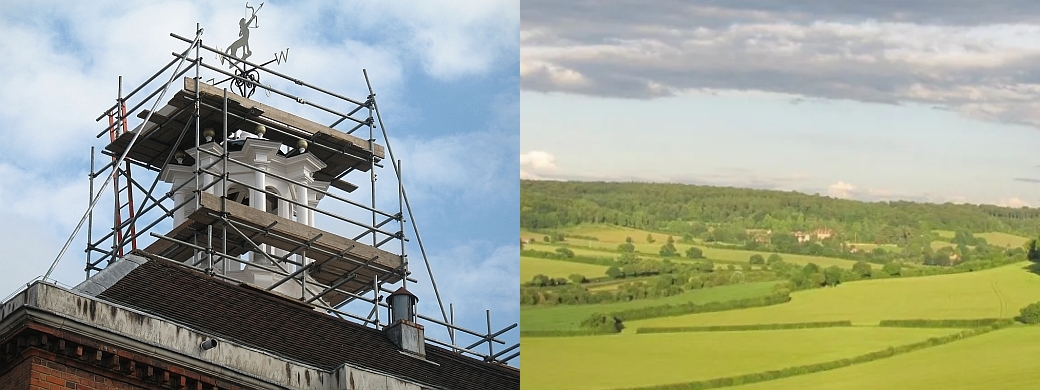


I lie in bed watching dawn’s rosy fingers light up the house opposite, creeping lower as the hour advances. This street is narrow, its houses joined together (‘terraced’) in a continuous chain on both sides. You’d think there’d be scant room for the low-slanting rays to penetrate. But our house is near the street’s eastern end where there’s nothing but a derelict school yard beneath a big sky, as in my middle picture below.
This bedroom is the cosiest refuge you could imagine. My beloved sleeps peacefully alongside. As insistently as a rooster, or a bugle playing Reveille, the sun rouses me to full wakefulness. Like a soldier in barracks, I’m ready to leap up and out, but I stay in bed, motionless. Only my imagination goes wandering, down a corridor of decades to a jukebox of old scenes, a database of memory snapshots. I don’t need to press any button. It operates automatically. When something here and now triggers it, the jukebox retrieves images of the first time I encountered that thing, like magic. I don’t know if that happens for you too.

So I’m taken back to a dawn long ago, when I found freedom in the midst of bondage. I’ll try and tell you about it, but it won’t make much sense until I tell you more of the story.
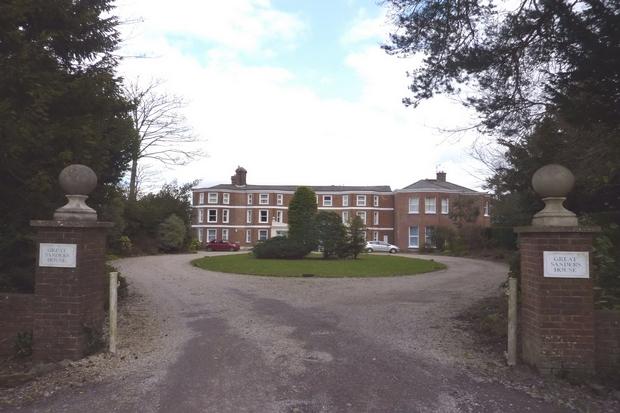
I was sent to boarding school at the age of six—six and a half to be more precise. I remained there, at Merrion House Preparatory School, Sedlescombe, Sussex, from September 1948 to March 1954. My parents, I mean my mother and stepfather, were newlyweds. They lived a mere seven miles from the school, but it must have been convenient for them that I should be out of the way. In my grandparents’ view, I needed to learn the speech and manners of a young gentleman. My half-sister must have been born around the time my grandfather delivered me to Merrion House for the first time. I have hardly any memories of ‘home life’ from that time. I suppose school was my real home, Matron the nearest thing to a mother.
The monotony of school routines makes it hard to arrange my snapshots chronologically. But it’s important to try, so that I can date each memory and know how old I was. Nobody is alive who can help me in this. (My sister was too young.)
I know that from January to March 1949 I missed my second term, being in hospital on a penicillin drip to avoid amputation of my leg. So it must have been in my first term that the headmaster first tried to rescue me from original sin. I was the youngest child in school then, still a little wild from having spent my earliest years in Australia in a ladies’ lodging house, my mother often absent. Then we came to England, my mother a war widow looking for a wealthy dashing replacement husband—her main concern being a father for me, as she carefully explained. This was why I was sent to Holland at the age of five, to lodge with her sister-in-law, whilst she went to Switzerland on a man-hunt—where, I imagine, she could have met some fugitive ex-Nazi, holed-up and incognito. This didn’t happen, of course.
So one night in the dormitory after lights out, instead of story-telling relays beginning “It was on a dark and stormy night” and going on to encounters with highwaymen or ghosts, the conversation diverted to matters new to me. In principle I knew about sex since the age of four, when a five-year-old girl, whose mother had just told her, had told me, and we had tried to do it there and then. It proved impossible standing up, and then my grandfather caught us before we could try an alternative position. That was only memorable as an embarrassment. I can’t remember anything of our dormitory discussion, only my utterance of four incriminating words, in which I offered to do something, though slightly repelled by it. A boy brought up by ayahs in Burma had been played with sexually, and he told a tale. Ever curious, I said “let me suck yours”. I must have spoken from curiosity and bravado. No sooner had the words left my lips than the headmaster, who had been listening outside the door, burst in, red-faced, trembling with anger, to give me a sound thrashing. This at any rate earned the other boys’ respect. Sympathetically they explained to me as a new boy that thrashings were inevitable once in a while.
Six strokes of the cane on bare buttocks was no big deal, after the pain wore off. What hurt most was the disapproval and suspicion that never went away afterwards. I had no idea about sexuality, let alone homosexuality. I just had an instinctive attraction to whatever was forbidden, like Adam and Eve. The headmaster was on my case, and must have worked on the principle that Original Sin could be cured by punishment. His religion was more Old Testament than New.
As time went on, I moved on from being the youngest boy, until I eventually became a Senior. I have no record of it but can deduce from memory snapshots when that transition occurred. For example, I recall a boy running up the little boxed-in servants’ staircase on 6th February 1952, to tell everyone that King George VI had just died. It was the staircase used by juniors. So I must still have been one. In June ’53 we were taken to the Gaiety Cinema in Hastings to see the Coronation of Queen Elizabeth II, and—exciting double bill!—the first ascent of Mt Everest, by Edmund Hillary and Sherpa Tenzing. By then I was certainly a Senior, with all corresponding privileges, the most exciting ones being to use the Pond. It was a muddy affair, surrounded by chestnut trees which dropped their conkers and leaves to decay in the pond till it smelt sulphurous. But it was stocked with varies types of fish, and in the summer we would make our own rods from bamboo, and buy line, weights and hooks from the school tuckshop. The floats we had to make ourselves, from corks and matches. We used white bread for bait, kneaded into a paste.
The other thing we did in the pond was make rafts, using small oildrums as floats lashed under a platform of old planks. There were always two rafts and the thing was to fight with them. One crew tried to board the other’s raft and push all the boys into the water. For me, the fishing and rafting were the ultimate fun you could have at school; because I was no good at football and cricket; and disliked the entire concept of organised team games.
But I think I became a senior first in the summer of ’52, for it was then that disaster struck. I had formed a one-to-one friendship with a boy of my age, whose skin was strangely dark, though not brown or ‘olive’. He was disapproved of like me, and I wondered if it was connected with colour. He used to talk about Burma and ayahs, but it was much later that I learned that his father had been a British officer, killed in World War II (like mine, I thought, not discovering till forty years later who my father actually was). His mother was Burmese and I deduce his birth was considered a scandal. So at the end of the war his relatives arranged to take him away from his mother so that he could be brought to England and learn to be an English gentleman. We seemed to have a number of things in common. Now, he was living with a widowed aunt in Sedlescombe village, having been rescued from a succession of ayahs (nannies). I believe (guessing in retrospect) that one of them had played with him “inappropriately”, as we say these days, for he was precocious in certain ways. One day we were both reported to the Headmaster for an offence recorded as “filthy language”. The description was accurate insofar as it clarified that no deeds were involved. I was ready for another thrashing but this time the punishment was more fiendish: no pond privileges for the rest of term. In addition my half-caste friend and I were not allowed alone together.
I’m quite sure that dreadful summer was ’52, because the following June was joyous. The dawning of the second Elizabethan age was merely the backdrop. I was particularly happy because my mother was happy. She had fled from my stepfather (leaving my half-sister with him) and was in love again. When the divorce came through, I’d have a new nice stepfather and we’d go to live in the Isle of Wight. Aged eleven, I suddenly had the prospect of a home and a future.

I still got school punishments from time to time, but nothing serious enough for thrashing or major loss of privileges. My principal sin was being cheeky to the prefects (the most senior boys) who supervised our evening ‘prep’. Each infringement was noted in a big book and had to be expiated on a Saturday afternoon. However, in June ’53 we had a full programme of cricket matches against other schools. I was too useless to be in the team. My once-infected leg was accepted as an excuse, even though it was quite well now. Being bookish and scholarly wasn’t enough, in that system of values. Unless certified as a cripple, you had to excel at sport too. So I was made the school’s Official Scorer. Keeping a scoresheet is a complicated business. You have to record every ball of every over and its effect on both teams, so that statistics like batting averages can be preserved for posterity. I was no good at this either, but the two opposing scorers sat together and at a pinch I could copy from the other boy.
Since my afternoon was to be thus occupied, one Saturday I was woken at dawn to take my punishment. I was to pull up all the thistles and nettles from a potato-field. I felt myself akin to a Negro slave, cotton-picking for a cruel master. The thought gave me strength for secret resistance. And it wasn’t so hard. I discovered the literal meaning of the adage ‘grasp the nettle’: it can’t sting you then. Or perhaps I had been provided with gloves.
What I do remember was the long shadows cast by the potato-plants in the early sun; the jewelled glint of the dewdrops caught in the spines of thistles; and my determination, as I wiped the sweat off my face with a dirty hand, to finish the weeding before I came to breakfast. But I was called in after an hour. I volunteered to complete the job on other mornings, but it seems the task was only available as punishment. To show signs of enjoying it was a disqualification.
These are the records which the dawn sun played for me on memory’s jukebox. I The more I think about him, the more I remember of Monty Brummell-Hicks. Maybe I’ll write a whole post about him.
Afterthought:
Coming back to this piece after publishing it earlier today, I realize that its significance for me is not how I was affected by several years of punishment and close scrutiny. On the contrary, it reveals to me that I was the same then as now: impulsive, disobedient, ungregarious; and other things I shall not list. What I discovered for the very first time in the thistlefield, that makes it stand out in my memory, that made me volunteer to go back each morning till the weeding was finished, was not a propensity to masochism or slavishness, but a love of Nature that still inspires me 58 years later.
And when I say ‘Nature’, I can’t describe what aspect I’m referring to. A potato field choking with thistles isn’t what you’d imagine as something to fall in love with. So I don’t really know what I mean. The mystery remains intact.
 a wayfarer’s notes
Ah, word pictures.
LikeLike
Now, see, this is good. I read one of your posts like this and I feel like a post such as my previous one is just a rough sketch while this is a full color portrait. I don't necessarily mean that as a self-deprecation, just different. But I do wish I could draw on this much detail.
And the writing…I love the opening description of the sunlight sliding over the house across the way. Again, the little touches. Also, I like the whole “jukebox” thing. I know the kind of half-awake reveries you're talking about, and that's a very colorful way of explaining it. Maybe you even half-dreamt that jukebox, through half-closed eyes.
LikeLike
Bryan, I’m glad to see you have got here, though I sneaked back to add something to the end of this piece. It is quite possible that this is indeed the full-colour portrait compared with a rough sketch, because I actually conceived it on 15th May (3 weeks ago today). That’s when I took the picture of the bedroom window. I sketched the piece and hated it; could not bring myself to come back and complete it, though I did tinker with it occasionally. Coming back from Lisbon, I played for time and showed some holiday snaps and made that into a post, knowing all along that it was but a displacement activity.
I had come to the conclusion that I didn’t like to write about it: too much suppressed feeling that I considered should remain suppressed.
Then yesterday I read your post On Field Day. In the comment I made, you see I was comparing my school experiences with yours, and expressed particular interest in what feelings you had about being a non-conformist.
As a result, I had a change of heart about my own rough sketch. Without consciously making the resolution to finish it, I stayed up till late, working on it for several hours, removing the irrelevant elements, sharpening up the vital points, bringing out the whole thing so that (I hoped) it could speak for itself, without me indulging in any kind of rant.
The jukebox metaphor was no dream. In a draft I’d merely called it a database before, but that wasn’t vivid enough. The jukebox wasn’t presented in a dream but was ‘given’ all the same.
It would be fair to say that the whole thing took 3 weeks, for I brooded about it off and on during that time, still hating the concept. But the long gestation was needed to distance myself from the events (though already distanced by at least 60 years elapsed!)
I find that the most vital ingredient of writing is enough passion to take you through the effort involved. The second most vital is to be open to inspiration and incentive from every source. Without your post above-mentioned, I might never have completed and published mine.
LikeLike
Ah, this was the “half-written post” that you couldn't bring yourself to complete. Well, I'm glad I could be involved.
“I find that the most vital ingredient of writing is enough passion to take you through the effort involved.”
Quite true. Nothing ruins a piece more than slogging through with no interest in finishing, no urgent need to get it down.
As for doubts about whether to post something or not, there was a discussion this morning in the comments below that field day post about times in the day people post, and I said this, which might be relevant here:
“I mostly post when I come home in the morning, when I'm too exhausted to have any nagging 2nd thoughts about whether a post is a good idea or not. Then I'll wake up later in the day and think, “My God, what did I put out over the internet?” That's how posts like this make it through.”
It seems that, thanks to this method, not only did I manage to slip my post past my doubts, but also nudged you to slip yours past your own as well. This is good thing.
LikeLike
What a marvellous post, Vincent, I am quite lost in admiration!
An immediate reaction – what casual cruelty was accepted and expected in the culture of the boys only school!
I experienced the tale-end of it, as a day-boy (fortunately) in a large Catholic grammar school (which also had boarders) in the west of Ireland in the seventies. One of my most harrowing memories is the tradition of hazing of first year pupils which went on for about four weeks after we had started there; beatings up, heads stuck in toilets, etc. It was an old tradition in the school and as such, was tacitly tolerated by the teachers – some of whom still made profligate use of the cane during my early years there. I'll never forget the snapping sound of the tip of a bamboo cane as it struck your bare palm with a burning thread. One teacher used it to teach Latin grammar. You had two mistakes free, every one above that meant an extra whack …
LikeLike
Bryan, your point about getting past one’s doubts is well made. I would go further and say that the writer is dependent on the unconscious mind to assemble the piece from the ingredients which have been stewing over time. The actual forming of the piece is possibly too complex for consciousness to achieve. What we may call ‘unconscious’, the Greeks called ‘Muse’.
I might well put together a post and publish it under the conditions you describe. If not fatigue then a little alcohol.
But in the hour before publishing, and the hour after, some frenzied editing and afterthoughts take place. The putting into the public domain, for the whole world to see, sharpens the mind as no other form of publication can do, at any rate in my methodology. As for the conventional routes of submission to a literary agent, or direct to a publisher (as in the old days), I’ve considered them but have passed through a tangled forest of doubt as in a fairy-tale, from which I never emerge, being totally demoralized. So now I am espoused, possibly for life, to the self-publishing methods of Blogger and Kindle; both of which leave everything in the author’s hands, including the options to revise or withdraw.
Both expose the work to the tender mercies of Posterity. What more do I need? Yes, it is possible that through some mischance I might find myself broke, and in need of a bestseller. My chances of that are many times greater than winning the lottery, but I shall wait till Necessity points her imperious finger in my direction: I hope never.
Posterity, bless it, is free to choose its own publisher, or none.
LikeLike
Thanks, Francis. About the cruelty, I’m pondering whether another post is doable on that theme, and the changes in attitude.
But I never experienced what you called hazing, either boarding at the prep school or the independent grammar school I went to after that, which was very humane by comparison.
What you’ve called cruelty was accepted by us generally on the basis of its fairness. We knew the rules and broke them at our peril. In some cases when there were no rules, we had a sense of guilt anyway. It was tacitly clear what the school was trying to do with the raw material submitted to it, and though it was our parents who had bought into that ethos, not we, we nevertheless colluded with those aims, even if we knew we were physically or temperamentally unable to achieve them.
I have a strange loyalty to the ways that prevailed in my youth, however cruel, arbitrary or imperfect they may have been, and however I may have suffered from them. Perhaps it is akin to ‘Stockholm Syndrome’. I speak as an honest witness and not a moralist or judge.
LikeLike
I can see how a post like this would take you three weeks to accomplish. I couldn't write something like that if I had three years. Now and then I look at other peoples blogs and despair of the fact that i write all of my posts at midnight after working all day and taking my night time medication on top of that. Most of what I write is pure drivel seasoned with a twisted sense of humor that is my major defense mechanism. Bravo, Sir.
LikeLike
Reverend, if I may call you that, don’t misunderestimate yourself! I can see how with your profession of Correction Officer, you are so well placed to appreciate the topic of my post—a retrospective from a correctee on the correction he received at a tender age.
I also see the raw vivid power of your own writing, as in I am Not a Rock and doubtless many other of your posts, which I have not yet had time to read. You conveyed a great deal there of the sense of comradeship in the front line of a dangerous, tricky or draining occupation, perhaps, all three, & I shall subscribe to your blog as of now.
LikeLike
I read it and then I came back and read it again.
Glad they didn´t change you, Vincent.
All the time I was reading I had a song going on in my mind. It´s a beautiful poem, actually, by Argentinian poet Maria Helena Walsh, and sung by Mercedes Sosa.
A fragment of it says a lot:
“Gracias doy a la desgracia/y a la mano con puñal/porque me mato tan mal/y segui cantando/cantando al sol como la cigarra/despues de un año bajo la tierra/igual que sobreviviente que vuelve de la guerra.”
There´s a pretty decent translation of that here:
http://lyricstranslate.com/en/como-la-cigarra-cicada.html
And the video with Mercedes Sosa:
http://www.youtube.com/watch?v=h0QFkpUhBFo&feature=related
LikeLike
you write very well. i enjoyed the read. thanks.
LikeLike
I have envied “writers” all of my life. I have always wanted to be able to move people's souls like Verne or Heinlein or Asimov or even make them giggle like Terry Pratchett. Struggle as I might, I have never been a great writer. I don't have a gift for words, not in the way you do, anyway. But I have settled for a style and a forum that suits me well and I am content with that. Sometimes it works wonderful things. Sometimes, like last night, it falls back on my face. But it helps me chase the ghosts out of my head and that's what I need and I'm happy with that. And reading some of the wonderful prose out there by other bloggers (like you and Bryan) helps calm my soul and transport me to other realms that I never knew existed. Words are magic indeed.
LikeLike
Lovely, Vincent, lovely.
I particularly enjoyed the observation – “it reveals to me that I was the same then as now: impulsive, disobedient, ungregarious..” an interesting reflection that is probably true for most of us. Punishment, when it tangles with innate character, is probably ineffective.
But this I love:
What I do remember was the long shadows cast by the potato-plants in the early sun; the jewelled glint of the dewdrops caught in the spines of thistles; and my determination, as I wiped the sweat off my face with a dirty hand, to finish the weeding before I came to breakfast.
Thistles are a humble plant, but one that gives many gifts. It's tonic and medicinal both for humans and for other plants. Only it's reputation and fierce thorns make people despise it; taken on it's own (especially in bloom) it's a lovely plant. And never forget that artichokes, with their nose-in-the-air elegance, are a kind of thistle too!
LikeLike
Thanks Luciana – a beautiful poem and song.
Thanks Sherry, glad to see you here.
DaRev, the special thing about writing compared with other arts is its universality, for with few exceptions we learn it at school, and have little choice but to practise it to some extent. Personally I don’t think creative writing courses are generally a good idea. What takes us further with it is an urge to do it and practise – for it takes time.
But isn’t Blogger a blessing! It gives us a forum to address the entire world.
Hayden, thanks as ever. there’s been discussion over at DaRev’s place on the (non)effectiveness of punishment. Our experiences obviously have an effect on us, but someone else’s intention to shape us may or may not succeed.
The Scots certainly don't despise the thistle. It is their national emblem!
LikeLike
of course, it is, isn't it! I'd forgotten that…
LikeLike
Vincent,
I believe relationships could be very complex and the world we lived in could be impossible to describe for readers to understand.
About the relationship with my mother and also in creative writing exercises, one thing helped me most was to write in her point of view. I didn't want to, but I did. That was years ago. I wrote only once and only a few pages of conversation about the light green kimono I didn't wear. I can't list and analyze the benefits, but after that, I lost appetitie to complain about her, and instead, my respect to her grew more and more. I know it's strange, but true.
LikeLike
Vincent, When I first read this post, I was drawn into the beauty of it. The tenderness in which you describe your morning with your beloved touched my heart and I could feel the coziness and warmth of your room.
The image of the jukebox is splendid and stayed with me for these many days and I know that it will now be a part of my own memory bank—so thank you for that. I love your writing—you are such an excellent essayist and I continue to appreciate the many sides of Vincent that I continue to know through your blog. I always learn and feel when I step away. (and sometimes I sound like a broken record 🙂
I often have memories playing on my own jukebox. They take me by surprise and are also spurred from the sound of a car, a smell—some trigger. Some memories I had forgotten about only until they surface. Sometimes, I wish I could turn the jukebox off, so that I could just be still. I do allow this to happen, but as I’m sure you know, it is difficult. When I’m deep in nature, hiking on a hill or with the flowers—this is when I’m able to be in the moment. Of course I like my memories, but sometimes, well you know…the same ones can play and play.
**
A poem you might enjoy on this day…(You probably know it).
**
Gerard Manley Hopkins (1844–89). Poems. 1918.
68. ‘The child is father to the man’
‘THE CHILD is father to the man.’
How can he be? The words are wild.
Suck any sense from that who can:
‘The child is father to the man.’
No; what the poet did write ran, 5
‘The man is father to the child.’
‘The child is father to the man!’
How can he be? The words are wild.
Accessed from: http://www.bartleby.com/122/68.html
LikeLike
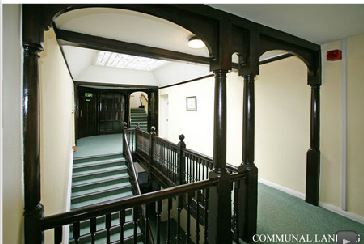
Thank you for that. It was great to read your reflections and particularly about Merrion House School. I live next door to the house,which has now been to converted into flats and was researching some local history. Your story created some very vivid images for me, brilliant!
LikeLike
Benjamin, thank you. It is good to hear from you. I did visit the place a few years ago and was sad at how so much had changed. On a more positive note, it was cheering to see how much had been preserved, including the entire frontage and circular drive. I still have a vivid memory of the layout of buildings and grounds, & can pay visits in memory. Are you living in one of the old houses nearby, for example the house near the entrance to Hurst Lane?
LikeLike
[…] encounters mortality encounters wondering wayfaring uncategorized other voices reviews rambling my life (in […]
LikeLike
[…] DavohJun 4th , ’118:26 amReplyEdit […]
LikeLike