


The other day I was writing about being nineteen and somehow feeling the same way fifty years later. But it was a mysterious feeling because I could not adduce a single instance of nineteenhood to illustrate my point. So it is a coincidence that I first discovered Wittgenstein at that age. Discovered is hardly the right word, for the vivid awareness of Ludwig Wittgenstein that I obtained was like a single flash of lightning, so indirect, you might say, that the long rumble of thunderous recognition did not follow till many decades later, when I first opened a book that he’d written.
I was staying in no. 57 Goldsmith Road whilst an undergraduate at the University of Birmingham. Miss McKenzie, a diminutive woman with a slight spinal deformity and a history of polio, ran Scottish dancing classes for little girls from that house, as well as a lodging-house for students. Next to the kitchen was our communal room. Upstairs were two small dormitories for students. Miss McKenzie herself occupied a tiny attic room. On Sundays she would prepare us a roast dinner with lots of orangeade and a dessert. She was not a good cook, but did her best, and this Sunday offering was her way of showing appreciation for her lodgers, to make up for any stinginess and rancour she may have displayed on the other days. She found us difficult to cope with, but needed the three pounds a week we each paid.
It was on one of these Sundays, then, that my friend and fellow-student Jim Slater (if only hewould read this, then we could renew contact!) mentioned his new subject of study: Wittgenstein. He was reading Philosophy. Peter Geach, his tutor, was one of those who had studied directly under Wittgenstein; his wife Elizabeth Anscombe was another. The great man’s close disciples seem often to have unconsciously acquired certain stigmata of eccentricity, particularly while lecturing small groups of students. Peter and Elizabeth had seven children and I heard that when she was delivering seminars she sometimes had to bring her toddlers in too, and perched them on a mantelpiece behind her, making it difficult for her listeners to focus on her words for worry that they (the toddlers) might fall off.
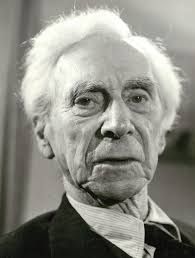
Jim Slater and I were opposites. He revered Frank Sinatra (as in Songs for Swingin’ Lovers), whereas I was into Brenda Lee (“Weep no more my baby”, “Sweet Nothings”). I’d recently seen seen her in a show at Birmingham Town Hall, where the programme included Bill Haley and his Comets. Jim also revered Bertrand Russell, philosopher and peace activist, who I considered a tedious old egotist. Jim was a rationalist sceptic and shameless square. For my part I was into Henry Miller, Jack Kerouac, and the Blues. We were disdainful of one another’s preferences, so when he told me about Wittgenstein, he little expected that I would be interested, especially as study of this philosopher (he said) involved awareness of the mathematician Gottlob Frege and required training in symbolic logic. Within five minutes of Jim’s synopsis, however, I hailed Wittgenstein as one of my heroes. Jim was stunned, convinced I had not understood what he was saying. “He’s very difficult, Vincent! You can’t even begin to appreciate him till you are aware of the context,” by which I think he meant the entire landscape of European philosophy going back to Plato. But I brushed that aside. To me, Wittgenstein was super-cool, and that was that.
I never got the chance to read what he’d written at that time. Books were hard to get hold of: expensive from the shop, and they never had enough copies in the university library to satisfy the students’ needs. I managed to scrape my own degree despite lazily having failed to read most of the essential or recommended texts in my French and Italian literature course.
But I’ve caught up on Wittgenstein in later years and am pleased to say I stand by my initial judgement. He’s the greatest thinker I’ve had the privilege to encounter, and one of the most honourable and fascinating human beings. I feel that I know him personally, and understand him better than most. I’m poor on mathematics, and he loses me in much of his Tractatus Logico-Philosophicus, but I can read his Philosophical Investigations again and again, for pleasure, while doubtless missing much of his significance to the learned academics.
What was it that Jim said about him that so convinced me that Ludwig was a man after my own heart, a mystic? I think it must have been the famous last sentence of the Tractatus:
Whereof one cannot speak, thereof one must be silent.
To Jim, it meant that since I did not know what I was talking about, I should shut up and listen only to the voice of reason, i.e. Jim’s.
But I saw it differently, in accordance with the context of the two preceding paragraphs:
My propositions serve as elucidations in the following way: anyone who understands me eventually recognizes them as nonsensical, when he has used them—as steps—to climb up beyond them. (He must, so to speak, throw away the ladder after he has climbed up it.)
He must transcend these propositions, and then he will see the world aright.
To my intuition (then as now, I was impatient with cold reason), this indicated that Wittgenstein was up there with the Zen Masters.
Death is not an event in life: we do not live to experience death. If we take eternity to mean not infinite temporal duration but timelessness, then eternal life belongs to those who live in the present.
Make sure that your religion is a matter between you and God only.
A serious and good philosophical work could be written consisting entirely of jokes.
One often makes a remark and only later sees how true it is.
What cannot be imagined cannot even be talked about.
Uttering a word is like striking a note on the keyboard of the imagination.
My aim is: to teach you to pass from a piece of disguised nonsense to something that is patent nonsense.
To many of his friends, Wittgenstein seemed to have had a tortured life, but his last words were, “Tell them I’ve had a wonderful life.”
I’ve grown up now, and don’t think of my hero as a Zen Master, and don’t even give any special respect to Zen. But I see in him a prophet whose time has not yet come, who is scarcely understood, whose discoveries are ignored by the very philosophers who have succeeded him, as if he were nothing more than a super-intense German eccentric whose thought is so abstruse that he’s good for name-dropping to show off your cleverness.
One of his key ideas, one I come back to again and again, is this simple bombshell:
the meaning of a word is its use in the language.[175]
This is the killer blow whereby he knocks Plato’s Idealism off its sacred pedestal in Western thought. Plato thought that the idea behind a word (such as Truth, Beauty, Justice …) existed in some realm, some heavenly warehouse, where ideals are stored, like the International Prototype Metre.[176] Such an idea is so ingrained in the Western psyche that this might be a reason why Wittgenstein hasn’t been absorbed into the intellectual bloodstream.
So let him remain an outsider, and my continuing inspiration.
47 thoughts on “Wittgenstein”
John Myste
I wanted to be the first to post a response to this, but I cannot. I do not have time to finish reading it. However, I can pretend to be the first to respond by posting a comment first, so I will have to settle for Francis Hunt
What a wonderful post! Unlike you, I studied philosophy, which meant reading Wittgenstein; like you I became a “fan.”I always felt that his English analytic disciples had managed to misunderstand him pretty completely, and that included Geach, Anscombe, Philippa Foot et al. I also had the impression that he was laughing up his sleeve at them a lot of the time.The Tractatus is a wonderful exposition of the limitations of the kind of mathematical reductionism applied to life, the universe, language and everything propagated by people like Russell and Ayer – that’s why the “ladder” image at the end of it is as important as the “silence” one. As the Investigations show, he was a thinker interested in opening things up rather than defining them away.
Vincent
Francis, thank you. You may recognise the following apposite words then: “Perhaps this book will only be understood by someone who has himself already had the thoughts that are expressed in it–or at least similar thoughts.” The same may apply to a blog post!
Vincent
John, I know what you mean. We are like dogs, wanting to lift our leg against a nice fresh lamp-post. I’d do the same. I’ll try and get to your new lamp-post, I mean blog-post, before the other dogs, I mean readers.
Vincent
I can share with you a couple of anecdotes about Peter Geach, one first-hand. I saw him in a bar on campus in the early evening, a pint of beer standing untouched at his side. I had a strong urge to introduce myself to him, perhaps to ask about LW like a star-struck loon. He sat entirely motionless, like someone who has been paralysed by appalling news. He had a newspaper in his hand, but I observed that it was upside down. I had a suspicious feeling that he was there to escape the memory of a seminar he’d presided over early that day. Or perhaps he was praying. As one of the greatest living champions of St Thomas Aquinas, he might have been muttering, “All that I have heard and said today seems so much straw.”
The other story I heard from one or two of the philosophy students in Jim Slater’s year. Geach was giving a seminar. Gentian violet was trickling from the corner of his mouth, giving him the air of Dracula. He stood straight leaning against the wall like a ladder, just his head touching it. He was silent a long time. The students looked at him, noticed his eyes were closed. Surely this was the fabled Wittgensteinian philosophizing on the hoof. He must be struggling with problems in whose realm no brain had yet ventured, or at any rate emerged sane. They waited in mounting expectation. The end of the hour came. A faint snore was heard from the direction of Dr Geach.I can vouch for my own story, but where is the corroboration to be had now? As with the “private language”, whose possibility LW famously refuted, it is no use vouching for one’s own memory.
raymond
“whose discoveries are ignored by the very philosophers who have succeeded him” I think this is partly because there is so much less to say about reality than there was before his work. Philosophers need to say something new in order to earn their paycheck, and so it is best for them to ignore him.But I do think there has been some useful expansion and restatement of his ideas. Specifically useful is the literary theory assumption that there is no proof for the existence of a transcendent signifier. No proof of any non-mathematical truth except for what Plotinus said: “I know I am, but I don’t know what I am.” That statement is the apt refusal to use a ladder, as Wittgenstein put it, if I am reading him correctly.
Vincent
“Specifically useful is the literary theory assumption that there is no proof for the existence of a transcendental signifier.” –?I’ve got this far in life without stumbling over anything called a transcendental signifier, and suspect that the very concept may be a transcendental signifier itself, that is, “any metaphysical, hierarchical principle that presumes to determine which constructions of signifiers are ‘natural’ or ‘proper.’”I’d be very glad if you will tell me what the usefulness is! Especially as it seems to me that one way to make the world a slightly better place is not to read Derrida, thus freeing up time and brain for healthy pursuits.
John Myste
You have repeatedly referred to Plato negatively, partially, I think for his Allegory of the Cave. Forgiven. Now Bertrand Russell, who is good if for nothing else, then for the quotes. I would really like to comment on Wittgenstein, but as I understand things, he has instructed me not to.
Vincent
John, as for Plato, I just came across a quote attributed to him: “What if the man could see Beauty Itself, pure, unalloyed, stripped of mortality and all its pollution, stains and vanities, unchanging, divine … the man becoming, in that communion, the friend of God, himself immortal; … would that be a life to disregard?” Personally, I would say yes, it would be a life to disregard, because I accept the life I have, with all its mortality etc. But still I see a common thread linking all the different forms of beauty, which might be, as the proverb so happily expresses it, “in the eye of the beholder”. Is that what he means? No, I think he rejects mortality, its pollution, stains and vanities with the same kind of disdain with which I reject him. (I spent fifty years of my life, on any calculation, pursuing the very thing he’s talking about, unless I am much mistaken, which would be nothing new. I am an expert in being much mistaken.)So I would dismiss Plato for the transcendental yearnings he fosters, which I see as having set Western civilisation on a disaster path. But thereby hangs a long tale, or tail, which I shall not wag here and now.Regardless of the above, Plato is surely interpreted by the reader’s imagination, just like the Bible (vide your post Let there be Light). For the quote above is the epigraph of a chapter by Annie Dillard, whom I currently idolize. I trust her clear-eyed realism when it comes to seeing Nature in all its brutality. She has written enough about her ecstatic acceptance of the world as it is, demonstrating that she has no need for something pure and unalloyed. But then you see, she may suppose that she has found it, in this life, having discovered for herself that “eternal life belongs to those who live in the present”, as Wittgenstein noted.
Vincent
Now, what was that about Russell? Is he an idol of yours? It is not that Wittgenstein has instructed you not to speak of something. He is acknowledging that there are things which cannot be said.
John Myste
I have no idols, and Mr. Russell is not one of them. Just out of curiosity, then, have you read Emerson, the Brahmin, Nature, Self-Reliance? If so, how does her fare in your imagination?
Vincent
I just checked my shelf: I have a volume of Emerson containing the essay “Self-reliance”, which adjures me to rely upon my own inner promptings rather than the wisdom of bards and sages. He does not say it exactly in those words. The paradox is that I regard him as a sage, so I should disregard his words. But I tend to rely upon my inner promptings anyway, so he is a veritable sage in my eyes, because he agrees with me. But thanks for the tip. I shall at least read this essay.Emerson, not being English, is not taught over here, but creatures like myself spot his works in charity shops and buy them when cheap. Getting round to read them is another matter, which needed your suggestion to get me started.
Francis Hunt
Vincent – as I’ve subscribed for comments on this post, everything that’s sent to you lands in my mailbox … including that hilarious piece of spam around half an hour ago – obviously the result of the work of a fairly mediocre translator bot. One example: “What can I put advertising on the Internet, especially web browsers, it is universally covenanted traffic, which is called [url=http://www.pozycjonowaniebitec.pl]pozycjonowanie[/url]. In my businesses, which occurred in google, it upright pays off. Innumerable people are choosing to do this to set up your province to the Internet…”I think we seriously need to reconsider Wittgenstein’s thoughts on private languages … 🙂
Vincent
Yes, Blogger filters them out automatically from appearing on the blog, but not from the emails. You’ve inspired me to change my settings to avoid anonymous comments. That will get rid of most of them. Now only “registered users includes open ID” can comment. I hope this will be OK.
CIngram
As (probably) the only mathematician who regularly haunts these halls, I feel it my duty to defend Russell the mathematician, who was a very different beast from Russell the moralist, Russell the Fabian, and Russell the philosopher.
Russell the man was probably insufferable, and had any number of chips on his shoulder, but he made important contributions to set theory and number theory (and there is far more truth and beauty in his maths than in his other work).
raymond
Hi Vincent ”I’ve got this far in life without stumbling over anything called a transcendental signifier,” Well then there is no reason for me to offer you anything further on this. Raymond
Vincent
On the contrary, Raymond! I miss our discussions and would like to hear your views on any subject, on any medium. Especially when you say something is useful!
Vincent
John, seriously, Emerson’s essay “Self-Reliance” is brilliant: yet another signal from the Muse that I should give up writing and just read.
John Myste
Interesting that you chose that one, as it is the one that that I have labelled “My favorite essay,” Since I encountered it about 20 years ago. I use/quote snippets of its often.
Steve Law
Just 2 or 3 observations…One is that I was told something similar about The Wasteland (‘it’s too difficult – you won’t get it unless you know everything about the history of Western Culture’) but I enjoyed it enormously nonetheless.
Secondly – do people really take Plato that seriously? I know he’s terribly important from a historical point of view but I don’t think I’ve ever met anyone who really takes his ideas seriously. I guess the Socratic discourse might be useful as a method but I suspect it only really works as a literary device.
Thirdly – isn’t this thing about ‘The Truth’ being ineffable (‘If you don’t get it darling, I can’t tell you’ as an Aussie Gnostic once told me)just a cop out? Even Socrates apparently said that he’d just make a fool of himself if he tried to define ‘the good life’. Surely the point is to keep trying – not to just throw our hands up and say it’s all unknowable (or worse, only accessible to a few.)Didn’t Wittgenstein say something about there being no philosophical problems – only disagreements over language? I’m not saying I agree with him, but I think there’s something in that.
Vincent
Steve, as to your second point, I felt that it is not so much that people take Plato seriously. I don’t suppose there are many who read Plato unless their school or college syllabus demands it; but his influence has seeped invisibly and mostly unacknowledged into the whole of Western culture including Christianity.
Vincent
… and your third point demonstrates what I meant by Plato’s influence being invisibly present. Even to talk about The Truth, whether knowable or otherwise, gives a nod of acknowledgement to Plato. I think what Wittgenstein did was to demonstrate through language errors in thought. He saw that you could say things that made no sense, and then attempt to analyse them logically.”The Truth” to my mind (as clarified by Wittgenstein) makes no sense, so there is no point discussing it; not even to say whether there is such a thing or not.
Steve Law
I just think perhaps you’re giving Plato a little too much credit. Are we saying that if Plato had not said what he did, that people would not have had any notion of seeking ‘The Truth’?My feeling is that if Plato had not existed, we’d have had to invent him. After all, don’t the Hindus have Brahma and the Buddhists are all about this unknowable reality, against which all our mundane activity is deemed meaningless and futile? But I’m not sure what you think the alternative is. Speaking with my scientist head on, any notion of uncovering the Absolute Truth is a bit empty, but I do think that some things are more true than others. That the earth orbits the sun is probably more true than that the sun orbits the earth. It may be that both descriptions are far removed from the Absolute Truth, but I don’t really doubt that one is closer than the other.
Vincent
I’d suggest that Buddha-nature and Brahma are not the same, though naturally Westerners would think they were pointing to the same thing because (via Plato) they have already been programmed through cultural influences to presuppose there is “One Truth”.”The meaning of a word is its use in the language”. The truth-value of a proposition such as “the earth orbits the sun” can be discussed within the realm of logic. We can talk about “The Absolute Truth” as we would talk about a unicorn. That is to say, we can define it any way we like, but it’s generally accepted that we can’t point to one, or put it in a zoo. That the same English word “truth” is used both times shouldn’t fool us into thinking that there is anything much in common between the two sentences.
Steve Law
I don’t think I’m saying that they’re ‘the same’, any more than Platonic ideals and the Judeo-Christian God are ‘the same’ – only that they come from the same impulse – to achieve some sense of (or relationship with) The Absolute. But yes – this whole idea of ‘The Absolute’ or ‘The Truth’ is something I have no truck with. I don’t even know what it means. And yet forgive me, but your blog entries – your experiences with nature – seem totally imbued with it, as do Annie Dillard’s. Maybe I’ve misunderstood.
Vincent
I think what you are saying here Steve is a powerful illustration of what Wittgenstein is about. You have no truck with the Absolute and don’t know what it means. At the same time there is something which you recognise as imbuing some of my posts and also Annie Dillard’s writings. As Wittgenstein said in one of my quotes above, “What cannot be imagined cannot even be talked about.” Yet the mystical can in some way be felt. And we wouldn’t talk about it, if Plato hadn’t with his notions given us a blessing to do so. Having inherited this mindset we think it is perfectly OK to talk about “The Absolute” whilst at the same time looking upon such “primitive beliefs” as animism and ancestor-worship with a superior disdain.
Steve Law
Aha – I get it now. It’s not that you don’t believe in ‘The Absolute’ – only that for some reason one can’t (or shouldn’t) try to talk about it. I on the other hand am not even convinced it exists.
John Myste
I am with you, Mr. Law. I am not convinced that the truth exists at all. If I am mistaken and truth is not something humanity invented, then I am convinced that it is completely unknowable. I mean, of course, philosophical truths, and just about all of them. Whether something is “right” or “wrong,” for example, means no more to me than does it offend the logical “moral sense” of the majority. I am not sure what else it could mean. However, if the “moral sense” of the majority leads to contradictions, then it is not logical and we may challenge such morality as inconsistent. Not to embrace Kant’s categorical imperative, but it makes far more sense than any Ten Commandments, or whatever other set of moral imperatives one thinks he uses. When a Christian, for example, feels a sense of compunction for an act, it is probably not always because he thinks he has violated a commandment of God. It is because his moral sense was offended. The non-literalist Christian thinks his moral sense is a gift from God. The literalist thinks it is a curse from God in response to humankind’s need to eat apples. The atheist thinks it the moral sense evolved. Regardless of its origin, it is an emotion, and as such, I am not sure how it could be a tangible reality. As for Plato, one need not embrace his conclusion to benefit from his clarification. The shadows on the walls of the cave are not thing casting the shadows. They are a reflection of something else, and an impure image of the real thing, whatever that may be.
Steve Law
OMG – ‘Mr Law’? Please call me Steve. Yes – but I think Vincent is right about the ambiguity about the word ‘truth’ – I mean, I really do think that ‘the earth orbits the sun’ is truer than ‘the sun orbits the earth’.I think it’s like the London Underground Map (bear with me on this) Londoners know that the positions of the stations on the map (the distances and angles between them) bear almost no relation to their positions in ‘real life’, but it’s a useful tool for finding your way around London on the Tube. If you wanted to take the bus you’d presumably use a different map, and by taxi you wouldn’t need a map at all, but the fact that there are all these different ways of representing ‘London’ doesn’t mean there isn’t an objective London out there. This I think is how Science works – by making more or less useful maps – depending on what you want to do. The Big Reality probably will never be fully ‘known’ but that doesn’t mean it isn’t out there. I think you’re right to mention the shadows on the cave walls analogy here. Spot on. But then we go on to ethics. I think that’s a totally different bucket of eels. I think I’m probably one of your atheists (Although I can’t prove that there is no God it doesn’t seem a very plausible hypothesis.) but I wouldn’t put it all or even mostly down to evolution. The accidents of history, culture, race, faith, family etc etc and ‘free will’ (whatever that is) are all in it together. I wouldn’t trust ‘the majority’ to tell me what’s right any more than I’d trust some learned elite and just doing what God says because you want to go to heaven strikes me as a particularly feeble system. But as I think Churchill said – ‘Democracy is the worst of all possible systems – except for all the others.’ I reserve the right to argue with all of them.The only thing that really troubles me about all this is the idea that if there is no absolute moral truth ‘out there’ for us to live by, then it doesn’t matter what we do. I think if there is no absolute moral truth ‘out there’ it matters even more. I’m going to do something really bad now and quote from my own book (Misadventure) but I don’t think I can say it better. ‘You might as well ask what the one true ultimate language is. Who cares? We use what we have. We modify it as we go. We come across other languages, equally useful, or not, as the case may be. We make a decision.’
ashok
Vincent, I have arrived late being held up elsewhere. Another beautiful piece from you. Thanks for sharing it. During my student days I too lived in accommodation similar to the one described – in one of two rooms rented out by a grand old Canadian lady of Scottish descent – Mrs. Cuthbert – to university students. I lived in her place for four years while the student in the other room changed every year. From what you have described my tastes appear to be more akin to those of Jim then yours. Hope you visit my blog too and vehemently argue the most recent post.
ashok
Just to add the my landlady’s father was a Christian minister but she was dead against anything Christian. Once she was approached by one who asked her “Sister Have you found Jesus” and she said her reply was “why have you lost the son of a B. ” and she would break out into loud laughter after recounting that experience.
Vincent
Good to see you, Ashok! I already visited your blog, but as you noticed I have not commented lately. You really want me to vehemently argue your latest post? Funnily enough, I was considering a new post on mine, responding to a variety of recent inputs. Let’s see what can be done!
Ashok, I have thoughts pending. Were it not for starting work now, the suffering would begin. Alas, you must wait.
ashok
Vincent, I shall look forward to your new post. John,I shall eagerly await for the pending thoughts.
Vincent
Re one of Steve’s comments: “Aha – I get it now. It’s not that you don’t believe in ‘The Absolute’ – only that for some reason one can’t (or shouldn’t) try to talk about it. I on the other hand am not even convinced it exists.” To which I, enlightened by study of Wittgenstein’s thought, reply, “If I say I believe, or don’t believe, in the Absolute, what kind of language-game am I playing with you? I don’t know. And that is why I can’t or shouldn’t try to talk about it.” And then, “What kind of language-game might you be playing, if you bring up the topic of the Absolute, whilst not being convinced that it even exists? Probably a philosophical one. Those games are often the most confusing, because they contain a meaningless term and yet try to coax meaning into it.”
Steve Law
I think the use of the word ‘game’ is misleading here – as if I’m merely trying to trip you up or score points, or beat you in some way, regardless of what the truth of the matter might be (truth, that is, with a small ‘t’).I think we can take this idea of philosophy as a mere linguistic game too far. I bring up the topic of ‘The Absolute’ because it seems to me to be the subject of your writings. I don’t have to believe in it or be convinced that it exists to perceive that. I don’t have to believe in fairies to know when someone is telling a fairy story. Sorry – that sounds like I’m trivialising your views but you know what I mean.
Vincent
Wittgenstein coined a word which is translated in English as language-game in order to explore and communicate his realization that language in fact is a game, or rather it is like games in general. We can only communicate with one another within rules as to grammar and so on. The essence of the game is to achieve a common understanding through language. So it is not trivial in the sense of a game that’s done for fun in leisure time. It is not a “mere”. It is what distinguishes Wittgenstein’s philosophy from any other. As for fairy-stories, you don’t have to believe in them, but then, neither does the author!
Francis Hunt
Wittgenstein’s concept of “language games” is central to his later thought; as Vincent points out it has nothing to do with a sense of triviality which some might associate with the idea of games. It has more to do with common rules and a common understanding of the rules. Imagine an attempt to play a football game between rugby and soccer players. The problems will begin immediately, as soon as the rugby player picks up the ball – his rules allow this, the soccer player will shout foul. Unless they find some kind of agreed rules, they can’t play against each other. In dialogue between different groups of people, the same problems arise. Two Catholics may have no problem talking with each other and exploring concepts of “God.” They have “rules” for their language game which they share. When Richard Dawkins joins the discussion, the problems arise. He’s using the same words – according to very limited definitions you might even argue that there is a rudimentary meta-language which is common. But this meta-language is extremely limited and completely formal; reducible only to bare definitions. The Catholic might even go so far as to say, “Ah yes, that is a definition of God, but that says practically nothing about what I mean by God, or what God means to me.” The other Catholic nods immediately in agreement. What’s going on here? The Catholics and Dawkins are following different rules in different language games. Incomprehension arises when either side assumes that the other is playing according to his/her rules. Personally, as an ex-believer, trained in theology, I sometimes tend to play both games. My own journey away from faith had a strong intellectual component but it was much more than that – and I’m quite happy with the result. I also believe that many of the assumptions and statements believers make can be challenged within the rules of their own language game – this can often be a more useful exercise than simply throwing arguments at them from the midst of another game. There may also be value in genuine searches for shared meta-languages; but such searches can only be fruitful if an honest, open searching attitude is shared by both sides – something which is unfortunately very rare. Personally, I would enter into such an endeavour by expressing my own “weak atheism,” but, at the same time, my feeling (or longing, if you will) that some kind of (what I call) secular spirituality is enormously enriching for life; a sense of wonder at the depth and richness of things. And then hope that some kind of dialogue could go on from there … (However, I’m not sure what kind of language game we’d be playing according to what sort of rules :-))
Steve Law
Vincent – “If I say I believe, or don’t believe, in the Absolute, what kind of language-game am I playing with you? I don’t know. And that is why I can’t or shouldn’t try to talk about it. ”You realise you can just dismiss any kind of discourse this way don’t you? ‘I’m not entirely sure what you are trying to say, therefore it’s pointless to respond. ‘That’s pretty defeatist. ”What kind of language-game might you be playing, if you bring up the topic of the Absolute, whilst not being convinced that it even exists? Probably a philosophical one.” A more useful response might have been to ask what I meant when i said “your blog entries – your experiences with nature – seem totally imbued with (some sense of The Absolute)” instead of wondering what game I was playing. I suspect we are using the word ‘philosophical’ in different ways too incidentally. “Those games are often the most confusing, because they contain a meaningless term and yet try to coax meaning into it.” The word is meaningless to me – that’s exactly why I asked. You may not want to call it ‘The Absolute’ or ‘Truth’ (pick your own word) but there’s something in your writing that you’re trying to communicate and it’s foreign to me and I really want to ask you about that. It’s not a ‘game’. Thanks Francis for the clarification but I can’t help feeling that Dawkins for example is deliberately missing the point. He knows exactly what they mean by God and dismisses it for effect. He just likes a good old ruck. Using common words in a new and skewed way is a major part of the problem and I think the use of the word ‘game’ is a case in point. The word is notoriously difficult to pin down but it seems to me that among the attributes of any game is that it is recreational and voluntary. Using language is neither of those things (well it can be, but so can eating.)It’s communicate or die. So I’m suspicious of this use of the word – it seems like a sort of newspeak. It seems disingenuous, if not devious. One thing about me. I may not be intelligible a lot of the time, and ill-read and defensive too but I don’t really play games (in the traditional sense of the word) I genuinely want to know what you mean.(I attempt an “open searching attitude”) Of course we need to be alert to the possibility of misunderstanding when we attempt to communicate but I have to assume it’s possible.
Vincent
Steve, I’m sorry to have used the word ‘game’ because it brings about a reaction in you, especially with your sense that it’s a perfectly good word used in a new-fangled way. However it was difficult to avoid in a post devoted to Wittgenstein. I shall say Sprachspiel from henceforth instead. I felt sure I knew what you meant when you first said “your blog entries – your experiences with nature – seem totally imbued with it [a sense of the Absolute], as do Annie Dillard’s.” So I didn’t ask what you meant. But in order to relate things back to LW, the topic of the original post, I brought it back to the Sprachspiel of identifying something and giving it a particular name, whilst not believing in it. I feel I understand that too, because I often in this blog refer to angels, without believing in them in any literal way. So now I will try to answer you as simply as I can and not drag Wittgenstein into it at all. I think you are absolutely right in thinking that we should be able to communicate anything with one another, even the most hard-to-pin-down feelings. There is certainly a feeling that lies behind my descriptions of nature-rambles, or the thoughts which occur on nature-rambles. It is an ecstatic feeling, whose source is unknown to me. I am reluctant to apply labels to it because labels carry baggage. If I conveyed the baggage, such as beliefs, without the feeling, then my communication would have failed. It may still fail because others are not able to conjure up from their own experience the feelings that inspire my writing. To me, ‘God’ starts from trying to give a name to a feeling. You are clearly aware of the God-word-baggage because you use the word ‘Absolute’ instead of some other word. Apart from the baggage, all these words are completely interchangeable, because we can’t bring ‘The Absolute’ and ‘God’ into a court of law as exhibits in order for a jury to decide how they differ. All such words refer to something abstract and unknowable. When you say that Dawkins “knows exactly what they mean by God and dismisses it for effect” I think you have hit the crucial point, though I take the opposite view. I think the whole point of Dawkins’ atheism is that he has no clue what a sincere believer means by God, and that is why he makes such a nuisance of himself. Dawkins knows what the baggage is, but not the feeling.
Steve Law
It’s not just the word ‘game’ (and I know enough German to know what ‘Speil’ means) although I think it is a particularly troublesome word at the moment. ‘Play the game’, and ‘Be a team player’ are just short hand for telling people to fit in or else. Don’t step out of line, just do your job, stop whining. Basically it’s all about trying to make conformism sound like fun. But there’s a lot of words I’d be very careful of. ‘Faith’ and ‘Believe’ I try to avoid using altogether. I guess this is where Wittgenstein throws his hands up and says that he won’t even try and speak about it. I’d hope it was possible to try to clarify what we mean but I understand that it’s often not possible (or too time-consuming). I think perhaps a bigger problem is the temptation to extrapolate a person’s entire belief system from a few comments. Once we listen to what a person actually says instead of what we assume they mean (asking for clarification where necessary) we are often surprised by how much we agree on. But I’m as guilty as anyone on this score. It’s a work in progress. You probably won’t be surprised to hear for example that I too am overtaken by that ‘feeling’ for nature too, and for music, and some might call that a spiritual experience or having some sense of ‘The Absolute’. I don’t, but then I wouldn’t dismiss it rationally either. I understand perhaps more than most about the ecology and the genetics for example but that just makes it more wonderful – not less. So this is where your writing intrigues me – because you (and many others) add this whole other layer to the experience (‘God’ ‘The Absolute’) and probably can’t imagine why a person would not do that. So we have a genuine conundrum here. I think that’s fascinating. And Dawkins? He’s a believer in a way that I am not. He ‘believes’ in science in a very religious sort of way. He believes it’s the way to ‘The Truth’.
Vincent
Can you give an example of where you think I “add this whole other layer to the experience (‘God’ ‘The Absolute’)”?You see, I definitely distance myself from any such beliefs and try to stop them seeping in as an overlay to experience, but in a clumsy and casual way I do try to express what I find valuable about certain experiences. I don’t know whether I have been able to express it though.
Steve Law
Ooh – now you’ve put me on the spot. I’ll keep an eye open.
Vincent
Apologies to CIngram, whose comment I have rescued from the spam folder. I can’t think why your comment was put there, Jack!
anatole
Yea! A great light.
anatole
Note that Russell loved Wittgenstein, even while disagreeing with him, and considered him his aptest pupil. I revere them both.
Vincent
Yes, without the encouragement and friendship of Russell, as I recall it, Wittgenstein would not have been led to philosophy. He first went to Manchester University to study aeronautics, which was a pretty cool thing to pursue in those days. He came from a rich family,
 a wayfarer’s notes