

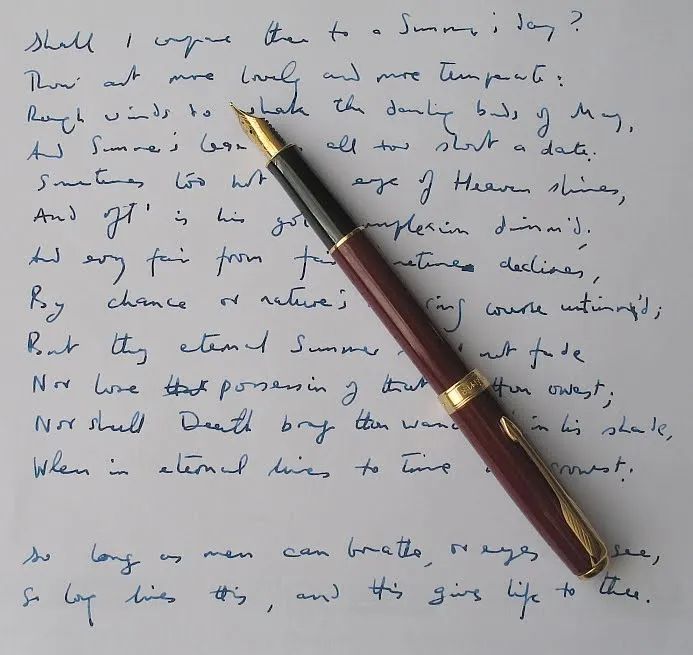
 I think Hayden is my longest-serving, faithfullest blogging friend. But when she writes about Jake, my empathy isn’t immediate. I prefer a cool relationship with wild animals who go their own way at their own pace, and don’t beg from me with soulful eyes. Slugs spring to mind, or rats. I’ve written here several times about both. Digging deep in my psyche, I may have found an equivalent love to hers, but it involves the inanimate world of artifacts.
When my daughter was 7, she had a little pet, a Tamagotchi. It incarnated as a puppy—no, it must have been a baby.
It was at the end of August 1997, forever connected in my mind with the death of Diana, The People’s Princess, which suddenly had throngs realizing retrospectively that they had always loved her in a personal way, and been loved by her in return, and were stricken with grief. Shrines of flowers appeared on every main street, growing by the hour. After a whole week of this, I congratulated myself on escaping the madness, for I was due to join my family on holiday in Orlando, Florida. It was not to be. I arrived there just as Lady Di’s funeral was starting, for the mania had gripped America too, unless it was just American curiosity at the British mania. In Orlando, it was live on TV, early on Saturday morning.
I discovered that she (my daughter not the people’s Princess) had interrupted her sleep every night for a week to tend her inanimate puppy/baby. This demanding creature, which she had the responsibility of feeding, keeping clean, playing with, taking for walks, responding to the cries (or barks) of, was encased in a thing with a small screen and buttons, an electronic craze from Japan. It was reasonably programmed to be active in the day only, so as to mercifully allow its owner to sleep in the night. But the reasonable programmer hadn’t reasoned that the unreasonable owner would be flying to a different time zone halfway through the wretched puppy/baby’s lifespan. My daughter was looking forward to the glittering prize of a high score, proving to her friends that her pet-owning/mothering skills were second to none. Or perhaps a love-bond had developed. At any rate, the only way to reset the thing’s internal clock would have been to start a new incarnation. Which would have been no good when she got back to England, and it woke her up in the middle of the night.
It proved, if proof were needed, that the pet owns its owner. Not only did it provide valuable parenting experience, it was a supplement to future sex education, impressing consequences on the malleable young mind. It is no small thing to be awakened every night by a bawling creature, however much you love it.
I’m not immune to inanimate pet-owning, but the objects of my love are not a cellphone, Blackberry or suchlike. I keep fountain pens. Till the other day I had three. None was quite satisfactory. One is very elderly in cheap-fountain-pen years (multiply its age by seven, and it’s definitely on borrowed time). The lid is cracked, it has insulating tape where you hold it to write, and a week ago it was incontinent on the bedsheets. A fountain-pen is the best for doing crosswords lying on your back because it can write upside down. I used a little too much bleach getting the ink off the sheets . . . and now that pen is no longer welcome in the bedroom.
I haven’t thrown that pen away. It has too much history; enough to try your patience if I were to tell you the tale of mystery. Oh well, it is my blog, I can try your patience if I want to.
You see, I’m not sure if it is the original pen, which I stole from one of my children, complete with bitemarks. I kept losing it, usually out of my pocket while driving the car. It always turned up in crevices or under the seat, till one fatal day when it left and never came back. I wanted to pin a reward notice on every tree as people do when their dog or cat has disappeared. But I contented myself with months of quiet grieving. Till one day, when one of my children presented me with an identical pen, complete with bitemarks in the same places, and was rather vague about where it was found, mumbling about the back of a drawer. I sentimentally assume the dear child had bought another one and bitten it to look as old as the lost one. I wasn’t convinced because the old one had more bite-marks. But I’m still not sure . . .
So now I’ve finally bought a more expensive pen, which can feed itself from its own bottle of ink, and doesn’t have to be fed little cartridges. A Parker Sonnet. I don’t want to let it out of my sight. I had the romantic notion that my handwriting would at last become legible and effortlessly calligraphic. Mmmm. Perhaps it will, one Summer’s day, before its gold complexion is dimm’d.
ZACL Edit
-
Vincent,
I get a calm feeling looking at the photo. The shape of the pen and colors, and your hand writing look warm. I can’t read it completely, but I hope the tradition doesn’t go away.
The other day, I heard the students here cannot read cursive writing anymore because they no longer learn it at school. Is the situation the same in England?
Like
-
Keiko, you ask a question I was discussing with a teacher at the weekend just past. The use of cursive writing is obligatory in Scottish high Schools, even with dyslexic pupils, many of whom, tend to work more easily with block letters. I should think the same applies to English Schools. Reading of variation of styles of writing might be more of a problem here in the UK.
Like
-
Hi ZACL,
Thank you for the information. I’ll let the local writer group know because they showed me an article about it, and they were concerned about it.
Like
-
Keiko, I have no idea! My children have all left school, and I shudder to think what is being taught or not taught these days.
Like
-
It never occurred to me that I have a pen collection, ZACL. It’s just as the act of writing by hand seems sacred, and I find ballpoint pens unworthy. Rollerballs are tolerable, I suppose; but now I feel equipped, and never go anywhere without taking at least one functioning fountain-pen along with me, and usually a notebook.
Like
-
Wonderful!
I feel my handwriting is awful, various reasons for that, though one or two flatterers close to me, say it is not.
I have ink pens, more mow as sentimental objects rather than for use. I do like the roller ball and sometimes, if the notion takes me, I will write with it.
Like
-
It’s a coincidence, but yesterday, I was in a writing group meeting and a man read a poem titled “Ink.” After he read it, the room was silent. I asked him, “Do you write in fountain pen?” He said yes. I thought most of the people there probably never used a fountain pen before.
I should have mentioned about your blog. I will, next time.
Like
-
oh, my! How Could I have WAITED so long to get here (never mind my mundane business, real life is folly, not pardon).
But but but…. Jake reduced to a fountain pen, or a computer program? Ah………… alas…….. we are forever at odds on this. And fountain pens (and their blots on my sheets too!) have never managed to become a favorite of mine, despite owning a few from a sense of duty. (All writers love fountain pens, yes? NO.)
Instead my adored implement is a Zebra E-301: is that a roller ball? It doesn’t make those nasty blots of ink that some roller balls do. Ahh, I’ve googled, and its a ballpoint, and retractable. Of course. Doesn’t leak its ink everywhere, just writes in an exceptionally smooth and fine line. No scritchy-scratching. Gets the job done smoothly without calling attention to itself. As a reward to it’s excellence, I have several, none of which is valued more than the next. Interchangeable. Indistinguishable, as all good tools should be.
I’m honored to be a long-term blog-friend, and yet – and yet – your absence of appreciation for non-human companions is odd to me. Not so odd that I can’t accept it with a shrug, still – at some level it’s quite incomprehensible.
I’ve wondered, Vincent, but not had the courage to ask before: do you value humans as singular and superior to other biologic forms? It has always sounded as if this were true. And if it is true, on what do you base the importance? Is it ‘human style’ intelligence? (And if so, she asks, scratching her head, why should human intelligence be valued so highly, all evidence being that it’s of a singularly destructive form?)
I ask because it makes no sense to me, and inquiring minds wish to know…..
Like
-
(things you aren’t interested in knowing: tonite Pike, whose predatory nature knows no domestic controls, again smacked Jake with all his switchblade talons exposed, and for no sin at all, other than looking, for the moment, vulnerable. I made a huge fuss, as usual – as this has been effective in the past in dampening this behavior – shouted and hollered like a fish wife, and ultimately chased him out into the fields – where he’s quite happy to be, when that is what he wishes. And it isn’t what he wished for this evening. Jake? He’s easily consoled, though I do feel sad for him sustaining the abuse. Quite simply: Pike’s claws hurt. Jake treats Pike quite gingerly and tries never to thwart him – but to Pike, Jake has the behavior of prey and it excites him to action. To some, Jake’s attitude of appeasement and conciliation might be onerous – but I see it as the corollary of the merry, fun-seeking temperment I selected for when I first went to meet baby Jake. But all of this assumes that one accepts and enjoys critters as beings in their own right, with lessons no more alien than I’d find if I were to settle in a Guatemalan village for a year.)
Irreconcilable differences, I think.
Like
-
Hayden, I was waiting quite a while for your reply, with the inevitable thought that I’d gone too far and upset you or something (as I always tend to think when somebody doesn’t reply. It’s never the case – almost never)
You have challenged me a lot with your questions. It is of course true that you and I are irreconcilably different. This difference between human beings, one from the other, could be considered the most notable thing that distinguishes homo sapiens sapiens from the other animals.
In my observation (very limited and unscientific) animals in the wild don’t develop individuality in the normal run. One is like all the others. But (I’m thinking on the subject for the first time as I write this) if some catastrophe happens to a wild animal, it may for survival have to become an individual. (This would be a mirror-image of a human child brought up by a wild animal becoming an animal herself, for survival.)
I do think that animals adopted by humans as pets become individuals, and are born with that propensity, through human-controlled evolution (breeding!). So a relationship is possible with the human keeper. (continued)
Like
-
You ask:
“do you value humans as singular and superior to other biologic forms? It has always sounded as if this were true. And if it is true, on what do you base the importance? Is it ‘human style’ intelligence? (And if so, she asks, scratching her head, why should human intelligence be valued so highly, all evidence being that it’s of a singularly destructive form?)”
It’s an extraordinary question. I mean most people wouldn’t ask it, but it shows how far you and I have come in our respective ways to be able to talk about this kind of thing. I will respond “No,” but that is on the mystic and philosophic level. (I have found myself in potential conflict, within the blogosphere, with certain exponents of traditional Indian philosophies to whom Mankind is the crown of creation).
On an everyday level, like everyone else, I’m locked into being a member of the human tribe, which represents in so many ways my own interests; though enough of an outsider to criticize it as you do. Yet I’ve often written about human-style intelligence being a kind of exaggerated excrescence, a burden, like the horns of the male elk.
Like
-
On the contrary, I am always interested in Jake & Pike, as it were against my own pretensions of not being a pet person. My comparing of a real pet with a tamagotchi and a fountain pen is really a form of self-mockery – looking at just one aspect of pet-keeping, which is the burden it places on the owner. The childlike dependence. The burden willingly undertaken because love is there.
I see that this is a human need, often for male and female alike. But somewhere I am detached about it, questioning, preferring the non-dependent, non-love relationship with animals. Reviewing my posts on this blog (to turn them into a different form of literature) I re-read my second post, entitled “Do fish have souls?” To me the question is not mere curiosity. It is an awe (which could become a horror) at the vast unknown. What is the consciousness of a member of a different species? What would it be like to see, even for a short time, through the eyes of another person, my next-door neighbour, say?
Looking at inanimate pets is a way to see the some of the human side of the relationship, in isolation. And it is also a bit of light-hearted teasing.
Like
-
I’m afraid you won’t have the interest in doing the scientific test I’m about to propose…but… it’s about observation, which is something you do so thoroughly and well.
It is my assumption from reading your response that you’ve never observed wild animals over an extended time. My own observations find them strikingly different from each other in the ways that they behave, and it’s my conceit that you’d discover the same if you looked. Doesn’t matter if it’s rats or pigeons. In fact, pigeons might be a good target, because it’s not hard to learn to tell them apart. You’d need to pick out a few individuals and watch them over a period of time, perhaps making notes to shorten the observation period. Just watch what is. I’ve watched a family of squirrels grow (I called them a “tumble of squirrels”) and each of the babies soon became quite distinct in it’s behavior. Each had a personality. I didn’t feed them. They became unafraid because they were used to me being around, but I didn’t attempt to interact with them at all, so I was not imposing personality on them in exchange for treats or attention. They seemed indifferent to me as long as I sat still.
I could – do- accept from you that animals not of your own species do not interest you. But I hold that your lack of interest is what makes you unable to see differences. I call this behavior “specist” – pronounced like ‘racist’ – because I see it as similar in it’s origins, and similar in it’s cure. People I’ve known who think that members of another race are ‘all the same and unlike themselves’ tend to not have known many individuals of that other race. In a way, their ignorance is of profound similarities, and they are caught in the dilemma of being derailed by surface differences.
When you and I were young it was de rigour to think of animals as being collections of instinct and any evidence of individuality was seen as projection and unprofessional behavior on the part of the observer. But even science has given up it’s resistance to this thing that seems so clear to those of us who spend time with animals. They have emotions and reactions much like our own. They are each disposed to act from a bundle of behaviors that, if they were human, would be called “personality.” But so weak is our language, and so unaccepting of critters, that we make “person” the word that personality is based on. I like to refer to Jake’s “dogonality” in jest…
I find critters to be far more like us than unlike – crafty, deceitful, humorous, jesting, brave, cowardly – all of the usual traits, distributed just as unevenly among critters as among humans.
Like
-
It’s true that I haven’t done the observations, and I don’t see myself doing them. Both in humans and animals, what interests me most is instinct; and something, whatever it is, that unites all species, There is so much to be interested into that I’m glad to be indifferent to some things. Otherwise it would be too much!
But thanks for the information on personality—I think we may legitimately use that word for non-persons. I wonder what it is that makes two squirrels different. Do you have any ideas about it? I’m interested in the implications of being a cousin to the animals and indeed to all creatures. But fortunately I don’t have the responsibility of sending them all birthday cards.
Perhaps my attitude to pets is partly a product of having been a father with children in the house for nearly 40 years. There were four, spaced out widely. It’s wonderful to be free of dependents that need to be cared for!
Like
-
I do hope that you take my word “speceist” as lightly as I said it. Racist is a fighting word. Specist is used as a light joke to nudge thinking, not meant as an accusation or an attack.
I find Christians – taken as a whole, which of course is an absurd elimination of difference – are just as firm in thinking of humans as being the pinnacles of creation.
Personally, I believe that this way of thinking, if we don’t correct course soon – will lead to the extinction of our species. Being at the top of the heap means you don’t need to pay attention to the foundation, which might work if we were able to absorb energy directly from the sun w/o the intermediaries of plants and animals to feed us.
Why each generation appears to think that the folly of mistaken science is behind us, and that THIS NEW discovery is absolute and accurate – baffles me. We’ve been wrong since before science was invented, and every day there are headlines exploding former “scientific truths.” And yet we stand naked on our latest discoveries and profess to know how things work, and what’s important.
To me, this hubris of thinking we understand, coupled with this human-centric model of behavior is what most threatens our continued existence. If we don’t poison ourselves with chemicals or destroy ourselves in war, we’ll probably end by accidentally kicking the ladder out from under ourselves by destroying the base of the food chain, and all because we didn’t extend our sense of what is important to our co-inhabitants in this world!
To me, all of this begins with the simple and revolutionary act of paying attention to the non-human inhabitants of this world. We must first notice them if we are to understand where we fit in the scheme.
Like
-
Vincent, I have no idea what makes two squirrel different. But you, having been a father 4 times, might have some insights on what makes children different? As I’m assuming yours are?
It’s all quite mysterious. And you’re right – the world is so filled with wonder that one can’t be interested in it all. One must edit.
That said – fascinating that you identify instinct as your primary focus. I hadn’t realized that… I will read your posts with a fresh eye now.
Perhaps that is why we are so different and yet so alike: you are drawn to understanding instinct, I’m drawn to understanding intelligence, and we’re both drawn to the mystery of it!
Like
-
oh, you’re got me off and rambling, still thinking!
you mention “the implications of being a cousin to the animals” but even that phrase contains a problem. (Our language is so human-centric! It’s barely possible to even talk about the issues!)
For we simply ARE animals, and the question is, knowing that, how we choose to behave. Our ancestors understood this, and – living side by side, did not diminish the others. You, fascinated by instinct, understand this. For modern religion and science hinge our entire alleged distinctive separation from “the animal kingdom” on an artificial divide between instinctive and rational being, or animal and man. Yet – animals act rationally and intelligently, and man acts instinctively. The line is not so bright as we pretend.
The Abrahamic religions deny this – you suggest eastern ones sometimes do as well, but I’m not familiar with that.
It is a puzzle to me.
Like
-
If we don’t correct course soon, it will lead to the extinction of our species? Well, I tend to go by James Lovelock in these matters. He says it is too late, we can’t turn the ship round in time. So we need to focus more on how we’ll adjust to different circumstances in order to survive. He also predicts we will not become extinct but reduced in population. He reckons seven out of eight will die – from starvation. I don’t believe he has the power of prophecy, but I respect his reasoning.
But you are right in another point, that I respect instinct more than intellect—because intellect is a whore, capable of perverting any values, including natural virtue.
You commented on my use of “animals” instead of “other animals”. I want to comment on your use of “intelligence”.
(continued …)Like
-
You wouldn’t by any chance mean the qualities which are measured by intelligence tests? I prefer to think of every creature as equally intelligent, for it knows how to survive in the environment for which evolution has selected it. A slug which comes into my bathroom or kitchen on a winter night has its reasons, which I respect. The dodo wasn’t stupid to be unafraid of man. It was unprepared, and unable to adapt.
So it may be with man: unprepared to solve the problems we have unwittingly created. Every solution we invent may create new problems. The next few hundred years might be like BP in the Gulf of Mexico – trying to find new fixes for the fixes designed to fix fixes.
That our language is human-centric, and our behaviour too, is perfectly natural and in accordance with the behaviour of every other species, for they are regulated by instinct. We can cherry-pick examples of Aboriginal beliefs and attitudes from around the globe to show their wisdom in coexistence. But I think we could also find examples where those same Aboriginals created deserts by burning forests as a quick and easy way to clear fertile ground.
Like
-
Vincent,
Humans are the only animals on our planet that can create a language for such complex discussions and then go on to create books etc. So this is one point of view from which you might regard them as the most evolved speices on our planet. There are several other points of view from which humans would be regarded as the most evolved.
Certainly there are other abilities such as jumping on trees where monkeys excel and sensing magnetic fields that birds can do etc. but humans are the only species that can create devices to do the same thing. But to regard that a mouse or a rat is more evolved than humans is just so much xx xx
However, Humans are not the most evolved species of the universe. Apes possibly regarded themselves as the most evolved when only apes were around on our planet. But if you say that they were not capable of thinking that complex then you would have to admit they were less evolved than humans who can think like that or otherwise.
The speices on our planet has been evolving and what is the proof that the process has stopped and newer more evolved speices will not emerge? and what is the proof that they do not already exist in the universe? Its a different matter if you call these more advanced speices just a more advanced one or a god or deva.
Like
-
Hayden,Vincent
Every ability is a two edged sword capable of destruction or creation and so it is with human intelligence
Like
-
Oh yes Vincent, Animals in the wild do have their own unique personality. Just observe them with love and compassion and you will note wonderful differences. Even insects have distinct personalities and this can be observed with ants easily.
The most easily observable is the distinct personality of birds in the forest or street dogs ( although I think they do not exist anymore in developed countries) or for that matter street cats. Some are violent and agressive others docile and so on.
One can experiment all this with ants walking along in a row in the wild. Place a slight obstruction in their path and each behaves differently. Some curious, linger on to examine the obstructions. Others change their path. Some try to fight to remove it and so on.
Vincent what you are perhaps referring to with pets is that they start to develop human like traits. That is to be expected. Company influences, either way. You may find that long married husbands and wives begin to pick up each others traits and that some old dog owners begin to look a bit like their dogs with time.
Like
-
or pens 🙂
Like
 a wayfarer’s notes
I agree with your theory that a pet owns its human. Those darn tamagotchi’s; the upset kids when the thing expired through accidental neglect. They certainly prove the point.
I too remember when Jake first came into Hayden’s life.
Your pen collection is sweet. I kind of associated you with a pen collector but not in quite the way you described your style of collection.