
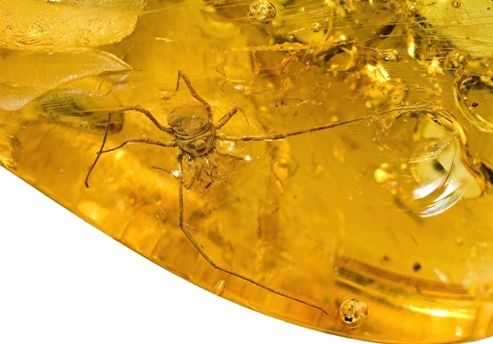
 Writing is a medium for the preservation of thoughts. Within the preservative—a string of words— the thoughts are embedded or entangled, just as prehistoric insects are caught in amber. Even if we find insects—the subject matter, the thought itself—repulsive, we can still admire the golden translucence and high polish of a piece of amber.
If a thought is well expressed, true to its thinker and its time, how can it not be interesting? I ask myself if a noble thought is worth more than a vulgar one.
I’d like my life to consist, above all, in educating others to feel more and more for themselves, and less and less according to the dynamic law of collectiveness. To educate people in that spiritual antisepsis which precludes contamination by commonness and vulgarity is the loftiest destiny I can imagine for the pedagogue of inner discipline.
So wrote Fernando Pessoa, in the voice of one of his fictional personae. He gathered his thoughts, intriguingly opposed as they usually were to the common view, and created “a factless autobiography”, a fiction of the inner life deeper than fact, in a real Lisbon, which becomes a Lisbon of the soul. I refer to his Book of Disquiet.
Raymond Sigrist, in a discussion elsewhere on the Web, also selects a quotation by Pessoa:
The first and last rule of love is that the beloved object should be loved for what it is and not for something else, loved for being the object of love and not because there’s a ‘reason’ to love it.
Shorn from its context, this can refer to many things, including fetish-worship. In the context of that discussion, it led to someone saying “If all parents showed unconditional love to their children, we would all be enlightened”—which stopped the discussion dead. I had ideas on how to continue, like “—Yes, and if we beat our swords into ploughshares, the lion would lie down with the lamb; or so they say.” But I held my peace.
Or I could have pointed out the love of parents for their children has a reason, and is only unconditional when the mother takes up her helpless newborn baby in the instinctive mammalian bond, a love given by Nature for its own reason. Consider another case, where a child has died or is otherwise taken away. In the wellspring of grief the parent discovers a greater love than was ever expressed when the child was alive. Is this unconditional love? No, it is conditional on the object being absent.
Am I being cynical? No, I am pulling away from the “dynamic law of collectiveness” in which ugly truths are hidden behind a mask of hope. Only then can I accept the world as it is, without the falsity of wishful thinking, without the fairy moonbeam of hope.
James Lovelock (see previous post) accepts the world as it is. He doesn’t think we can stop the earth reaching a tipping-point, where it will get stuck in a warm phase for a very long time. Humanity, he says, will survive, but the population will reduce to the levels of two hundred years ago—estimated at one billion in 1804). His motto, as suitable for a 90-year-old as for humanity in general, is “enjoy life while you can”. Which comes out not as a cliché but with the freshness of a new-minted idea, one whose time has come and which he has embedded in the amber of literature, in his new book The Vanishing Face of Gaia: A Final Warning: Enjoy It While You Can.
I’ve often wanted to play some tiny part in the world’s constant musing out loud; as if I might be able one day to say something original. But I see that my writing will have its greatest integrity as part of a performance labelled “Enjoying it while I can”. If in the process I can lay down a humble time-capsule, a verbal piece of amber, then that is part of the enjoyment. I’d like to tell a future generation how precious it is to be alive here in 2010, especially if it inspires someone in 2040 to recognise the preciousness of that year and place too. And even if things aren’t running out, even if the climate is not being wrecked and the species (including our own) do survive more or less as you and I have known them in 2010; still, you and I personally are running out of time. Enjoy it while we can. Leave a record for the others. Show them how beautiful it is.
Posted by Vincent at 8:19 AM
15 comments:
Hayden said…
I love this post, Vincent – amber/beautiful expression doing its job of adding a deep, golden glow to your thoughts.
I wonder, sometimes, that fully believing in the imminent destruction of life-as-we-know-it I am so at peace with the notion. Still I continue to commit deeply to the life of the soil, which is the basis of all life and healing, as if it will stop or change the larger trajectory. Still, somehow I believe it matters, even as I see my small efforts as futile in the larger view. Why am I not fiddling as I await the conflagration?
Perhaps because life is never lived in the larger view, but only small and personally. We insects-caught-in-amber must enjoy the moment and live with our view of integrity as best as we can.
I wonder if some of those insect hordes, chewing and chewing, didn’t unleash the flood of sap that preserved their relatives in mid-bite. Resin is the boiling oil, the artillery with which the tree fights to stay whole. It isn’t simply a breeched reservoir. Trees actively change the flow of their sap in response to attack: either stopping it or thinning it and pouring it out like liquid gold.
So much like us, blindly chewing and chewing….
4:45 PM
Davo said…
Forever in Amber. Been a concept for many years.
10:35 AM
Davo said…
(what, essentially. do we need to preserve ?)
10:38 AM
Davo said…
“The first and last rule of love is that the beloved object should be loved for what it is and not for something else, loved for being the object of love and not because there’s a ‘reason’ to love it.”
Summarising. Methinks it’s better to love without precognitions, no baggage. Not easy.
10:47 AM
Davo said…
can find DNA in ancient amber, “love” is only found in books .. heh.
10:58 AM
Anonymous said…
Vincent, yup, am sort of scatty. Conversations ARE – immediate, instinctive vocal interchanges. Am struggling with typewritten concepts .. que.
12:09 PM
Anonymous said…
.. and yes.. I DO NOT NEED to BE FORCED INTO ANONY MOUS!!
12:10 PM
keiko amano said…
Vincent,
I like the color of your photo. And I agree with “Enjoy it while we can.” My mother used to tell me, “Enjoy your life,” and she enjoyed her life to the fullest. So, that’s our house rule descended from our ancestors.
About the rule of love, it sounds as though it comes from the Celtic cultures. I’ve read that Celtics were quite spontaneous about love. I’m interested in this aspect of the cultures. I’ll be taking a class on Celtics here in Japan in a week or so. I can’t wait to hear the professor’s opinion on the subject.
3:28 PM
Rebb said…
I enjoyed your Amber blog very much, Vincent. As I read it, I feel the Amber quality of your words, as they stick with me, and I too join in: “Enjoying it while I can.” A wonderful “time-capsule” you’ve created–one that I can visualize and relate to.
5:51 AM
Marilyn L. Geary said…
Magical form and wonderful spirit but what if humanity like man has a lifespan? Humanity could be a better constructed story if we showed more interest in how the conclusion relates to the conception..
2:16 AM
Vincent said…
Hi Marilyn and thanks for your comment. It’s an interesting thought that we might make a morality out the lifespan of humanity rather than our individual life. And that in either case we can consciously shape that lifespan as a narrative whose conclusion has a satisfyingly relevant relation to its conception.
I see it as characteristic that we thus summon meaning out of chaos following an instinct to pursue meaning as justification for our actions.
I suppose the theme of this blog (now I’m trying to find meaning in its own lifespan!) is to re-examine such meaning-quests and travel more lightly.
6:55 AM
Vincent said…
Thanks, Rebb. Yes, amber also has the quality of demonstrating static electricity, which historically helped lead to the invention of electrical current. I love your notion that “I too can join in”: a realization about writing and reading that takes on new resonance now that reader is invited to add words to what was written before.
7:08 AM
Vincent said…
And Keiko, I love too the notion of a “house rule descended from our ancestors” – the very definition of a culture. I see it in Jamaica. And I see it in America too (currently writing a post about New York, following my first-ever visit to that fabled city).
I’m interested to know from what sources you equate the notions of love expressed in the post to Celtic ideas. Did you ever read Anam Cara by John O’ Donohue? There he muses on Celtic spirituality at length.
7:13 AM
Vincent said…
Davo, I must have been very tired when a while ago I first read the comments above by Anonymous, and didn’t immediately recognise them as yours!
Taking them as a series, I find them not scatty but precious. Or else I’m at least as scatty, and can’t see the problem.
Your observation “can find DNA in amber. ‘love’ is only found in books” is an arrow piercing the confusion of those who read and pontificate.
Yes, “what, essentially, do we need to preserve?” I want to preserve your iconoclastic thought. I agree with your scepticism, but offer an instinctive answer: “the world as affectionate memory presents it”. We cling to that which we know and have known as beautiful; because we see also the lack of beauty, and fight it in a bitter struggle. (Or we may, more simply, ignore the ugliness, on the ground that life is too short to bother with it.)
7:21 AM
Vincent said…
Hayden, coming at last to your comment, I can only agree with deep feeling to all you write here. It’s fascinating to learn that resin is the tree-body’s own healing mechanism. I didn’t know it, but instantly see you are right. Another metaphor embedded in that magical amber!
7:26 AM
 a wayfarer’s notes