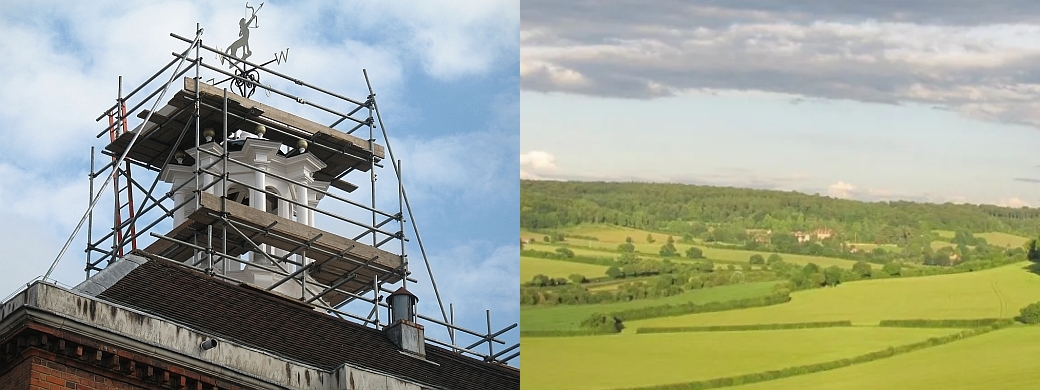


After my last post, I’ve been drawn to philosophical speculation. How can we talk of one world, except in given contexts, such as world cocoa prices? How can you ask whether there is hope for the world? I would answer, “Whose world are you talking about?” Each of us sees a different world of experience; so there must be, in that sense, a multiplicity of worlds which overlap to create this extraordinary illusion of a joint destiny on spaceship Earth. We strut our brief lives on this mysterious stage, whose brightness and shadow are artificially created by limelight, as in Victorian theatres. The stage’s painted backdrop is history, current affairs, science, religion, movies, conversations, myths, all blended into the fiction which by habit we call reality. But as one person, I dwell in a space like a hermit’s cave, unillumined but for the candle of consciousness, hardly bright enough to see another’s point of view. If I don’t assert my existence, for example by writing here, do I really exist, or would I fall into a vertiginous madness where dream and wake have no sharp boundaries?
I ponder thus in the kitchen, at a time defined by the intersection of evening and night; for I slept early, as if napping, then woke. I make myself a milky drink with sugar and salt, cocoa and chilli, and reflect that I dwell in the realm where art and philosophy combine. Philosophy is the search for truth; but art is the search for a greater truth, beyond the limits of time and space. It creates what never was, guided by the hidden fact of what really is.
I’m glad that I chose to learn sketching with words instead of pastels, for words are faster; and anything can be said. Whether I speak from the magic of God’s creation, or the magician’s sleight of hand, is out of my control. For when your world overlaps mine, then only is there oneness between two; perhaps momentarily, before refracting into a rainbow of differences. Do we see the same colours? How can we know?
I may choose to travel in time and space. Or I may stay here, in this artificial indoor space. Here’s a photo of my new desk, actually fifty years old and newly acquired. I need space to spread my work, and having acquired as big a worktop as the room size permits (a room strung with washing-lines like a five-string banjo), I’ve adopted a new discipline of keeping it clear, thanks to the luxury of drawers, which I also keep tidy.
My work multiplies. It doesn’t fill my time, merely clarifies it, like isinglass added in brewing to help dregs sink to the bottom. One of my tasks is to organise the documentation of a company. A previous firm of accountants had filled it with pomposity, self-important capitalisations, bold face, obscure references and missing verbs:
Where Non-conformity is raised against a supplier it shall be recorded in the pertinent Branch Non-Conformity Book. Where goods are returned to the Supplier, or to another Company Branch, a Reject Slip (7XR1-2) shall accompany the returned goods. Additionally, where the failure is identified as an Adverse Incident (as defined in HRG(97)13, HRG(97)26 and safety notice GNA SP9701, SP9601 and GNA/2003/(001)).
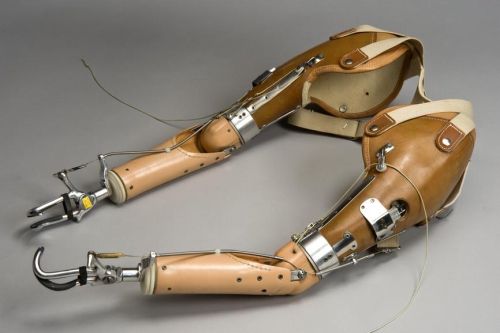
When I have translated it into English, I wonder if they will understand it. I’m buoyed by idealism, for my client company practises the noble craft of fashioning limbs for those who have lost theirs in military or civil life. Thus, from a philosopher’s cave, I engage with the topical business of “this small world”; this one world, whose existence I question.
22 thoughts on “We Create Worlds”
Pauline
This was wonderfully written, full of questions with answers that change with the answerer. We think much along the same lines – I like the way you phrase this: …”there must be, in that sense, a multiplicity of worlds, billions of them, which overlap to create this extraordinary illusion of a joint destiny on spaceship Earth.” I agree; we are all in our separate though sometimes overlapping worlds, eager to see if anyone else dwells in ours, and anxious if they appear to do so. It’s all smoke and mirrors and at the same time very solid and real. Exciting, isn’t it? Thanks for your kind comment at my site.
keiko amano
Vincent,I agree that all of us need to be always aware of other worlds exist out there. And about your milky drink, I want to try it. I never heard of such a drink, but it must be great.
Vincent
Keiko, my whole point is that the worlds are not “out there” but “in here”, in someone’s consciousness, so the multiplicity exists only because there are many consciousnesses. Hundreds and thousands within one person, actually. I am not supposing you missed my point, but just making a linguistic remark about the metaphor “out there”. As for the milky drink, what I described was one of the simpler versions. Some of them involve cinnamon leaves, cloves . . .I think it is based on “masala chai”, which you can look up on Wikipedia. But the salt and chili I think were both inspired from a Mexican recipe for hot chocolate. My mother-in-law sometimes gives us cocoa beans, which you grate into milk and then add cinnamon leaf allspice and so forth before boiling it up.
Vincent
Thanks, Pauline. I think (having been reading The Book of Disquiet, by Fernando Pessoa) that one could go on discussing this, with oneself or others, ad infinitum. For example, suppose that every relationship, however slight, is an overlapping? If I pass someone in the street and there is a mutual eye-contact, or simply mutual awareness, is there not an overlapping of worlds? Or rather there can be. At any rate, I can step into the other person’s shoes for an instant, or my appreciation of the other reaches the other, and generates a moment of self-appreciation. But then again, I don’t find relationship in that kind of sense – one-to-one, or even many-to-many to necessarily require any realisation at all. I’ve never thought it weird that some nuns or hermits live sequestered lives praying for the world. – There, “the world” again, referenced as if it’s one thing.Yes, it is exciting because it makes us feel there is something beyond the common assumptions: something much nearer and more real, if only we will allow it space.
keiko amano
Yes, Vincent, I understand. It’s like MVS in each person.
Rebb
Vincent,There is much to ponder in your post, as always. And as I read your words, thoughts, musings, I enter your consciousness for those moments, and of the other ocean dwellers—our worlds meet for a time at a point—and then…yes, we are the filled with an infinity of consciousness, contained in this strange fleshy body, yet not contained if we allow ourselves to travel inward, outward, ad infinitum. You made me think of…I love the Mexican hot chocolate that my grandmother would fix for me. They sell it in stores, round circles that you break into chunks and melt into hot milk. Cocoa, sugar, and cinnamon. Delicious!
Hayden
I, too, was caught – sent off into a parallel world of my own, spiralling out of control – by your milky drink. I wondered at the chocolate and chilis, and thought of Mexico, imagining that it might be like a drink I used to sip eagerly at a friend’s house, Christmas Eve. And that is the point, perhaps, – some shamans say we each create our world, and can, by act of trained will – alter it entirely. I don’t know. I do know that the way I perceive my world alters it. If that is true, there are as many worlds as there are people. More, perhaps, for those of us prone to flights of fancy.
Luciana
Well, I appreciate to share part of my world and your world as ‘our world’ here, Vincent, for I also like Pessoa. Worlds are organized more in the sense of ideas and feelings than in nations and concrete realities. The biggest obstacle for that to fully happen though is still language.
Vincent
Luciana, I don’t fully understand your sentence “The biggest obstacle for that to fully happen though is still language.” What is it that should happen apart from an obstacle in its path? In what way is language an obstacle? These are interesting topics!
Vincent
Rebb, yes, I once found that Mexican cocoa in a supermarket, and in my mind confused it with something I’d heard, that they have sweets with chilli inside; and in Holland they have salty sweets – liquorice for example.
Vincent
Multiple Virtual Storage, Keiko? Perhaps – if people have any resemblance to computers at all!
Vincent
Hayden, yes, I think I agree with the shamans on this. But the main thing is that we cannot view the external world in its nakedness. There can be no perception of reality without our own constructions entering into it, whether “flight of fancy” or the practical attempt to interpret what our senses present to us. Since so much of our world is built from our own pre-existing constructions, it stands to reason that these constructions can be modified, so that the world is seen differently. Speaking loosely, this is where we enter the world of magic.
Hayden
interesting that this idea “our world is constructed of our expectations” is both a mundane physical truth, and also a metaphysical one.
Luciana
See? That´s my point: language is an obstacle many times. The means of expression of our worlds is language. I suspect that is one of the reasons Keiko is teaching us Japanese… :-). We all want to share a piece of our worlds and be understood. Our interaction, Vincent, is only possible because I learned your language.
Vincent
Yes, Luciana, but there is another way of looking at it, another way that language can be an obstacle. Which is more important: to share and interact or to live one’s own life authentically? One viewpoint is to make a priority of sharing and interaction. Another is to be independent, to be one’s true self rather than swayed by a need for conformity.(You might label the first as more feminine, the second as more masculine, but let’s not get caught up in debating that.)So language can be an obstacle not so much in standing in the way of interaction but forcing it; and at the same time denying the existence of that which cannot easily be conveyed in language. This is why I love The Book of Disquiet: because in it, a man who lives deeply in his inner world of dreams, whose thoughts and feelings are not those of the marketplace, finds the language to express his very private world, and do it with clarity and precision. So yes, he does want to share. But he doesn’t want to compromise.
keiko amano
Vincent, Want to share but not compromise. Stay authentic but interact. Be independent but friendly. I say yes to all. About Multiple Virtual Systems, the concept is the base for Windows. When we click and see a window, and click again to see second, third, and so on, in concept, we seem to be able to have endless windows coming up. But in reality, after six or seven or whatever the number depending on the capacity of our machine, the system slows down. And eventually, it might go frozen. So, similarly to MVS, our consciousness slows down if we overload ourselves. How much can we take is up to each individual. We’re only humans, not machines. It really varies, I think. In the meantime, my memory needs more central storage because fetching auxiliary storage is not working well.
keiko amano
Lu, perhaps I should have a separate language blog as I was thinking originally. Maybe I carried away. I’m a nut anyway. But I don’t want to analyze it because I really enjoy it. Call me Crazy!
Luciana
*thinking* [maybe I should write this comment in Portuguese];-) You know, Vincent, I´m not ‘either/or’ about anything, and I don´t like labels, so yes that´s not a discussion I want to have either. As for ‘Livro do Desassossego’, I agree – he doesn´t want to compromise. He´s terrified about it, maybe because he fears he´ll fail if he tries: ‘o coração, se pudesse pensar, pararia’ (if our heart could think, it would stop beating).
Vincent
Keikuccia, the femininity shows in what you say: the urge to balance the opposites.I feel a different urge – to extremes, or rather to pursue one thing endlessly and never mind the balance, while the enthusiasm lasts. To explore deeper, I am prepared to sacrifice the interaction, go into the impenetrable jungle or trackless desert, away from all contact; to discover and perhaps not be understood when I return. Yes, you could have a separate language blog, but I think you might regret it. By just having one blog, you need not worry about topic. They can all be mixed up.
Vincent
I don’t see terror in Pessoa, Lu, but an outstanding courage – to go where it is not safe, to go beyond the comfort of human fellowship. There is a sense in which The Book of Disquiet is a novel rather than an autobiography, I think, in which the narrator escapes the gravitational force of social conformity and takes a kind of shamanic journey into uncharted depths. Perhaps millions have done the same; but his particular genius was to find words to express it eloquently.
Rebb
Keiko, “Want to share but not compromise. Stay authentic but interact. Be independent but friendly. I say yes to all.” Yes, these words resonate with me too, Keiko. I think we can still share and interact, while being authentic. It’s a choice. This is a fascinating discussion about language, the medium here being words. As Vincent pointed out, he chooses to sketch with words because they are faster, and I agree with you, Lu, that language can be an obstacle because with language comes imbedded the culture, tone, and subtle nuances that can create these obstacles to communication. And that’s part of the beauty…as you pointed out, you would not be able to communicate here in this particular forum if you had not learned this language. I also agree with you, Vincent, that language can also stand to force interaction. Vincent, I’m glad to now know of The Book of Disquiet, and am eager to look in its pages. On another note, when you say, “I feel a different urge – to extremes, or rather to pursue one thing endlessly and never mind the balance, while the enthusiasm lasts. To explore deeper, I am prepared to sacrifice the interaction, go into the impenetrable jungle or trackless desert, away from all contact; to discover and perhaps not be understood when I return.” This is obviously very authentic in how you feel. It makes me think, though, that in going so deep to one extreme, one risks the potential for getting lost and losing sight of their own way, thus coming out fractured. I suppose I feel a detached nature here, which I suppose is a positive and can also be a negative. I’ve tended to walk more in balance, so it’s interesting for me to imagine what it would be like to try on the opposite of that in how you describe it here. Keiko, you can weave anything into your blog…language as you mentioned. It’s whatever you want it to be all in one blog
raymond
Great discussion. Regarding “To explore deeper, I am prepared to sacrifice the interaction” In my world I have, so far, needed the intimate interaction in order to go deeper, in order to go out onto the edge of my reality. Vincent’s excellent writing reminds me of Plotinus: “I know I am; but I don’t know what I am.”
 a wayfarer’s notes