
 Years ago, before the public library in this town was cunningly pruned and restocked to reflect the scientifically-determined reading taste of the residents, it contained some quirky books that made a rainy-day visit into an exciting adventure. In the foreign languages section I found a novel
 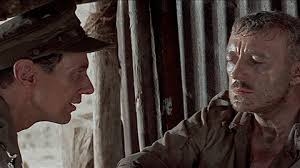 by Pierre Boulle. I was astonished to discover he had also written the story on which the famous English film The Bridge over the River Kwai was based. My astonishment was partly based on a concept that the French inhabited a completely different cultural space, one which contained no Anglo-Saxons. I should have remembered Jules Verne. Like him, Boulle is drawn to science fiction, of a psychological as well as technological kind.
If you have seen River Kwai, you’ll remember that Colonel Nicholson, played by Alec Guinness, spends time in a tiny solitary-confinement shed with the Burma sun beating down on the corrugated iron roof turning it into an oven. This confinement energizes Colonel and prisoners alike, and leads to the construction of the great bridge, as well as its destruction on the day it’s finished.
The book of Boulle’s that I read in the library had a similar theme though I didn’t spot it at the time. In a forest somewhere in France, some civil works are being undertaken: the building of what looks like a prison, and also of some high-voltage power lines—the sort that would take the 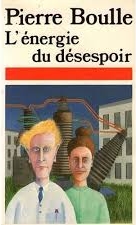 current directly from a power-station for distribution later at lower voltages. It’s all very mysterious. Eventually we discover the extraordinary secret. Two large buildings like prison blocks are built close and parallel to one another, with the most elaborate barbed-wire fences separating them. It’s a mental institution for incarcerating teenage boys and girls. They are kept in segregated blocks and the sexual frustration generated across the fences is so strong that it generates a powerful electric current, exploited by the owners of the institution to sell at market prices on the public grid. Pierre Boulle’s L’énergie Du Désespoir is no longer amongst the County Library stocks.
PS Pierre Boulle also wrote Planet of the Apes.
- welcome to the world of spontaneous blogging. it has the same sexual energy which lights a million minds
- all energy is sexual energy.
the city is lust.
passion.
desire.
the desert is without.
though we must go to the desert to transcend.
- Vincent said…
- Alistair, you find that? the city as lust, passion, desire? I can only go to the city wrapped in a bubble. I have little desire to see or be seen there. There isn’t a lot of desert where I live, only a living wilderness, full of luxuriant growth. I don’t go there to transcend anything, but to connect with nature and discover my place within it; where there is no excess of lust. But you are a city-lover, I think, who feels at home in the coffee-houses and bars and streets, and perhaps the places of art and culture?

- Vincent said…
- Ghetu, the world of spontaneous blogging gives out sparks, it is true! And those millions of minds are ready to catch fire
- dr. alistair said…
- the city pulses with energy. as I drive in along the highway it virtually seethes as I approach.
it is not that I’m a fan so much as that notice the energy more in the city with its urban density, whereas the desert, or your forests and woods allow an expansiveness unavailable in the concrete and steel and glass.
mind you though, I’ve had some serious transcendent experiences 40 floors up……
- Vincent said…
 a wayfarer’s notes
I think it’s essential to human happiness to reconcile ourselves to our environment, by adaptation or emigration. At my age I’m staying and making the best of it.
You have the youth and energy to do either, but I think it suits you to be where you are.