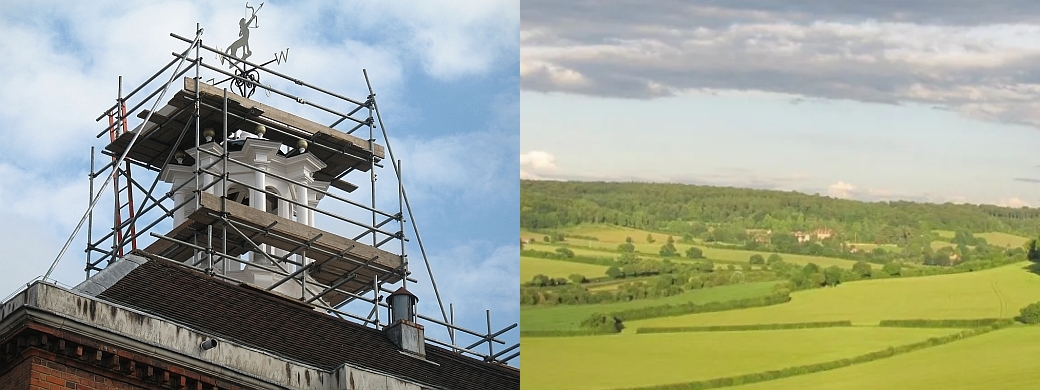

It’s fifty-four years since I lived in East Cowes. It has the air of being past its best, but it had the same air in 1954, so you can say it has hardly changed. Fifty-four years before I lived there, Queen Victoria was still alive and she lived there too, in the house she had built with Albert, and had remained mourning for 40 years after her husband’s death in 1861. She was hardly seen by the local people but still, her presence changed the landscape.
A source on the Internet* tells us this:
During the reign of Queen Victoria who made her summer home at Osborne by acquiring and rebuilding Osborne House, East Cowes was the subject of planned estate of grand houses, groves and parks. The scheme, not finding the finances it needed was folded, but a few residences built in the early stages still survive to this day such as the former Albert Grove residences of Kent House and Powys House on York Avenue.
Powys House was where I lived – see its photo in my previous post.
When the Queen-Empress went into mourning it is hardly surprising that speculative builders were unable to sell “grand houses” to the high society who would desire to be her courtiers, for she withdrew into her family and when she needed to attend to affairs of State would go to Windsor which was within reach of London. But she had a detachment of soldiers to guard her person and they were garrisoned in the town, in a barracks near the sea-front.
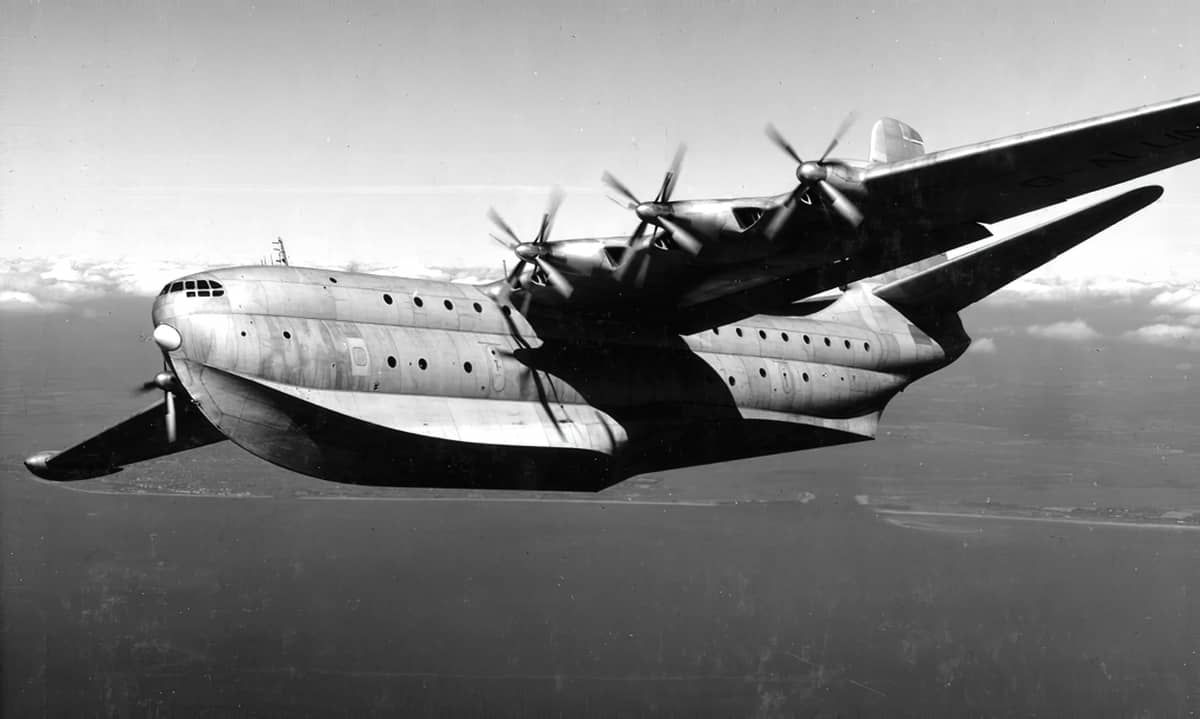
In 1954, my stepfather was working for Saunders-Roe whose Columbine works had been built in 1935, next to the barracks, which now housed the firm’s drawing offices, where he worked. I believe that, despite his lingering ambitions as engineer and inventor, he wasn’t much more than a technical clerk, responsible for managing the drawings. But Saunders-Roe was his pride and must have been something to hang on to after his wife left him, running off with a lodger to New Zealand, and taking the kids with her. He had my mother of course – and me. But I was no consolation. I called him Sep (though in this blog I always call him Blackett). His full name was Septimus Leslie Carr Blackett Charlton. His work colleagues called him Les. He called me “Boy”.
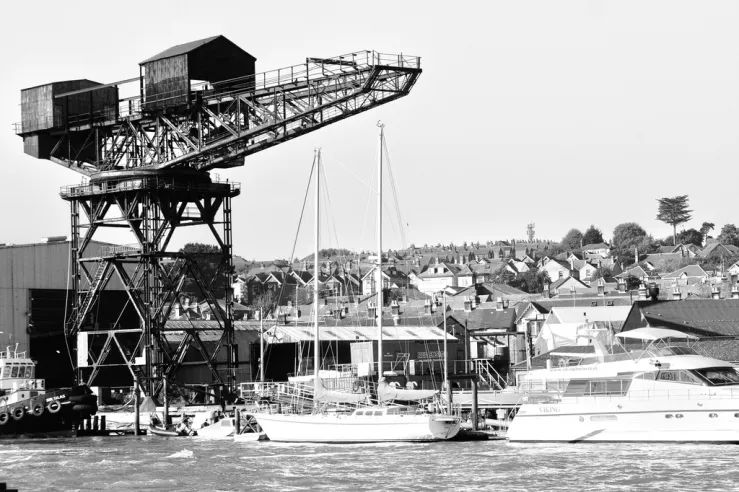
I feel his presence strongly in this town of great engineering achievement; which built warships for the First World War and whose giant hammerhead crane still stands, one of few left in the world (built 1911, see illustration at top); which built the Saro Princess, the largest flying boat in the world. How he loved that plane! He carved a model of it in clear Perspex and gave it to my mother as a present, and somehow I felt it was the embodiment of his dreams and not just the end-product of the project he was working on.
But Saunders-Roe took Powys House back from us—Blackett had rented it from them—“to use as offices”. A couple of years they took away his job too. The Princess was permanently mothballed after 100 hours of test flights. Jetliners, not flying-boats, were the future now.
A few years later the company had a small renaissance, developing the world’s first hovercraft to the designs of its inventor Christopher Cockerell. Too late for Blackett. He’d had to move to the 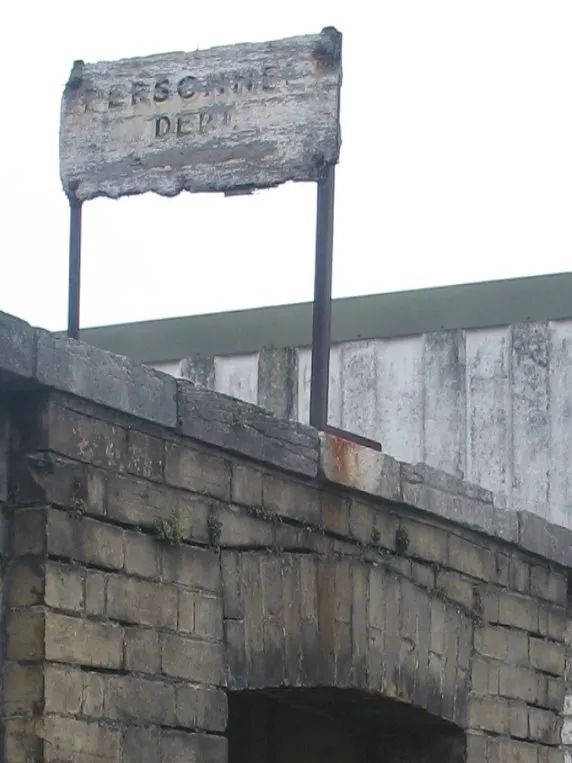 mainland to work for a company called Specto, printing and filing drawings, in a job so humble that my mother was employed in the same office, doing virtually the same job. She was hardly skilled. She had not done a day’s paid work since Singapore in the 1930s. Blackett’s humiliation was gradually the death of him. They went to live in the town of my mother’s birth. He became a driving instructor and secretly smoked (she had made him give up) till lung cancer got him
  and spread to his brain so he died within six months of his illness.
The Columbine Works, the flying-boat hangar with its slipway down to the Medina estuary—all were disposed of to smaller companies, and Saunders-Roe vanished without trace: almost.
On my visit last week I found two poignant reminders of what was once, at the back of Queen Victoria’s guards’ barracks. One is a rusting bicycle shed with an official Saunders-Roe notice still fixed to the wall.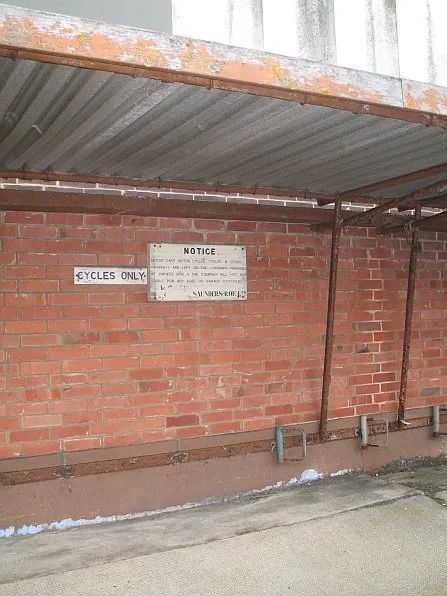
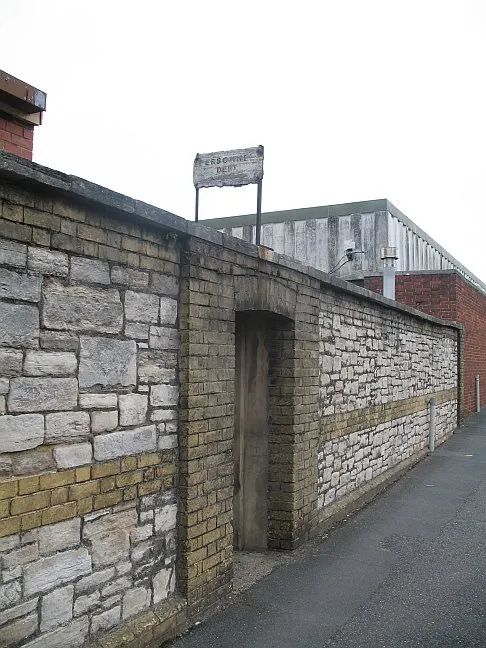
The other is a peeling sign marking the door in a wall, leading to “Personnel Dept.”: probably the last door Blackett walked out of, when he left the company.
Here you can see that Personnel sign from the other side, with Columbine works in the background, bearing the date 1935.

 a wayfarer’s notes
In August of 1861, four months before Albert's death, Queen Victoria made a state visit to Ireland, which included a private visit to the Herbert family at Muckross House near Killarney in County Kerry.
The Herbert family had been preparing for this visit for six years, the guide told us. They spent a fortune on furnishings and decorations, and setting up private apartments for the royal family (who were only staying for three nights). The Queen's bedchamber, unusually, was on the ground floor, at her request. Apparently, she had a fear of fire stemming from a childhood incident where her nightclothes caught fire, and wanted to be sure she could easily escape the building should there be a fire.
The Herberts, the guide continued, expected – after all the lavish expenditure and entertainment – to be given a suitable recompense in the form of some title. But then Albert went and died, and the Queen neglected her royal duties for a considerable period. The Herberts were forgotten, and lost so much money that they had to sell Muckross House.
The record of the visit I have linked to includes this snippet:
“On Thursday 29th August, the morning of her departure, Queen Victoria visited Muckross Abbey, a 15th century Franciscan friary within the Muckross demesne. Eleanor, the eldest Herbert daughter described this visit as having been 'very quiet, hardly any of the suite with us, they were all enchanted and wandered over it gathering ferns and leaves as recollections. She is to have ivy from the Abbey and ferns from various places sent to Osborne as recollections of this place.'
Kathleen
LikeLike
Ah, so I may have last week encountered ivy and ferns originating from County Kerry!
Thanks for the story, Kathleen. I shall be posting another anecdote about that Queen in my next.
LikeLike
From this side of the water I learnt very soon after my arrival in this place that we can see Queen Victoria's Osborne House. There is even a well known pub The Osborne View (my son told me only last night that he took his g/f there for dinner earlier in the week). I have never learnt the history so I thank you for enlightening me
LikeLike
beautifully told, Vincent.
LikeLike