
 What ought I to think about climate change and the impending catastrophes of the world? What ought I to do about these things? Such questions are infiltrating the moral consciousness of humanity. Even the Catholic church now proposes that ruining the environment is another way of offending God, in addition to the seven deadly sins.
It’s not my practice on this blog to comment on politics or news in general. I prefer to contemplate eternal verities through the lens of everyday life and personal memory—for example my history lessons at school. Europe in the Middle Ages was full of catastrophes. Invasion by the Romans, Picts, Scots, Saxons, Vikings, Normans, Visigoths, Ostrogoths, Huns, Vandals was like the end of the world, if you were on the wrong side. But that is looking at it from the point of view of a side: a tribe, a country. An individual or family could be hit by disaster at any season, and this is still true today. I never understand why the worst earthquakes, floods, tsunamis, droughts and plagues occur in poorer countries, where it is hard enough to scrape a living in a shanty town even in a good year. Sometimes I think it has taken nearly a thousand years for England to get over the Norman Conquest. And now that the last vestiges of that heritage have all but gone—an educated ruling class of landed aristocracy who don’t have to dirty their hands with work—I’m not sure that their disappearance is entirely a good thing.
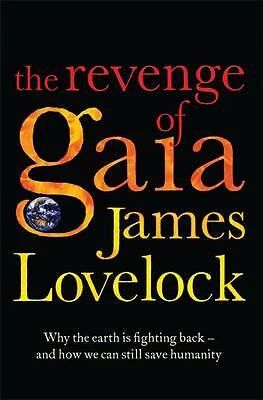
According to James Lovelock in The Revenge of Gaia, it’s too late to save Earth from accelerated climate change. I feel that he is right. It doesn’t mean that I ever sin against the new morality. No, I find it natural and beautiful to walk instead of driving, to bring my own shopping bag and refuse plastic ones; to live simply in consciousness of the natural resources I consume to stay alive. I don’t live this way because someone nags me to, and so I won’t nag anyone else. I only mention it at all to make clear that I’m not on the side of the climate change deniers who behave as though this new morality doesn’t apply to them.
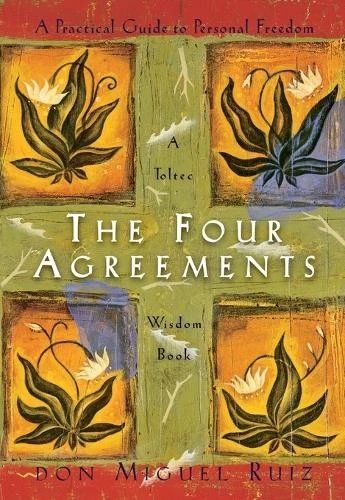 I don’t like endless preaching. Morality doesn’t need religion and its preachers. Until Jesus came along you’d think there was no loving-kindness, if their sermons are to be believed; as if Christianity holds the patent for compassion, which is to be known as “Christian behaviour”. I don’t like experts telling me how to bring up my children, have sex, cook, eat. Their propaganda would have been superfluous had not others tried to indoctrinate me into degenerate behaviour and alienated work so as to keep the wheels of commerce turning. My dears, we are farmed like domestic animals. Don’t ask the farmer to set us free. That we can only do for ourselves. (My imagery of human domestication has its source in Don Miguel Ruiz’ book, The Four Agreements.)
My response to the challenge of climate change is aesthetic. Polluting behaviour is ugly, like cruelty to any living thing. Indeed, in the Gaia hypothesis, Earth is a living thing. A big green slug has been finding its way into my kitchen through a hole in the floor. I keep flinging it into a lush part of the back garden. It finds its way back after a day or two. Simply to kill the slug would be unbeautiful behaviour, excessive force. And this makes me think of my quarrel with Søren Kierkegaard, that inspiring, annoying philosopher. He believed in three phases of human consciousness. In the aesthetic, a man is hedonistic: swayed by senses and emotions. In the ethical, he follows rules governing conduct. In the religious, he adopts Kierkegaard’s frightfully challenging version of Christianity, for Kierkegaard sees everything through the lens of his own tortured, blissful life. I find myself wanting to dig him up from the grave, as it were, to dispute with him on one point. He says the aesthetic phase must be abandoned in order to adopt the ethical; and the ethical must be surrendered likewise in order to enter into the religious. And I would say to him, “Søren, Søren, what makes you think these phases must be separate? To me, ethical behaviour is to do what is beautiful and shrink from what is ugly. Religion is no more than this, for as Paul Maurice Martin proposes in his blog post, there may not be a difference between God and Nature.” To which Kierkegaard replies, “And who is Paul Martin? I have never 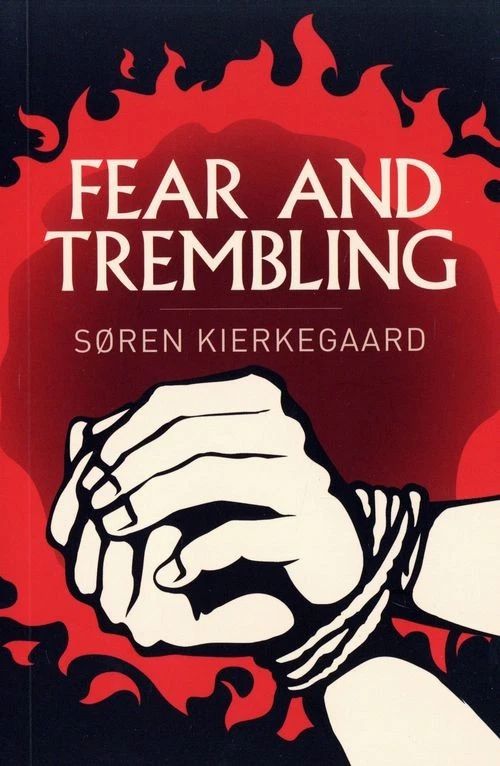 heard of him. But it sounds as though you have never progressed beyond Plato.” To which I would respond, “Søren, my dear sweet Søren, I have not even read Plato, never mind progressed beyond him. I am that creature disparaged by the populist C.S. Lewis as “the natural man”. Have you heard of Lewis, a populariser of Christian ideas in many of his books? Like your countryman Hans Andersen, he wrote fairy-tales. Like you, he thought a man would progress from being the natural man—a pagan—to Christianity. Perhaps you influenced him. But I see the natural man as enjoying freedom from the neurosis known as religion.” “Dammit, Vincent,” says Søren in the end (I’ve edited our five-hour disputation down to a few highlights), “you’re right! I tried to escape from my father’s religious neurosis and ended up taking refuge in my own.”
Yes, well, it’s bigger and worse than that. The whole of European culture, which shaped that of the settlers in the Americas and much of the globe now, was tainted with the neurosis of Christianity, as diagnosed by Nietzsche before ever Freud came on the scene. I’m referring to notions of guilt and virtue, the one needing to be washed clean to herald the other. Meanwhile, the stain of slave-trading has metamorphosed into other forms of ugliness.
But I say the important thing is not to live ethically as if it would save the planet. It won’t, not now that it’s too late. The thing is to prepare ourselves aesthetically for the myriad catastrophes, which the wretched and dispossessed of the earth already suffer, but which rarely as yet shake the towers of privilege from which Westerners have so far to fall before they hit the ground. Why should the Chinese peasant care about carbon footprint, he who clings precariously to subsistence in his village, so long as he can resist migration to the factories of Shanghai, where he’ll be a human battery hen?
Why do we bother about Earth’s future at all, for each one of us will die soon enough? Strip away politics, slogans and media hysteria. All that is left, the source and sum total of aesthetics, ethics and religion, is just one thing, which everyone values more than life itself. I don’t mean God. I say that the thing to live or die for is to keep one’s human dignity. Most of all, this requires the affirmation of being loved, so one can love oneself. When that aching need is satisfied, a person wants to perform beautiful actions and not ugly ones (and will know what they are, if not bombarded with preaching from all sides).
(Cue the storied metaphor of mankind in the garden of Eden) Good stuff!
 a wayfarer’s notes
Who does Soren K think he is, going, “Who’s Paul Martin?” He’s in my book even if it is just a sentence…Seriously, thanks for the link. Notice that I’m not stating that there’s no difference between God and Nature, but asking the question of how we would know there’s a difference. It could be that the distincition isn’t meaningful. First, how do you tell the natural from the supernatural? If something IS at all, if it’s in the domain of being, what makes it “supernatural?” Just because it violates “the laws of science?” How would we know that we simply didn’t need to expand our laws? Or maybe there are footnotes and exception clauses.Beyond this, how can we imagine that we now fully comprehend the nature of nature? Couldn’t nature in its fullness conceivably be as transcendent of life as we know it now as to rise to the level of what monotheists define as God?Hmm… maybe I should post these comments as a post on my own blog sometime as a clarification of what I was getting at…
Like
I take the view that we use different words for different purposes, and traditionally we’d use Nature to describe the Creation and God for the Creator.Your point about the “supernatural” is valid. Again, its meaning varies according to who’s saying it. The Catholic Church might boast of a divine intervention in the normal laws of nature, for example as evidence of sainthood. Scientists and their fan club of sceptics use the “supernatural” to mock, for they like to deride “!quackery”.“Couldn’t nature in its fullness conceivably be as transcendent of life as we know it now as to rise to the level of what monotheists define as God?”I think the above is worthy of being expanded into a post, as you suggest. I’m torn between saying I don’t know what you mean, and agreeing with you emphatically. For in Nature I feel there is always something beyond my understanding, which fills me with fascination, awe and a kind of worship.
Like
I like this post very much. It resonates the feelings I have on the subject as well.I think that I have one additional hope. And that is to see some form of more sustainable living in action before I take leave of this place.I don’t see it, necessarily, as a means of saving the planet. Rather, I see it as a positive indicator that our collective consciousness has managed to overcome it’s selfish tendencies.Plato’s allegory of the cave, was his way of justifying his vision of the Philosopher King. While I would not identify myself with his Utopian vision, as it reflected too much of that vicious Sparta, the concept of guardian has some appeal.”A philosopher who is fit to become a guardian, will feel it his duty to those who were formerly his fellow prisoners to go down again into the cave, instruct them as to the truth, and show them the way up.” It was a way of showing the superiority of intellect over the power of the senses. In other words, while it may be too late to save the world, it is not too late for us to be enlightened. Any positive sign of this enlightenment would make me very happy, and give me some hope for my daughter’s generation.
Like
“My dears, we are farmed like domestic animals.” Love this, & made me chuckle!Perhaps hope is natural to me, for I find much to be hopeful of. I’m not yet convinced that a balance can not be reached “in time.” No doubt to me that the world will be very different by then, but perhaps it will still be a world capable of supporting a form of life we would recognize as such.And quite possibly my obsession with “doing things right” (ie, farming/building/gardening) is as linked with beauty and respect as it is with any deliberate effort to ward off a desperate future.
Like
“Beyond this, how can we imagine that we now fully comprehend the nature of nature? Couldn’t nature in its fullness conceivably be as transcendent of life as we know it now as to rise to the level of what monotheists define as God?” Paul, if you go around talking this I shall be tempted to renunciate my comfortable atheism, and what an annoyance that would be!
Like
We don’t need to renounce anything, unless to be an atheist or a God-believer is to cheer for a particular team in a theological tournament. I’ve never gone so far as to call myself an atheist, because according to a certain usage that means I pick fights with religious believers. I just find that God is a word with too many historical strings attached for me to find a use for it in my own discourse. There doesn’t seem to be a need for the word – except to communicate with those who have it in their regular vocabulary. And I find that I have very similar experiences to many of those persons.
Like
Vincent and Hayden – First, Vincent, this light, fluffy kind of subject – what you think the meaning of life might be – is really hard to respond to on a thread this way. Seriously, the best I can do is say that we’re on the same wavelength. The essential dynamic you outline – being loved to self love to what you’ve called “beautiful actions” – is a major thread in my book. Hayden and Vincent – If you guys don’t buy my book you may force me to send you copies for free, which I really can’t afford to do, lol, but seriously…In a way, it’s a problem that I had to give the book a religious title – it’s clearly in the religion and spirituality category, so that was a no-brainer for targeting a potential readership. But since I wrote it for people who are more interested in substance than labels, I’m certain that it would appeal to as many people who consider themselves atheists as who view themselves as religious. I’m afraid most atheists will look at the front cover and assume it’s not for them. Hopefully some will look at the back cover too…
Like
Vincent, still have a little spunk in you, I see! Perhaps I have a little too much faith in Nature, but I hardly believe our effects, as the human “virus” on the skin of this planet, have much of an impact (if any) on its life-system. Much like a rash on human flesh, we humans are on the surface of this 8000-mile diameter glob of mud. Our presence may irritate and even cause oozing sores… but, ultimately, as with any healthy organism, its defense-mechanisms will win. Entire civilizations have essentially been consumed by the flesh of the Earth, in as little as five-thousand years… a mere tick in the life-span of the Earth.It’s a great idea to be self-moderating in terms of pollution… on a global scale, we could certainly clean things up and be a far more benign ailment to the planet (or even more beneficial). In the big picture, I believe the “craze” we’re experiencing right now will die, like all the poor, abused, forgotten, and neglected pet rocks of the 1960’s.I would compare the difference between God and Nature as that between a breeze and air itself. Like the molecules of liquids and gases which make up our breathable atmosphere, Nature is the material aspect of the system… the hard-coded, tangible, physical stuff of which all things exist, including the systems by which they operate. All of these things are within the realm of knowledge. God, however, is in the breeze… the forces put in place so long ago, even the wind has forgotten where it started. The unmatched, cooling effects of a breeze at it brushes our skin on a hot day. The way the air moves as it kicks up a dust devil. The raging forces inside a cyclone or typhoon as it lashes out against forces unseen, cleansing and purging the Earth. The immeasurable effects the wind has against the ocean, and ultimately the rock and fire below. This is how I view the difference between God and Nature. While, on the surface, they can be seen as one and the same, in a still, small way, God’s hand controls Nature, and it boggles the human mind to understand and accept this the way we used to before we became so “smart.”To all of the above: I think the majority of atheists profess to be for the simple reason that they have been turned off by “religion,” and not at all by “God.” That’s the main reason I chose the name of my blog site – one higher power. The idea is to transcend the common ideals, and hopefully to do my small part in bringing folks back to the ultimate reality of spiritual existence… finding God outside of (or in spite of) religion.Great thoughts! Thanks for sharing.
Like
Tim I was just commenting on your latest! But I’m only awake briefly – it’s 4am here & I ought to get back to bed. Have you too much faith in Nature? I’m not sure. Lovelock agrees with you that the Earth can catch a cold. Based on previous instances, he reckons it will take 100,000 years to recover from what a few generations have have done to it.It seems clear to me you don’t share my sense that the way of life man has chosen (advanced Western civilisation) is an ugly thing against nature.I like your metaphor of the breeze and the air, not because I agree with your use of it, but because it shows the shortcomings of old fashioned notions of nature. It isn’t a clock that God wound up! You cannot separate forces from matter and if a Christian doesn’t bother about stewardship of nature because God like a big daddy will tidy up our toys, then the Christian is the person I will blame! (I was starting to comment on your latest “blame” post.)I do appreciate your attempt to rise above religion to the One Higher Power, but I do find that your world-view is essentially (and I would say dangerously) Christian.
Like
So, Paul, I have been waiting for this book for a long time. Is it now published then? Of course I want to buy it. It sounds just the kind of thing I want to read and I will buy the deluxe edition autographed by the author if possible!
Like
VINCENT and TIM, health aide day, just time to scan the thread, but just to say Tim doesn’t strike me as in the dangerous category of Christians! Also, thanks, on the book, which hopefully will be available in June. It’s honestly way better than my blog and I think makes clear things that people who read my blog try to figure out about where i’m coming from -sorry for any mspellins, gotta run (figurativey… -Paul
Like
Great post again Vincent, fine writing! Without getting into details, I agree. I think religions, most of them, intend to rob a person of dignity, then to sub itself as love to replace and restore the vacancy with a narrow and false reality. In that, reading Paul M. Martin’s comment, I think I agree with him, that narrowness of reality doesn’t make the truth supernatural, and this in all respects.I gave up studying systems, any systems, at best they become too narrow and robotic, at worst they become possession-able and take total control which makes the possessed vulnerable on all levels of their being.I once said true Judaism is anarchic and correct in that it had no doctrine, no system. I was reprimanded by some who perceived that it did have a system of dogma and that it resented ‘anarchy’. I think the Text itself disproves that, but that the anarchy is not the habituated understanding of the word itself, but one more like what you are writing on, one in which love creates aesthetics without systemic structures, simply living within common sense based on love and acceptance. Soon as acceptance depends on this other stuff, who wants it?As to God and Nature, I have always referred to God as the Future, and this Future is not a human determinable thing, it is a Nature determined thing, and that Nature will ensure it happens, this specific and absolute Future scenerio in which the human has a very important place, and in which the mind/heart of the human is a duplicate of that Perfected Nature and v.v. without qualification, one and the same. In the meantime, the ‘present’ we live and see narrowly, and we think God is us, in our ‘present’ nature and image, so we build dogma around that and we suffer the lies and their effects.Look at the nature of the earth, the earth itself, and see that it tears down and it builds up, it covers and supplants the errors, it recovers itself and it grows on.And it, nature, does have that aspect of dignity and supremacy, witness the weather changes, watch the effects of global warming, I don’t think it is simply an effect by humans, but a correction of humans by Nature, by God as that Future Nature Intention that we are ignorant of but moving ever more closer too being like and v.v.Like Tim says to, God and Nature may not be one and the same, but in that case I would say that God is THE FACT that Nature could be like I just described, that Future and that Knowing, thru Him, God, The Fact of Nature Herself. For the people of the Book, Eve was the first nature man had, and she was false, then the men that followed each had their nature, each had their problems, each was followed by yet another. That is saying the same thing, with it all going toward a Perfected Nature for mankind with a reciprocal existence of equality, only good for good and all the absolute best Nature can give and v.v with mankind.This is verifiable in the Text workings itself, and, like Vincent keeps saying, it stands to Reason, reason without guile that is.Great posts Vincent, great comments all! Thanks immensely!
Like
Ghetufool, I have looked at your comments already and take them very seriously. That is the trouble with generality. I hate it in myself, but all the while it happens even when I try to avoid it.I knew immediately that you are right in what you say about preaching about religion, in certain societies. I have been to India and have seen how things are different there. I don’t think they are better, but probably adapted to the society in which they have grown. I would not be able to distinguish good rituals and processes from bad ones in India. Probably the traditions last beyond their usefulness but as with all religions they have become too sacred to be changed.I think a lot about America and Europe and Africa and West Indies and of course this country that I know, England—and sometimes about China a little. But I am glad you tell me about India. I don’t think about it much because it never seems to be a problem to the rest of the world. And that is highest praise to it.But I will examine what I have written in the light of what you say. Not to change it: let my errors be shown shamelessly to the world.I responded immediately to your first comment but I see you have amended it. Now I will read it again.
Like
i see that you have replied to my earlier one. sorry for posting it again. i deleted it after reading and thought of correcting something and add something more.
Like
OK, now I have looked at your comments again. Actually you have proved to me that my attitude was right in the first place not to preach. Here in this blog I reach about 15 readers, whose views are as important as my own and I learn from them and change my views.If I discovered something new, then I would share it with the world, hoping to get more than 15 readers. But on climate change I have nothing new to offer. On religion, I try to explore through my own experience—rather than setting out to study (as William James did, in about 1900) “The varieties of religious experience” as well as the varieties of external religious organisation and practice.I follow politics and world events very closely, and study every person and situation I meet, and more besides, yes, including the bushes and pine trees, of which there are none in my backyard, for it is big enough for a clothesline and not much else and is in a very poor neighbourhood (by the standards of this town: rich of course by world standards).
Like
“but who can break the slumber of a man who is sleeping eyes wide open”Yes, that is the point. Reason I would not preach is that I don’t know anything that others could not know if they woke up. I was noticing it today, seeing how everyone was sleepwalking, for their lives are so comfortable and ritualised and their jobs and routines have been refined till they don’t need to think about them at all. So I wondered where their consciousness was.
Like
i am not arguing here about your attitude. your attitude is definitely welcomed where there is no dearth of people who are eager to preach when what they have to offer is a bag of dung. but, you are of course an illuminated mind. what bothers me is the indifferent tone in your posts these days. as if you are happy and comfortable in your shell. but you had a lot to offer, i am sure. and do you really need to care about the 15 people here and restrict your writing just to respect their views? i liked your ‘sex’ posts. you were a raw energy that time. almost like a rockstar. raw emotions were reflecting through your mature and balanced writing. but this is far more absurd and poetry for me to digest. i am sure you don’t count me in that 15 and i would be relieved if you don’t. jugglery with words have replaced the certainty of magic of yours that once drew me to your blog. alas! yves was better than this intellectual vincent.
Like
well now you are quite right. what do you mean by “this is far more absurd and poetry for me to digest”? Why do you think I don’t include you in the fifteen? I don’t write FOR the 15. They are the regular readers. The material is not tailored to their tastes but to mine at the time. However, i do want to get away from the intellectual stuff. That is where you are especially right. In fact it’s been getting harder and harder to write these pieces. I think about them for a week. It would be better to do something spontaneous. But it’s experimentation.
Like
and that bush and pine part was just lazy simile. i don’t know if you have weeds on your backyard or a lilly pond with swans in it. but i would prefer to think it as a nice forrest where birds chirp and romantic minds go to sleep with a half-read book on their breast.
Like
well, there are nice forests round here. And when it is a bit warmer it would be lovely to fall asleep with a half-read or even a half-written book fallen on to my romantic breast – or someone else’s romantic breast. Fact is, it is still wintry here. I’m longing for a bit of sunshine and warmth and springtime.
Like
I think as long as humankind remains convinced it is somehow above or superior to nature, to the earth, it will see it as in existence for its use and exploitation. This is the result of what some would call unconscious living. To see nature, the earth as not separate from God, but to replace the word God with nature, would be to be living more “consciously”. Religion, because of its pollution by the unconscious mind of humankind is little help in this regard. Even the message of Jesus, seen through the distortion of years of bias, is misinterpreted and used for power and self gain. To me, to live more consciously is to live without this notion of separation, either from one another or from nature. Once a human being sees himself/herself as separated out, he/she can convince him/her self that he/she is special, is entitled, has no responsibility but to listen to the demands of selfish desires, resulting in greed, more accumulation of material things, and yes, even to the point of destruction of the planet.With all of this, I still have hope, hope in the power of awakening, that people such as yourself do make a difference to shift things in another direction. You don’t have to preach to make a difference, you merely have to make the shift within yourself as I see it. I look forward to returning to read the extended discussion that has taken place on this post, a most heart-provoking one to say the least.
Like
Charles, somehow I overlooked responding to your comment above. You raise some very discussable points. (re Plato)It was a way of showing the superiority of intellect over the power of the senses.Yes, Charles and look where intellect has got us! Now the search is on for a wisdom beyond intellect to take us out of this mess.This is what we thought religion was for but as you say Joanne, it has got itself so polluted that it doesn’t perform that function too well any more. But I won’t generalise more than that for as Ghetufool reminded me, its not uniform across the globe—and I cannot speak about what I do not know.I do think it is as you say, Jim, that Nature knows more than religion. Nature has its vengeance and rains down its punishments “on the just and the unjust”. So we cannot just do what we like and let Nature be our teacher—not any more. As we are beginning to see, the repercussions of our mistakes can last many generations, and perhaps according to James Lovelock for 100,000 years.So we have to learn to be alive to Nature, individually respectful of it, “living consciously” which to me means being aware of our own nature, the miraculous faculties that we have at our disposal beyond intellect.How to do that is the quest here, in this space, as I conceive it. It is difficult, stretches all our powers.
Like
interesting post and fascinating discussion!
Like
And thanks Juliet for your post which set the thought process going!
Like
jim, thanks for those golden words on india. it’s quite nice to know how people think about india. it’s not my habit to write long comments. i get tired. but in short, i agree to what you are saying. i also never disagreed to what vincent said in his post. my only objection was the inactivity of people who can make a difference. religion nowadays are no doubt hijacked. and seeing the number of hijackers, the guardians have lost hope, i guess. so, in a way, inaction is a mild protest in its own. i think you validated me. thanks
Like
Vincent, you said…..”I do think it is as you say, Jim, that Nature knows more than religion. Nature has its vengeance and rains down its punishments “on the just and the unjust”. So we cannot just do what we like and let Nature be our teacher—not any more. As we are beginning to see, the repercussions of our mistakes can last many generations, and perhaps according to James Lovelock for 100,000 years.So we have to learn to be alive to Nature, individually respectful of it, “living consciously” which to me means being aware of our own nature, the miraculous faculties that we have at our disposal beyond intellect.”Vincent, it is my understanding that Nature is more than a mirror for us, in which we see our real selves, she is that for sure, but she is also, Nature I believe is, a direct equivilent, a balancing reality, to our imaginative and creative lives. By that I do mean that she and us, individually us and/or collectively us, are one, are the same, and in reaching that consciousness as an existing fact that can be exercised immediately and directly, we will be truly conscious.I think that that is achievable, even now, but the crust of our present is a preventive, I think you have heard this before.Getufool, I agree with you and think I did agree with you all along, I just was putting my slant on to it. India, as an artist I say this and have said it in person with artists I know here who are Indian, India has the most beautiful people in the world, their innocence is tremendous and shows in thier faces and bodies, my Indian artist friends have agreed of course. Considering the stresses that India has been thru with the past and present, that is one of the most remarkable and miraculous things, that a human being can maintain such beauty in the face of such adversity, and this beauty is more than skin deep, more than surface, it is in the character in most cases. May God bless India, and you too my friend. Thanks for the discussion, it has been wonderful.
Like
Jim, you said: “It is hard to balance, and the overseers are not easy to trust and depend on.” Well said, and succinctly true.ghetufool, you said: “the guardians have lost hope, i guess” My opinion is this… are folks like us not discussing things like this? Are we not quietly concerned and pondering a different way to return to our source? I would say that the guardians are aware of the situation and working diligently and methodically to find a new platform beyond religious institutions. I believe the discussions we have on forums like this, and in face-to-face encounters… are evidence of this shift.I’ve seen an underlying theme here… the separation of ourselves from the higher power due mostly to our assumption that “knowledge” can suffice as an alternative to existing. (Cue the storied metaphor of mankind in the garden of Eden)Good stuff!