

 I was waiting at the bus station, that haunt of pensioners, new immigrants and indigent travellers—in short, the dispossessed. I feel at home there. For the first time in fifty-three years, the name of Morton Spencer came back to me. Katie Spencer was my mother’s schoolfriend: vivacious, pretty but still a spinster, still in her parents’ house. My mother had danced her way through the Thirties in Singapore, spent the war years in Australia and clocked up several husbands. Katie’s fate was to inherit a spacious house and a simpleton brother called Morton. At forty-five her romantic dreams still burned, but the light they cast didn’t reach far. The only men she met were her “PGs”—paying guests. She joked to my mother about her current lodger, “Humming Horace”. He hummed through the house, hummed at the breakfast table. She bestowed discreet attentions upon him but he never noticed. Morton with his damaged brain was like a ghost: his words hesitant and blurred, his soul somehow distant. She had tried leaving him in an institution, but it distressed him and never again could she betray him that way. Her only hope was to outlive him. Then she would spare him the limitless grief she would have caused by predeceasing him, and gain a little of her own freedom. Morton continued to live healthily, defying all expectations for someone with his condition. I remembered him whilst I waited at the bus station because he liked to go on bus-rides. It was something he could do on his own. After he had learned to get help from staff and passengers, he could find his way home at the end of each day. I don’t know much else about him.
Perhaps Morton was happier than his sister but happy is a peculiar word. Unhappy is a lot clearer. It’s true that Vincent van Gogh shot himself in a field near Auvers, where he was staying with Dr Gachet, and died a few days later. He’s often cited as the archetypal unhappy mad artist, but I think his mental anguish occurred only at the crises of his intermittent condition. Surely painting itself was his joy, a sensual ecstasy which communicates through his colours and brush-strokes. Art and literature aren’t easy. To develop the highest skill requires obsession. The goal is to communicate one’s experience to another. Joy is the only experience worthy of being translated via the painstaking treatment of art. It doesn’t matter what facilitates the obsession. Certain blues-singers honed their art when blindness and poverty had closed other avenues. They say birds sing sweeter in a cage. The young child is endlessly creative, with potential for anything, then life closes off one option after another.
To be frank with you, I’m not comfortable with these generalisations, but I made a promise at the end of my last:
“Next post I want to talk more about understanding others, and about the conditions for the highest creative work. Does it help to be mad? Or unhappy?”
For a week I’ve been obsessed with fulfilling that promise, and hope the above answers some of these questions. Now, understanding others. Do I? Can I? Is it possible to know if I do or can?
In the simplest sense, if I know you it merely means I can predict how you will behave. From this I can say that at best I can only know you partially. But truly to know how you feel, to gatecrash your consciousness, that’s unbearable, surely; even though it’s something an actor attempts, getting into the skin of his character. Only through art is it bearable.
I don’t think ordinary language helps much. What people say is more to conceal than reveal. “How are you?” “Fine. What about you?” There are too many layers. First I must understand myself. Only in desperation, ready to step out of stereotyped thinking, can I understand what makes me happy. I believe Prince Harry when he says fighting in Afghanistan was the best experience of his life and he doesn’t much like living in England. This is wonderful honesty from the person third in line to the British throne: to admit he prefers being a bullet-magnet amongst the Taliban to being a babe-magnet in the night-clubs of London and Paris. He knows it, but more than this, he knows that he knows it.
“Kipling knew more than he knew that he knew, and, if I can add one more refinement of complication to that phrase, he knew that he knew more than he knew that he knew.”
That’s from a sermon by Rowan Williams, the present Archbishop of Canterbury. There is potency in the sentence, like a magic potion, for it points to layers waiting to be uncovered in all of us. Oh dear, I am launching in to a sermon myself: perhaps it’s because I’m descended from another Archbishop of Canterbury, John Bird Sumner. I’ve inherited the sermonising but not the Christianity.
Suddenly awake at 2.40 am, I wonder if “blessed” and “Kingdom of Heaven” refer to happiness. Blessed are the poor in spirit: for theirs is the Kingdom of Heaven. Surely it’s one of the most mysterious verses in the Bible. I try to condense my theological studies into a quick peek at Wikipedia. It tells me that humility was already known to be much cherished by Jehovah: “Therefore, when Jesus blessed the poor and announced them to be owners of the kingdom of heaven, nobody argued.” Right, nobody argues, because it’s so familiar. But who understands?
Why do the Christians of this world, despite not arguing with the Beatitude, seek wealth and power? I cannot answer truly, because I cannot understand my own self, let alone others. Naturally, I can give a false answer. Everyone has that skill. The common obsession is to have an answer for every question. It’s like putting a lid on every jar: to preserve the contents. Nothing must fester or ferment.
But I always know more than I know that I know. Don’t you?
——————–
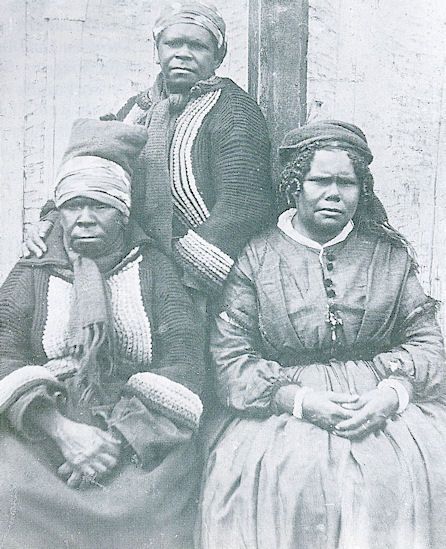
“… they may appear to some to be the most wretched people upon Earth, but in reality they are far more happier than we Europeans; being wholly unacquainted not only with the superfluous but the necessary Conveniences so much sought after in Europe, they are happy in not knowing the use of them … the Earth and sea of their own accord furnished them with all things necessary for life …” (James Cook, 1770)
 a wayfarer’s notes
Some of the most money-hungry people I know are Christians. This may have been one of the influencing factors that turned me off from the religion. It seems to me that they care more about making money than they do about people, even though that's not very Christian, really. The poorer people that I know, they're the ones that really seem to have a heart for everyone else. Those who think all the time about money don't have time to think about people.
Hmmm… hopefully that doesn't sound too much like a rant. There are some really nice Christian people in this world, really.
LikeLike
Sometimes I don't like to think. I prefer to live by formulas, rules and etiquette. It saves me a lot of embarrassments.
I read the beatitudes or the sermon on the mount everyday for a period of time. To see if it would enlighten me. It didn't. Well, it did.
LikeLike
And I prefer to use mantras these days. Like: believe in yourself. It keeps me going. And in the right direction. Hopefully.
LikeLike
These days, we are offered several alternatives: Greco-
Roman, Judeo-Christian, Germanic, Hindu-Buddist way.
“I am The Way, The Truth, and The Life” seems to be the honest One. And the right One.
LikeLike
Well, I didn't mean Jesus of Nazareth. I mean I AM.
LikeLike
Yes, I didn't mean to press any anti-Christian button, and I was thinking more of Christian societies that I know about such as US and Jamaica rather than those which I don't know about such as the Coptic Christians in Egypt, or the Orthodox Church in Greece and Russia, which aren't so readily associated with a desire for wealth and power. Indeed the Catholic communities of Ireland, Italy and Spain used to be quite contentedly peasant-based. So the phenomenon of Christian capitalism, slavery, treating aboriginal peoples as inferiors to be enslaved, dispossessed and/or converted is a local one. And the same with Islam.
Sophia I sympathise with the views you express, though as ever I feel most uncomfortable with generalisations because they encourage us to be selective in our sampling.
Siegfried I tend to agree with you on all the points you make.
LikeLike
In fact the post is not about Christianity at all, so I have changed its title from Beatitude to Bus Station, to try and correct any wrong impression.
LikeLike
“In the simplest sense, if I know you it merely means I can predict how you will behave.”
I think people can fool themselves into believing this at times. When they do, they are often annoyed when people don't behave in a manner consistent with their understanding of them.
I think the best we can hope for is to gain some appreciation for why people have done what they have already done. And in the process of learning the reasons behind their past behavior we can help each other learn more about ourselves.
To predict what someone will do, or how they will react, is more difficult. New layers are added as time goes on, and we inevitably alter our patterns of behavior.
In spite of the difficulties and obstacles, I find it worthwhile and very rewarding to make the effort.
My growing concern is around the “survival of the fittest” or “every man for himself” sort of mentality that has come to prevail over more civil forms of social interaction.
It would appear that the concept of walking a mile in someone else's shoes, has been corrupted into a means of getting a mile away from that person with their shoes.
LikeLike
this is a fscinating post, especially the paragraph about Van Gogh and the blues and the one about layers of meaning and understanding ourselves.
Sorry you felt I'd wasted your time with the video on my blog. I know that for some people there is nothing new in that but I think it offers a cogent argument that we all know people who would benefit from. I didn't want to say too much about the video because if I did then it would be likely that the people who would most benefit from watching it would be the ones most likely not to watch.
LikeLike
You know I am Christian – you pushed no buttons for me. Maybe I read it differently than others.
The human mind is astounding in its ability to retain information.
Yes, we know more than we know that we know.
I am intrigued by Katie Spencer and her hope and (un)happiness. Do you know if she did outlive her brother?
LikeLike
Beth, I didn't mean to push any buttons really, nor did I really get across what I was trying to say.
There is no one alive who would know about the fate of Katie Spencer or her brother, except possibly my sister. I will ask.
LikeLike
Crafty Green Poet, no please excuse my rudeness. Actually it didn't waste time at all but set me thinking about my own reactions to the topic of global catastrophe. I might be able to post something about it but what I post is subject to the Muse and not under my own control. So I will summarise here what I may try and say better.
I feel that the catastrophe course is already set. If James Lovelock (author of Gaia) is correct, the course was set more than a hundred years ago and there is nothing we can do now to avert it.
So to me the issue is not taking the avoiding action as proposed in the video, so much as learning now to behave properly when the catastrophe does happen. This means a far greater change than reducing CO2 emissions, etc, though it does include that.
Catastrophes cause premature deaths. But those deaths will happen anyway. Catastrophes destroy ways of life. But some of those ways of life need to be destroyed anyway. So I am not against catastrophe in itself, if it is already inevitable.
But I want us to learn how to face it with dignity and humanity. The terrible thing about Hurricane Katrina when it hit New Orleans wasn't the loss of architecture or even of homes or even of lives. It was the ugly behaviour and indignity that it exposed. I feel that catastrophe will forcibly teach lessons in how to live and I hope that as many people as possible will learn the lessons from instinct rather than force.
As my post tries to say (perhaps too subtly) we know more than we think. I don't mean anything about retaining information, as Beth suggested, but refer to innate knowledge which comes with being human. I believe that sending round robin messages to people on the internet is just spitting into an ocean of spam. Spam is designed for the credulous but strengthens the resistance of the cynical. It is not a good repository for anything true.
The catastrophe will be good for mankind: a kind of flood as in the book of Genesis, to the extent that an Ark can now be built, in the form of a fundamental improvement in consciousness: not by turning to old religions, which have had their chance; nor by inventing any more new religions, which become corrupted as soon as invented because it's only the opportunity to make a buck which makes them flourish and multiply.
In short, I believe in mankind's innate common-sense and divine nature. I don't think there was anything intrinsically wrong with that video, but it wasn't the important message from my point of view. The important message could not be transmitted in a short video. I suppose in my blog I try to explore what the message is by reflecting what my life and inner voice tells me from day to day. I don't have any information for anyone but all the same believe that in communication, some understanding can be shared.
LikeLike
Charles, thanks for your comments which I find helpful in many ways; partly to be more careful how I express things. You are right that knowing a person is more about understanding how they have behaved in the past rather than predicting their future behaviour.
Yes, in my previous comment referring to the floods in New Orleans I am concerned like you about the “every man for himself” attitude. There was something shocking about that and more recently I feel the same shock about the citizen's right to bear arms in US; particularly as some blogging comrades are not shocked – being used to it all their lives I suppose.
I could imagine a catastrophe in US in which guns would be used in preference to currency to obtain food and other essentials. Which is what in any case happens in war zones in Africa, Middle East and elsewhere, when law and order has broken down. I know it is not the guns that kill. It's the fear that squeezes the trigger.
I somehow sense that the era of ascribing acts of violence to “evil” is coming to its end, like a flu virus which has exhausted itself at last. And people will see that it wasn't evil but fear: an insecurity, a desperation, an inability to articulate the sense of wrong and desire for vengeance except through acts of violence. And that the thing called “evil”, that is to say the provocation, exists in equal measures on both sides.
LikeLike
I just wanted to apologize if I came-off sounding too anti-Christian. Sometimes the frustration I experienced when I was a Christian in my teens – and bad childhood memories of some Christians – voices itself too strongly.
I don't like that I was negative in my first comment. Really, if I offended anyone I'm terribly sorry. I can be such a goof sometimes.
To ameliorate things (or not), some other religions give me bad vibes sometimes. But some people apparently need religion in their lives as much as I need spirituality in mine.
LikeLike
i have a feeling.
i think your writing is going to outlive your life and lives of many generations to come.
LikeLike
I would like to make a point about the Beatitude, the 'Blessed are..' things, (this after reading the comments some and being reminded of a thought)…
Blessed is a word used in these, a word that essentially refers to that evolution of feeling, from unfeeling thought/sound, to the eventual full bloom of empathetic communication potential, such is the province of the poor over the rich, for obvious reasons.
Like wise for the others in that genre.
There is another word for Blessed, not used in the Beatitudes, it places the blessing in the midstate of that evolution, more in the simple functional state of biological processes over the more human evolutionary potential, hence it is more angelic, meaning systematic, rather than possessed by human freedom and open horizons.
Since I open this door, let me say that my interpretation of these words 'Blessed', are based on Hebrew, the origin of those words later translated into the greek and latin and english. So you won't be able to verify my point of view thru published works, don't bother to look, lol, (not even will it be found with the Jews, who are some of the most Christian of Christians I have found, lol, no offense intended, just a jab at the ribs of the world).
LikeLike
And one, or two, more things, lol, from these wonderful comments.
Sophia makes it fully clear that she doesn't want to generalize and is refering to particular experiences, relative to statements involving a religion. I feel the same about the religions I mentioned, they are not intended to be generalizations.
Charles has given a great restatement of much of the globalization thru economic means problem, the mile in shoes statement, that is SO right on!
And I share the concern, Charles, about the great attachment of the USA public with the survival-of-fittest nature model of behaviour, thankfully that is not totally the case.
And Vincent, your replies here are like addendums to your already excellent post, equally excellent in rendering the subject. Thanks so much Vincent, for the whole package, truly magnificent!
LikeLike
As far as I am concerned, Sophia, you said nothing anti-Christian. Merely gave your honest reflections for which every Christian will be grateful. There may be a Judgement at the pearly gates, or at the Last Day, but Christians know that they are judged by the world too: fellow-Christians or not. It can do nothing but good to get such feedback.
LikeLike
Ghetu, you say something I had hoped might one day be true, that is, I might one day write such a body of work.
LikeLike
Jim, a reply is due. Please watch this space, and thanks for all you have written in the meantime.
LikeLike
Vincent, you said: “…Catastrophes cause premature deaths. But those deaths will happen anyway. Catastrophes destroy ways of life. But some of those ways of life need to be destroyed anyway. So I am not against catastrophe in itself, if it is already inevitable. But I want us to learn how to face it with dignity and humanity…”
This reminds me of the little blurb during “The Great Gig in the Sky” on Pink Floyd's “Dark Side of the Moon” album. In the nature of catastrophe, it seems the ultimate catastrophe in any life is death. The blurb goes like this: “And I am not frightened of dying, any time will do I don't mind. Why should I be frightened of dying, there's no reason for it you've got to go some time…”
For some reason, I had thought the voice sounded like Winston Churchill so I checked to be sure. After a bit of searching, I found that the quote actually came from an Irish doorman at Abbey Road Studios, named Gerry Driscoll.
Oddly enough, this fell right in with the other point I wanted to make about your post and the associated comments. I meant to suggest that folks ought not confuse power- and wealth-hungry people who wear the badge of “Christianity” with actual “Christians,” who by definition are like Christ. Remember, Christ was a peasant and aimed his efforts at likewise – for he knew these were the people who would truly embrace the “Kingdom of Heaven,” which could surely be compared to simple and humble happiness and connectedness with God.
How stark a point that the wisdom of sages lie in average folks like you and me, Vincent, and in simple people such as an old, Irish doorman… all because we tend to slough off piety, pomp, and circumstance as the rubbish they are.
How cool is it, that I meant to express two completely differing points, and in working to validate my statements, ended up tying them together seamlessly?
To the original point of your post, we surely know more than we think we know. Anyone with a glimmer of wisdom knows that he knows more than he think he knows he knows, and at the same time, the more he knows, the more he realizes how little he knows. It's quite the conundrum, you know?
Thanks, Vincent. Beautiful personal reflections, by the way.
LikeLike
Who was the philosopher that said,. .”at least I know that I don't know.” Could that sensitivity be as comfortable as ignorance?
LikeLike
Vincent I will look forward to it.
As to Bradford and that comfort, I think this sensitivity is producing in me more comfort than the ignorance itself, for it allows me move.
LikeLike
Brad4d. your point is deep, it fizzes in me, it illuminates my attempted point in one powerful thought. You are right to talk of comfort and sensitivity and knowing and not knowing in your diagram-in-words, like something scribbled on a paper-napkin in a restaurant, in a conversation of wild ideas and pregnant silences . . . Thank you! I do not know who was that philosopher, except that it was you.
LikeLike
Jim, I am immensely pleased to be certain that I have reached at least one person for you show your understanding and embroider on my words to illuminate them further, and give encouragement to carry on exploring when – I confess – it gets more difficult every time. I know what I want to say but not how. Thousands of words are discarded. Finally the how of telling is arrived at, but in the process the what has somehow gone beyond my conscious control. And then I wait to see if the whole will be understood at all, fearful that it won't, yet despite this each time daring more.
And this, let's note, can only happen on a blog, only with your encouragement.
LikeLike
Tim, I love your definition of “actual Christians” being like Christ! The general proposition that bad Christians aren't Christians at all is very familiar to me from disputatious Nonconformists in my youth.
Despite having read a translation of Thomas a Kempis' The Imitation of Christ in my youth, I cannot now work out, from the New Testament or imagination, what being like Christ could be like in a person today. Being a wandering preacher? Performing miracles? Please explain.
LikeLike
Vincent, I am amazed at blogs and what they can do, how much they are able to serve.
When I first started posting, I really didn't think it could be a substitute, an effective one, for what I knew I needed (a means of outloud declarations with a mystical application), but lo and behold, it works, and while not indespensible, near to that, for me anyways.
The give and take and the power of that to serve individuals personally, that too is amazing, it really works also.
LikeLike