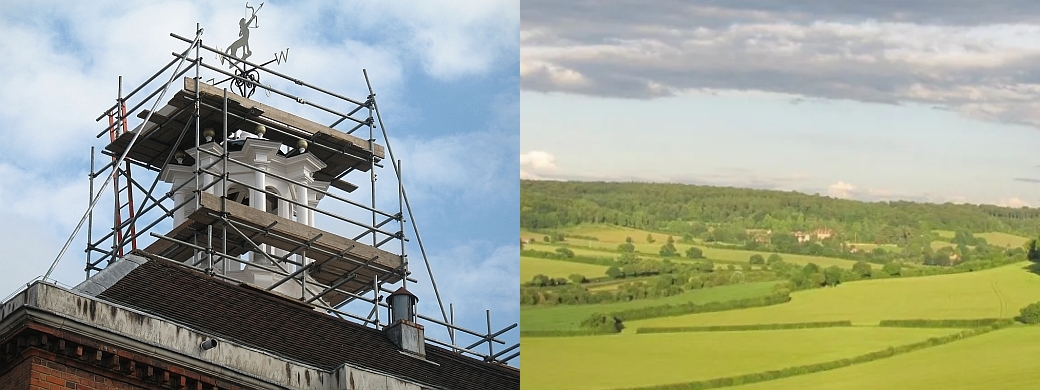

last night’s dream:
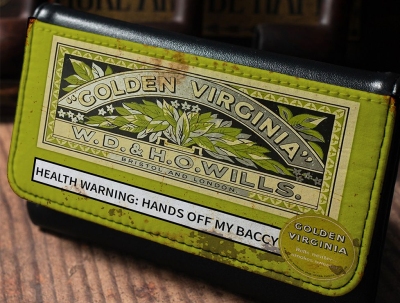
 I have just dyed my hair orange: a sort of coppery burnt-sienna. I have decided to take up smoking again after all these years, so I leave the house to buy half an ounce of Golden Virginia and some rolling-papers. Do they still sell tobacco in half-ounces, I wonder. Perhaps I will have to ask for it in grams. I’ll need matches as well, but I don’t want the shopkeeper to think I have just started smoking, so I decide to buy the matches in a different shop. On the way, a grizzled man with a beard accosts me, with something in his hand:
“Do you want to buy a film?”
“What of?”
“The film is about you and me. I haven’t made it yet.”
What he’s holding is a small picture-frame, nothing but the edges, no back. He waves it about, to show how anything visible may be caught in the frame.
He changes the subject and asks what university course I’m on. This amuses me and I do a quick mental calculation.
“I graduated forty-four years ago.”
My words are wasted, for he has already vanished. Perhaps the effort of doing arithmetic in a dream has woken me up from it.
Now, writing this down, I see that the grizzled man must be me. I stopped the flow of my memoir-writing a few months ago, when I moved to this house. Will it be possible to continue? I’ve been inwardly debating this since September 17th. If my life is a burning twig, the writing part is the bright glowing end, increasingly ruled by impulse, not reason: a fact which I accept with complacency.
The spontaneous part of me increasingly outwits my clumsy will. I’m more excited by the intermingling of memories with the present moment, than with those fixed narratives of long ago. Fixed? They are more or less copyrighted by fact and policed by occasional photographs. Usually the evidence is destroyed. For example (continued here)
I have just dyed my hair orange: a sort of coppery burnt-sienna. I have decided to take up smoking again after all these years, so I leave the house to buy half an ounce of Golden Virginia and some rolling-papers. Do they still sell tobacco in half-ounces, I wonder. Perhaps I will have to ask for it in grams. I’ll need matches as well, but I don’t want the shopkeeper to think I have just started smoking, so I decide to buy the matches in a different shop. On the way, a grizzled man with a beard accosts me, with something in his hand:
“Do you want to buy a film?”
“What of?”
“The film is about you and me. I haven’t made it yet.”
What he’s holding is a small picture-frame, nothing but the edges, no back. He waves it about, to show how anything visible may be caught in the frame.
He changes the subject and asks what university course I’m on. This amuses me and I do a quick mental calculation.
“I graduated forty-four years ago.”
My words are wasted, for he has already vanished. Perhaps the effort of doing arithmetic in a dream has woken me up from it.
Now, writing this down, I see that the grizzled man must be me. I stopped the flow of my memoir-writing a few months ago, when I moved to this house. Will it be possible to continue? I’ve been inwardly debating this since September 17th. If my life is a burning twig, the writing part is the bright glowing end, increasingly ruled by impulse, not reason: a fact which I accept with complacency.
The spontaneous part of me increasingly outwits my clumsy will. I’m more excited by the intermingling of memories with the present moment, than with those fixed narratives of long ago. Fixed? They are more or less copyrighted by fact and policed by occasional photographs. Usually the evidence is destroyed. For example Norfolk house, today’s topic, was pulled down long ago.
We moved there from Powys House, a tall granite Victorian building which still stands, a mile from Queen Victoria’s holiday home at Osborne. Norfolk House was in West Cowes: an Edwardian mansion with broad veranda and balcony overlooking the Solent, that busy strip of water separating the Isle of Wight from the English mainland. The house had lain empty so long that we had to chop down thickets to make a pathway to the front door.
“Young, handsome and melancholy, he sought in solitude everything he could not find in the company of other men: serenity, sincerity and purity. Wandering on his trusty steed he arrived, one day, at the dark forest. Being adventurous, he decided to explore it. He made his way through slowly and with a struggle, for the trees and bushes grew in a thick tangle. A few hours later, now losing heart, he was about to turn his horse and go back when he thought he could see something through the trees . . . He pushed back the branches . . . Wonder of wonders! There in front of him stood a castle with high towers.” (from the tale of Sleeping Beauty)
 Inside was a grand hallway, always cool, with an interesting fragrance and acoustics. The floor was patterned in fake medieval tiles of indigo, cream and ochre; overlaid with patterns from stained-glass windows in the porch. A stone staircase curved to a first-floor gallery, and half-way up was an alcove with two doors, one leading to my bedroom.
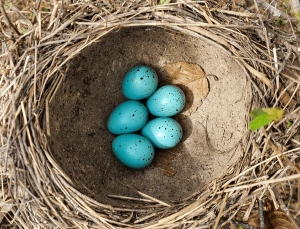 For nearly four months, I’ve held back from describing this phase of my life, shy of my ability to describe that house, and what happened to me there. It was the end of April, 1955. I know the month because in trimming back the thickets we exposed nests with eggs still unhatched, turquoise and speckled ones from the blackbird.
It was in that bedroom aged thirteen that I stumbled upon a hitherto unknown function of my adolescent male body. It was an event too momentous to be passed over unmentioned in a memoir. The exact details remain vivid for they fascinated me by their awesome novelty. I was reticent then, and remain so today. Compared to my peers I was prudish, a fact I know with confidence because forty years later, I attended a small reunion of school friends—all men, it was a boys-only school. It wasn’t any crudeness in the conversation, but just a remembrance of how they were as teenagers, and how I was: different, apart.
Masturbation—at any rate I can utter the word—became a shameful habit thereafter, morally indefensible, weakening to the will, fatiguing and aesthetically repugnant; or so I thought, doubtless influenced by lurid old books. Understandably they went into horrid detail about sexually transmitted disease. But why were they so hard on “self-abuse”?
There was one genuine drawback to the practice: it put an end to wet dreams. Till then, these had offered solace to a lonely adolescence. I’d awaken clinging to the memory of a sweet feminine presence, gracious and full of virtue. Was she an outstanding beauty? That didn’t matter. She took different forms, but always the main thing was that she loved me…
 a wayfarer’s notes