

updated on 6th December 2024
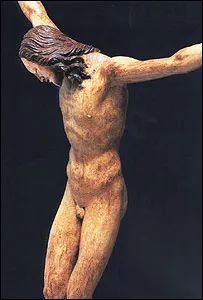 In an “utterly insane world ruled by a capricious and indifferent deity”*, the only thing we can keep swept clean and fresh is our own doorstep. To follow our own conscience is a tragi-comic defiance of the gods. It is the Absurd, symbolised by Albert Camus in his Myth of Sisyphus.
Where god is capricious, indifferent or perhaps even vicious, there is even more scope for individual significance: not sacrifice to the powers that be, but simply to follow our conscience.
Above all I abhor sacrifice, that primitive burnt offering which is the beginning of religion. We sacrifice a lamb, a goat, our own firstborn son, decent behaviour, even public safety “?”
Because we British took sides in someone else’s fight, and helped invade a country which was not our enemy: Iraq in 2003.
Conscience is not about sacrifice but about being true to my deepest humanity, my instinct of rightness. They say that all power resides in God:
Our Father which art in heaven
Thy kingdom come, Thy will be done on earth, as in heaven.
For thine is the kingdom, the power and the glory, for ever and ever, Amen.
I spit in that father’s eye for all the injustice and cruelty. Which is to their god is a monstrous bogeyman that haunts the dark recesses of brainwashed christians.
In a world of sacrifice, suicide bombers thrive. In a world of conscience, armies can’t recruit, factory farming goes bankrupt.
Christianity has sacrifice at its core.
—–
* This was my latest response to a thread on Steve Holmes’ Destiny Discussion forum whose first post was “Do Fish Have Souls?”
(original version: a revision follows)
Some people are bitter and cynical from life-long rejection and disappointment. I’m thinking of Steve, with his Destiny Discussion website. We’ve known each other a while and I started a thread there, called “Do fish have souls”. I’ve forgotten what anyone said except for one phrase from Steve: “this utterly insane world ruled by a capricious and indifferent deity”. I think of it as a cry of despair: “not even God loves me.” I’m sad for him, but admire his frankness at the same time. I can’t say the same about Albert Camus, concocting his notion of The Absurd, writing his absurdly celebrated Myth of Sisyphus. He considers the option of suicide, not on a personal level, so far as we know, but as a decision the thinking man might make.[4] He ends up advocating gestures of defiance, for the cold comfort he hopes they will provide:
It’s enough to strive towards the heights. This is enough to fill the human heart. We are to imagine Sisyphus happy.
(my translation. The official English one is too literal to make much sense or any sense. Not till I’d spent many hours working on my own version in idiomatic English did I realized how wrong the academics can be, how little his Sisyphus has to say that warrants the effort of reading it. See this post with parallel translations.
My translation. The official English one is too literal to make much sense or any sense. Not till I’d spent many hours working on my own version in idiomatic English did I realized how wrong the academics can be, how little his Sisyphus has to say that warrants the effort of reading it.
Steve could be right about his capricious and indifferent god. No, I’ll go further. He is right. Anything we attribute to God is our own fabrication. The “real God” is unknowable. There are Scriptures, but they’re best treated as hearsay, poetry and myth. Religions are best treated as conduits for tradition, be it good or bad. I ask myself why I should even take an interest in such things. Firstly, from curiosity about what has shaped humanity. Secondly, from looking into them as mirrors, helping me see what I am and am not.
I assume there are deeper layers in the human being than those sedimented from lifetime circumstance. When I find them in myself, I assume that the personal is the universal.
I find in myself a conscience, which makes me obedient to beauty, justice, truth and love.
(updated 7/9/17) Are you a non-believer? May 12, 2006
In the way I was brought up, what you believe was important. “Believe on the Lord Jesus Christ and ye shall be saved.” Was it St Paul who invented that mantra? Anyway, you were called upon to “stand up and be counted” in terms of your “beliefs”. Even on the last government census in the UK, which inquired as to your religion. Even what social class you are in, these days, is determined by which one you believe you are in. That puts me in the aristocracy: not the ermine-clad, coronet-topped toffs. No, I took a different turning on life’s track, quite early on, and joined the anti-social classes. I found my peers in books and works of art.
It seems to me perfectly obvious that the fewer the beliefs the better, if a belief is something we depend on but don’t know for certain. I have never believed. Instead, I have cherished Memorable Fancies, in the manner of William Blake.
 a wayfarer’s notes