
 I finally got to watch Scorsese’s The Last Temptation of Christ, after wanting to see it ever since it first came out in 1989. Wonderfully poetic fiction and superior to the official fictions so jealously guarded by the churches. As for the Da Vinci Code, I got as far as opening it in a bookshop a while ago and instantly found it unreadable, in exactly the same way that I’d never been able to read more than a page of the Celestine Prophecy. Both books invited me to look through the contemporary eyes of fatuous characters, the author presuming I would identify with their points of view.
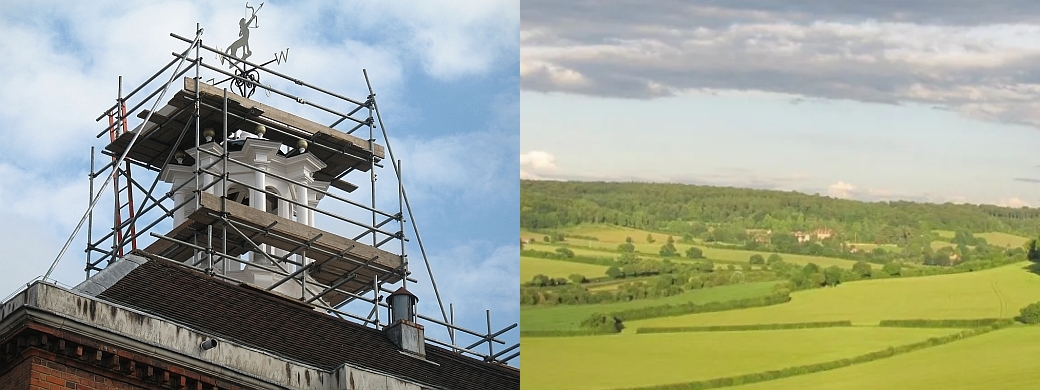
Kazantzakis and Scorsese have it exactly right for my taste. Jesus is believable in every scene where he deviates from the Gospel texts, and is somewhere on the spectrum between deranged and megalomaniac the rest of the time; but then, you can feel afresh the astonishment of his audiences. Clearly, his family life with Mary and Martha (left) is far preferable to his triumphant cry (right) of “It is accomplished!”
We are left to speculate how everything would have been different if he had succumbed to the temptation, and taken the lovely angel’s invitation to get down from the cross and live till old age. We discover the angel is another trickery of Satan, but it’s clear that the world would be a better place today if he had given the flesh its due like normal people. And that is the beauty of the film’s poetic vision. 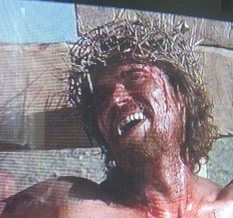 Despite Kazantzakis’ intention, the film’s unintended consequences live on, and I feel like the little boy who sees that the Emperor has no clothes.
 a wayfarer’s notes